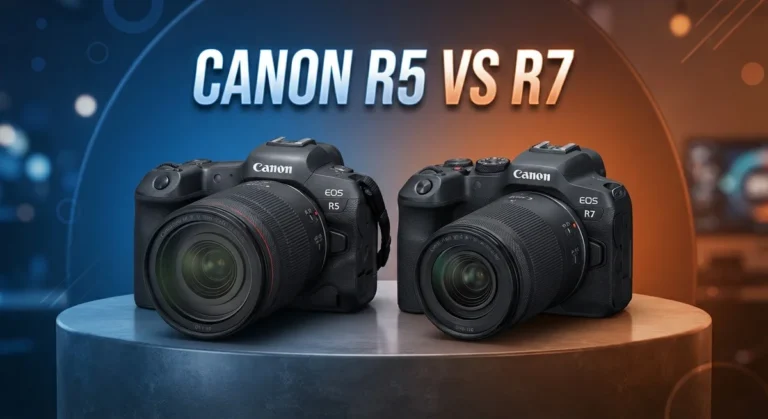
Canon R5 Mark II vs R6 Mark III: Complete Camera Comparison Guide
Choosing between the Canon R5 Mark II and R6 Mark III feels tricky. Both cameras pack serious power for photographers and videographers. But each one shines in different ways.
The R5 Mark II brings a 45MP stacked sensor. It offers lightning fast readout speeds and superior autofocus tracking. This camera suits creators who need top resolution and precision.
The R6 Mark III counters with blazing 40fps burst shooting. It uses a 32.5MP sensor and delivers smaller file sizes. This makes it a strong pick for fast action and everyday shooting.
So which camera fits your needs? It depends on your shooting style. Do you crave ultimate detail and speed? Or do you want rapid bursts and simpler workflows?
Let’s break down the specs, features, and real world performance. You will find the right choice for your creative journey.
In a Nutshell
Here’s a quick summary to help you decide fast.
-
Resolution power: The R5 Mark II packs 45MP for massive detail. The R6 Mark III offers 32.5MP, still great for most projects.
-
Sensor speed: The R5 Mark II uses a stacked sensor with a 6.3ms readout. This means less rolling shutter distortion in fast action.
-
Autofocus tracking: The R5 Mark II locks onto subjects more accurately. This helps in wildlife and sports photography.
-
Screen and viewfinder: The R5 Mark II gives you a sharper EVF and screen. You see more detail while shooting.
-
Burst speed: The R6 Mark III wins here with 40fps electronic shutter. Sports and action shooters benefit most.
-
File handling: Smaller files from the R6 Mark III mean faster transfers. Your storage fills up slower too.
-
Cooling system: The R5 Mark II has active cooling built in. Long video sessions stay stable without overheating.
-
Processing muscle: Dual processors in the R5 Mark II handle heavy workloads well. The R6 Mark III still processes fast for everyday shooting.
Sensor Technology and Resolution
The R5 Mark II uses a stacked sensor design that reads data much faster than traditional layouts. This 6.3ms readout speed gives you cleaner images in low light and faster autofocus performance. The sensor stacking also reduces rolling shutter, which matters when you shoot fast action or pan across scenes.
The R6 Mark III takes a different approach with a non-stacked sensor. Its 13.5ms readout is slower, but Canon optimized other areas to compensate. The trade-off means you get slightly more rolling shutter distortion, but the camera still performs well for most shooting situations.
Resolution tells different stories for different shooters. The R5 Mark II delivers 45MP, giving you massive detail and flexibility in post-production. You can crop aggressively and still maintain sharp prints. The R6 Mark III offers 32.5MP, which is still excellent for most work. It produces smaller files that move faster through your workflow and take up less storage space.
The stacked sensor in the R5 Mark II enables several advantages beyond just speed. It allows the camera to reach 30fps burst shooting while maintaining full autofocus and exposure tracking. Active cooling keeps the sensor temperature stable during long sessions, preventing thermal noise buildup.
The R6 Mark III pushes burst speed to 40fps using an electronic shutter. This raw speed advantage appeals to wildlife and sports shooters who need maximum frames per second. However, the non-stacked design means faster processing happens elsewhere in the camera system, not at the sensor level itself.
Autofocus performance differs between these sensors. The R5 Mark II’s stacked architecture provides faster phase-detection data, resulting in snappier subject tracking. The R6 Mark III relies on Canon’s intelligent autofocus algorithms to compensate for its traditional sensor layout. Both cameras use the same autofocus processor, but the R5 Mark II’s hardware advantage shows in complex tracking scenarios.
Your choice depends on what matters most. Need maximum detail and sensor speed? The R5 Mark II wins. Want the fastest burst rates and smaller files? The R6 Mark III delivers.

- FULL-FRAME CMOS SENSOR: 24.2 effective megapixels (approx.) lets you capture sharp, detailed images...
- DIGIC X IMAGE PROCESSOR: Enhances digital camera performance and processes, including image...

Last update on 2026-11-05 / Affiliate links / Images from Amazon Product Advertising API
Video Performance and Capabilities
The R5 Mark II excels at capturing cinematic 7K video at 60 frames per second. This resolution gives you enormous flexibility in post production work.
The R6 Mark III also shoots 7K60p video, matching the R5 Mark II in this key capability. Both cameras handle professional video workflows with ease.
Frame rates and codecs differ slightly between the two models. The R5 Mark II delivers smooth motion across multiple frame rate options. The R6 Mark III provides equally smooth footage with slightly different processing characteristics.
Recording formats on the R5 Mark II include Canon’s advanced codec options. You get greater control over bitrates and color depth. The R6 Mark III simplifies the codec menu while still offering professional quality options.
Autofocus during video performs differently on each camera. The R5 Mark II’s stacked sensor enables faster focus tracking during continuous shooting. The R6 Mark III’s autofocus remains responsive and accurate, though the sensor architecture differs.
Overheating management matters for long video sessions. The R5 Mark II includes active cooling that keeps the sensor cool during extended recording. The R6 Mark III handles heat well but relies on passive cooling methods.
File sizes create practical differences in your workflow. The R5 Mark II generates larger files due to higher resolution output. The R6 Mark III produces smaller files that transfer faster and need less storage space.
Electronic viewfinder performance affects your video experience. The R5 Mark II offers a sharper, higher resolution EVF for precise framing. The R6 Mark III provides a capable viewfinder that works well for most video work.
Dual processors in the R5 Mark II handle video encoding more efficiently. This means faster rendering times and smoother performance during playback. The R6 Mark III’s single processor still manages video tasks effectively.
Choose the R5 Mark II if you need maximum resolution and advanced thermal management for demanding shoots. Pick the R6 Mark III if you want solid video performance with simpler file handling and faster burst capabilities.
Autofocus and Burst Shooting Speed
The autofocus systems in these cameras operate on different principles. The R5 Mark II uses a stacked sensor that delivers phase detection data faster. This speed advantage means your autofocus locks onto moving subjects more reliably during fast action.
The R6 Mark III takes a conventional approach with its non-stacked sensor design. It still performs well for most shooting situations. However, the slower 13.5ms readout means slight delays when tracking rapid movement compared to the R5 Mark II’s 6.3ms speed.
Burst shooting speed creates the biggest separation here. The R6 Mark III reaches 40fps using its electronic shutter. This means you capture more frames per second when shooting fast sequences like sports or wildlife. The R5 Mark II maxes out at 30fps, which is still impressive but 10 frames behind.
For continuous autofocus during burst shooting, the difference matters. The R5 Mark II’s faster sensor readout keeps focus accurate throughout long bursts. The R6 Mark III maintains focus reasonably well, though the non-stacked sensor means occasional focus hunting during extreme speed situations.
Buffer capacity plays a role too. The R5 Mark II uses dual processors to handle data from its 45MP sensor while maintaining autofocus tracking. The R6 Mark III processes smaller 32.5MP files, allowing faster write speeds to your memory card. This means you can shoot longer bursts before the camera slows down.
Real world shooting shows these differences clearly. Sports photographers benefit from the R6 Mark III’s 40fps burst rate for capturing peak moments. Wildlife shooters often prefer the R5 Mark II’s superior autofocus tracking because it keeps focus locked on distant, moving subjects better.
Neither camera disappoints for autofocus performance. Your choice depends on what you shoot most often. Need maximum frames per second? The R6 Mark III delivers. Require rock solid autofocus tracking during fast action? The R5 Mark II excels. Both cameras track subjects effectively with Canon’s Dual Pixel AF system working behind the scenes.
Top 3 Alternatives
Sony Alpha a1

- 50.1MP full-frame stacked Exmor RS CMOS sensor w/ integral memory
- 8x more powerful, next generation BIONZ XR image processing engine
Last update on 2026-11-05 / Affiliate links / Images from Amazon Product Advertising API
The Sony Alpha a1 stands out as a powerful full-frame mirrorless camera. It delivers 42.4 megapixels of resolution, which gives you exceptional detail in every shot. The camera features real-time eye autofocus and animal detection that works across multiple species.
You get 11 fps continuous shooting with full autofocus tracking. The electronic viewfinder refreshes at 120 fps, making fast action feel smooth and natural. Video capabilities include 8K recording at 24p, which opens creative possibilities for professional filmmakers.
The build quality feels premium with magnesium alloy construction. Weather sealing protects your investment in challenging conditions. Dual SD UHS-II card slots ensure you never miss a moment due to storage limits.
Nikon Z9

- Bundle Includes: Nikon Z9 Mirrorless Digital Camera (Body Only) + 120GB G Series XQD Memory Card...
- Experience exceptional image quality with the Nikon Z9's 45.7MP FX-format stacked CMOS sensor paired...
Last update on 2026-11-05 / Affiliate links / Images from Amazon Product Advertising API
The Nikon Z9 represents Nikon’s flagship mirrorless solution. It captures images at 45.7 megapixels with incredible dynamic range. The autofocus system tracks subjects with remarkable accuracy, even in low light.
You can shoot at 20 fps with full autofocus, or 11 fps in continuous mode. The 8K video recording capability runs at 60p, giving you smooth footage for professional productions. The camera handles both stills and video workflows seamlessly.
Ergonomics matter here. The Z9 feels comfortable during long shooting sessions thanks to its balanced design. Dual XQD card slots provide fast write speeds and backup security.
Panasonic Lumix S1H

- V-log/v-gamut – features a wider 14 plus Stops of dynamic range which are compatible with the...
- Rugged Mirrorless camera design – dust/splash/freeze-resistant design withstands heavy field use...
Last update on 2026-11-05 / Affiliate links / Images from Amazon Product Advertising API
The Panasonic Lumix S1H focuses on video performance and reliability. It records 6K video internally, which provides significant cropping flexibility in post-production. The full-frame sensor captures 47.3 megapixels for stills work.
The camera excels in color science and autofocus stability. You get unlimited recording time without overheating issues, making it ideal for long-form content creation. The articulating screen aids in creative framing during video shoots.
Build quality emphasizes durability with weather-sealed construction. The ergonomic grip reduces fatigue during extended use. These features make the S1H a solid choice for hybrid creators.
Image Processing and File Management
When you import images from either camera, the file management experience changes based on resolution and processing power. The R5 Mark II generates larger files due to its 45MP sensor, while the R6 Mark III creates more manageable file sizes from its 32.5MP output. This difference affects storage needs, transfer speeds, and backup strategies.
The R5 Mark II benefits from dual processors that handle image processing faster. You can offload files to your computer more quickly and work through large shoots without lag. The R6 Mark III processes files efficiently too, but handles fewer simultaneous operations.
Raw file organization matters for your workflow. The R5 Mark II produces RAW files around 120MB each, while the R6 Mark III stays closer to 85MB per image. If you shoot 1000 images daily, that’s roughly 35GB difference in storage. Over time, this impacts your hard drive purchases and cloud backup plans.
Color science and in camera processing differ between these models. The R5 Mark II applies its dual processor advantage to real time image analysis and histogram accuracy. The R6 Mark III delivers solid color rendering but processes information slightly more slowly.
Video file management creates another separation point. The R5 Mark II records 7K60p files that demand serious storage capacity. The R6 Mark III matches this video capability, so both cameras require fast SD cards and large drives for serious video work.
Software compatibility matters too. Canon’s Digital Photo Professional works with both cameras, but the R5 Mark II’s files benefit from faster processing when using batch operations. The R6 Mark III handles batch edits smoothly as well, just with smaller individual file sizes.
For photographers managing thousands of images, the R5 Mark II demands more infrastructure but rewards you with exceptional detail preservation. The R6 Mark III keeps your system leaner and faster while still delivering professional quality files. Your choice depends on whether you prioritize maximum resolution and processing speed or streamlined file management.
Build Quality and Cooling Systems
The R5 Mark II features a stacked sensor design that generates significant heat during intensive shooting sessions. Canon equipped this model with active cooling to manage thermal buildup. The stacked architecture enables faster readout speeds but creates more internal heat generation.
The R6 Mark III uses a conventional non-stacked sensor. This design produces less heat naturally during operation. You’ll notice fewer thermal throttling issues during extended shooting, especially in warm environments.
Both cameras handle 7K60p video recording, which demands robust thermal management. The R5 Mark II’s active cooling system kicks in automatically when needed. This system maintains consistent performance throughout long video takes. The R6 Mark III relies on passive cooling supplemented by intelligent power management.
The R5 Mark II body construction incorporates better heat dissipation pathways. Its magnesium alloy frame works with internal thermal design to channel heat away from critical components. The camera maintains full performance longer during continuous shooting.
The R6 Mark III prioritizes a more compact form factor. This size advantage comes with slightly different thermal characteristics. You get reliable performance for most shooting scenarios without the active cooling system.
Weather sealing differs between these models. The R5 Mark II offers superior dust and moisture protection. Its sealed construction supports professional use in demanding conditions. The R6 Mark III provides solid weather resistance suitable for most outdoor work.
Burst shooting heat generation matters too. The R5 Mark II reaches 30fps maximum, while the R6 Mark III achieves 40fps. Faster burst rates generate more heat per second. The R6 Mark III’s non-stacked sensor handles this more efficiently.
Long recording sessions reveal the thermal differences clearly. The R5 Mark II can record longer without throttling thanks to active cooling. The R6 Mark III performs well for typical video work but may reduce frame rates during extreme conditions.
Build quality favors the R5 Mark II for professional environments. Its reinforced construction and active cooling system support intensive workflows. The R6 Mark III delivers reliable durability for most photographers and videographers without requiring the same thermal management infrastructure.
Pros and Cons
Pros
- R5 Mark II: 45MP resolution captures exceptional detail for large prints and heavy cropping in post production
- R5 Mark II: Stacked sensor with 6.3ms readout speed delivers faster data transfer and superior autofocus tracking performance
- R5 Mark II: Dual processors handle image rendering and video encoding much faster than single processor designs
- R5 Mark II: Active cooling system keeps the camera stable during extended 7K60p recording sessions
-
R6 Mark III: 40fps burst shooting captures fleeting moments that the R5 Mark II’s 30fps cannot match
-
R6 Mark III: Smaller file sizes mean faster card writes and less storage demand across your entire workflow
- R6 Mark III: General processing speed feels snappier for menu navigation and image review on the back screen
Cons
- R5 Mark II: 30fps maximum burst rate falls behind competitors when you need continuous high speed shooting
- R5 Mark II: Large raw files require more storage infrastructure and longer backup times after each shoot
- R6 Mark III: 32.5MP resolution provides less cropping flexibility compared to the 45MP sensor
- R6 Mark III: Non stacked sensor with 13.5ms readout speed creates performance limitations during fast autofocus tracking sequences
Who Should Buy It
Professional photographers shooting high resolution work will find the R5 Mark II essential. Your projects demand exceptional detail capture. The 45MP sensor gives you flexibility for heavy cropping and large format prints without losing sharpness.
Wildlife and sports photographers benefit more from the R6 Mark III. You need speed over everything else. The 40fps burst rate catches fleeting moments that the R5 Mark II’s 30fps simply misses. Fast action sequences become easier to nail.
Studio and fashion photographers should lean toward the R5 Mark II. Your controlled lighting setups don’t require extreme burst speeds. Instead, you gain superior autofocus tracking and the stacked sensor’s faster readout. Color accuracy and detail matter more than rapid fire shooting.
Event photographers face a real choice here. If your events involve fast paced moments like ceremonies or receptions, the R6 Mark III handles rapid sequences better. If you shoot detailed group portraits and need maximum resolution for cropping, the R5 Mark II serves you better.
Content creators producing 4K or 7K video should consider their workflow carefully. Both cameras shoot 7K60p equally well. However, the R5 Mark II’s dual processors render footage faster during editing. Smaller file sizes from the R6 Mark III mean quicker uploads and backup times.
Travel photographers often prefer the R6 Mark III. Lighter file sizes reduce storage burden. Faster card writes let you shoot longer without waiting. The camera handles spontaneous moments with its burst capabilities.
Photographers with existing Canon RF lens collections benefit from either option. Your glass works perfectly on both bodies. The choice becomes purely about your shooting style and output requirements.
Professional backup camera users should pick the R6 Mark III. You gain a second shooter without managing massive file sizes. The resolution difference matters less when this camera serves as backup rather than primary.
Hybrid shooters mixing photography and video might prefer the R5 Mark II. Dual processing power handles both disciplines smoothly. Your complete workflow stays efficient whether you’re capturing stills or recording footage.
Final Verdict
Choosing between these two cameras comes down to your shooting style. Both are excellent tools, but they serve different needs.
Think about what you shoot most often. If detail and precision matter most, the R5 Mark II fits your workflow better. If speed and agility drive your work, the R6 Mark III makes more sense.
Consider your delivery format too. Large prints, magazine spreads, and heavy retouching favor higher resolution files. Fast paced content for social media or quick turnaround jobs favor smaller, quicker files.
Your existing gear also plays a role. Both cameras share the same RF lens mount, so your lens investment stays protected either way. This makes switching between bodies simple for photographers who own both.
Think about how you work under pressure. Some photographers need every frame to count during a single decisive moment. Others need to capture rapid sequences and select the best shot later.
Long term flexibility matters as well. The R5 Mark II suits photographers building a diverse portfolio across genres. The R6 Mark III suits photographers who specialize in one or two fast paced fields.
Ask yourself one simple question. Do you need maximum image quality, or do you need maximum shooting speed? Your honest answer points you toward the right camera.
Neither camera is a wrong choice. Both deliver professional results that satisfy demanding clients and personal projects alike.
Your decision should reflect your actual shooting habits, not just specs on paper. Match the camera to your daily work, not to a checklist of features.
Take time to think about your typical shoot day. Picture the moments you capture most and the files you deliver most often. That mental exercise reveals your answer faster than any spec sheet.
In the end, both cameras represent excellent choices from Canon’s RF lineup. Pick the one that matches how you actually work, and you will feel confident with your choice.
Frequently Asked Questions
Which camera handles burst shooting better?
The R6 Mark III wins here with 40fps electronic shutter performance. The R5 Mark II maxes out at 30fps. This 10fps difference matters most for sports and wildlife work where you need to capture split second moments.
However, the R5 Mark II’s dual processors maintain faster autofocus tracking during those bursts. So while you get fewer frames per second, each frame stays sharper on moving subjects.
Does sensor resolution really matter for video work?
Both cameras shoot 7K60p video, so resolution parity exists there. The real difference shows in still photography. The R5 Mark II gives you 45MP versus the R6 Mark III’s 32.5MP.
More megapixels help when you need to crop heavily in post production. They also provide flexibility if you print large or work with demanding clients. For standard delivery formats, the R6 Mark III’s resolution proves completely sufficient.
Which camera processes files faster?
The R5 Mark II handles this task better thanks to dual processors working simultaneously. One processor manages image rendering while the other handles video encoding. The R6 Mark III uses a single processor, which slows down complex operations.
This matters most during long shooting sessions where you’re importing footage constantly. You’ll notice the difference when editing 7K footage or working with RAW bursts from either camera.
Can I use the same lenses on both cameras?
Yes. Both cameras use Canon’s RF mount system. Your existing RF lenses work perfectly on either body. This compatibility removes one variable from your decision process.
You gain no lens advantage by choosing one camera over the other.

Dillip is the founder and editor of Switch & Size, where he breaks down tech products, accessories, and gadgets to help readers make smarter buying decisions. With a passion for testing and comparing the latest technology, he delivers honest reviews, in-depth guides, and side-by-side comparisons that cut through the marketing noise.