
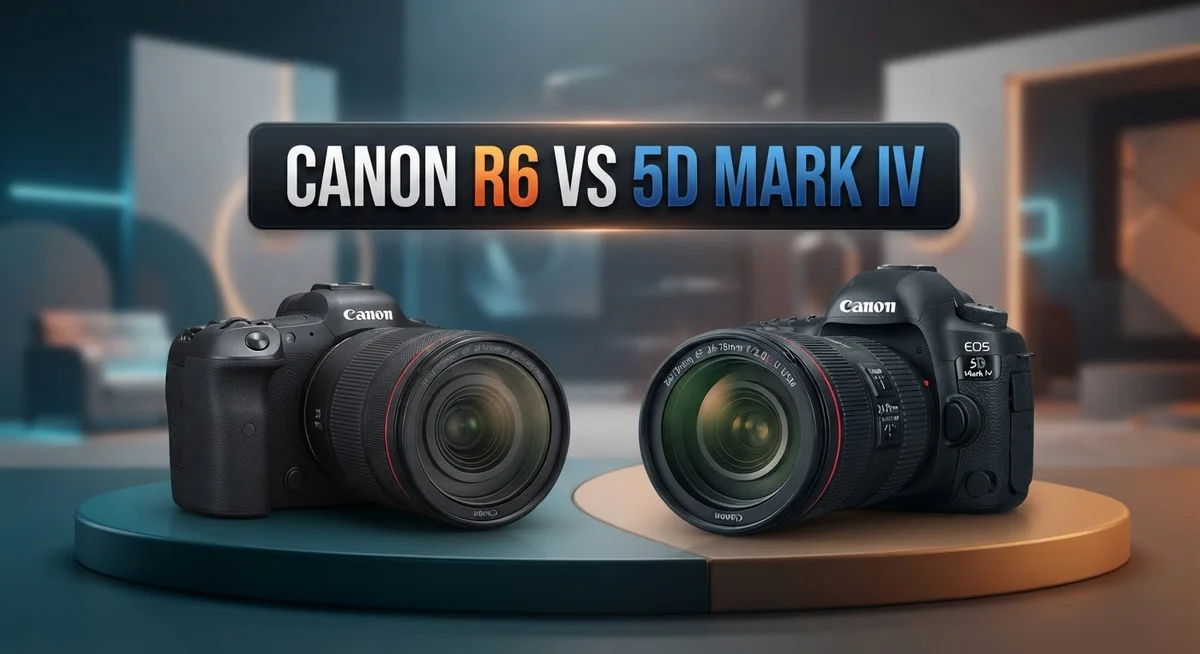
Canon R6 vs 5D Mark IV: Full-Frame Camera Comparison Guide
Choosing a new camera can feel tricky. Two Canon models often come up in the same breath: the R6 and the 5D Mark IV. Both cameras carry the Canon name, but they serve different needs.
The R6 is a mirrorless powerhouse. It brings modern autofocus, better video, and improved low light performance to the table.
The 5D Mark IV is a DSLR classic. It offers a higher resolution sensor, tough build quality, and battery life that simply outlasts its rival.
So which camera fits your style? Photographers who value speed and video may lean one way. Those who want durability and long shooting sessions may lean another.
This guide breaks down specs, pros, cons, and top competitors. You will see exactly how these two cameras compare, so you can pick the right tool for your creative journey.
In a Nutshell
Here is a quick summary to help you decide fast:
-
Sensor type: The R6 uses a 20MP mirrorless sensor. The 5D Mark IV packs a 30MP DSLR sensor for higher resolution shots.
-
Autofocus power: The R6 brings a modern autofocus system. It tracks subjects fast and stays sharp in tricky light.
-
Video performance: The R6 handles video with ease. It offers smoother footage and better low light results than the 5D Mark IV.
-
Battery life: The 5D Mark IV wins here easily. It offers roughly three times more shots per charge.
-
Build and feel: The 5D Mark IV has a tank like body. The R6 feels lighter but slightly less rugged in hand.
-
Best fit for you: Pick the R6 for video and fast autofocus. Choose the 5D Mark IV for battery life and pure resolution.
Both cameras have loyal fans. Your choice depends on what you shoot most often.
Sensor and Image Quality
The sensor sits at the heart of any camera decision. Let’s dig into what makes these two cameras different when it comes to capturing light and color.
The R6 uses a 20MP full frame sensor, while the 5D Mark IV packs 30MP. More megapixels sound better, but the story runs deeper. The R6’s newer sensor design captures images with superior dynamic range. This means you get more detail in both bright skies and dark shadows without losing information.
When light gets low, the R6 truly shines. Its modern sensor handles high ISO settings with less noise. Shadows stay clean. Colors remain accurate even at ISO 3200 or higher. The 5D Mark IV struggles more in dim conditions. Grain becomes visible faster as you push the ISO up.
Resolution matters for large prints and cropping flexibility. The 5D Mark IV’s 30MP gives you more pixels to work with. You can print bigger or zoom into your frame with less quality loss. The R6’s 20MP feels like a step back on paper, but real world shooting tells a different story.
The R6 sensor also responds faster to light changes. Its autofocus system works hand in hand with the sensor to lock focus quicker. The 5D Mark IV’s sensor feels older in this regard. It needs more time to process information.
Color science differs between the two as well. Canon programmed the R6 with newer color profiles. Skin tones look warmer and more natural straight from the camera. The 5D Mark IV’s color rendering feels slightly cooler, though many photographers prefer this classic look.
Both cameras shoot RAW files beautifully. In post production, you have room to adjust colors and shadows. The R6 gives you slightly more flexibility due to its wider dynamic range capture.
The bottom line: Choose the R6 if you shoot in variable light and need clean high ISO performance. Pick the 5D Mark IV if you need maximum resolution for large format printing or heavy cropping. Both sensors deliver excellent image quality for professional work.

- High Image Quality: EOS 5D Mark IV digital 4K camera features a 30.4 megapixel full-frame CMOS...
- Powerful Image Processor: High-performance DIGIC 6+ Image Processor allows for improved speed with...

Last update on 2026-11-09 / Affiliate links / Images from Amazon Product Advertising API
Autofocus and Performance
The autofocus systems on these two cameras sit worlds apart. The R6 uses Canon’s advanced Dual Pixel CMOS AF II technology. This system tracks subjects with incredible speed and accuracy across the frame.
The 5D Mark IV relies on an older 61 point AF system. While reliable, it feels slow compared to modern standards. The R6 locks focus faster, especially when subjects move unpredictably.
Real world shooting shows clear differences. The R6 catches fast moving athletes and wildlife with ease. The 5D Mark IV requires more deliberate focusing techniques. You may need to use single point AF rather than zone tracking.
Eye detection matters too. The R6 detects and tracks eyes automatically. This works on humans and animals. The 5D Mark IV lacks this feature entirely. For portrait and wildlife work, this changes your workflow significantly.
Video autofocus reveals another gap. The R6 keeps subjects sharp during video recording. The 5D Mark IV struggles with smooth focus pulls during filming. If you shoot video regularly, the R6 performs noticeably better.
Performance speed extends beyond autofocus. The R6 processes images faster. Buffer clearing happens quicker. You can shoot longer bursts before the camera slows down. The 5D Mark IV has decent performance, but the R6 handles demanding sessions more smoothly.
Low light autofocus also differs. The R6 focuses down to minus 6.5 EV. The 5D Mark IV manages minus 0.5 EV. This means the R6 works in near darkness. The 5D Mark IV needs more light to lock focus.
Continuous autofocus tracking separates these cameras too. The R6 maintains focus on moving subjects automatically. The 5D Mark IV requires you to anticipate movement. Professional sports and event photographers notice this difference immediately.
The R6 represents a generational leap in autofocus technology. The 5D Mark IV remains capable for static subjects and controlled situations. Your shooting style determines which system serves you better. Fast action and video work favor the R6. Studio work and controlled environments work fine with the 5D Mark IV.
Video Capabilities and Recording
When it comes to recording video, these two cameras live in different eras. The R6 captures 4K video at up to 120fps, while the 5D Mark IV maxes out at 4K 30fps. This speed difference matters when you want smooth slow motion or fast action sequences.
The R6 also offers 8K recording capability, something the 5D Mark IV cannot match. If you work with high resolution video projects, this feature opens new creative doors. The 5D Mark IV sticks to standard 4K, which still looks excellent but feels less future proof.
Autofocus during video separates these cameras dramatically. The R6 uses continuous autofocus that tracks moving subjects smoothly. The 5D Mark IV struggles with video autofocus performance. Real world shooting shows the R6 keeps focus locked on moving people and objects. The 5D Mark IV often hunts for focus or loses it entirely during video work.
Dynamic range in video favors the R6 significantly. It captures more detail in bright skies and dark shadows. This means less color grading work in post production. The 5D Mark IV delivers good video but with narrower dynamic range.
Codec options differ too. The R6 records to modern codecs that compress efficiently. The 5D Mark IV uses older codec standards. Modern editing software handles R6 footage more smoothly without transcoding.
Stabilization features matter for handheld video. The R6 includes in body stabilization. The 5D Mark IV lacks this feature. You will need external stabilization gear with the 5D Mark IV to get smooth handheld shots.
For vloggers and content creators, the R6 wins clearly. The autofocus tracking keeps you sharp while moving. The frame rates give you creative flexibility. The stabilization reduces shake without extra equipment.
If you shoot mostly stills and rarely touch video, the 5D Mark IV handles basic video tasks fine. But for serious video work or mixed media projects, the R6 delivers professional grade video capabilities that the 5D Mark IV simply cannot match.
Top 3 Alternatives
Nikon Z6 III

- Bundle Includes: Nikon Z6 III Mirrorless Camera with 24-120mm lens + Camera Bag + 128GB Memory Card
- 24.5MP PARTIALLY STACKED FULL FRAME SENSOR: The Nikon Z6 III features a newly developed 24.5MP...
Last update on 2026-11-09 / Affiliate links / Images from Amazon Product Advertising API
The Nikon Z6 III brings excellent autofocus performance to full-frame photography. This camera uses Nikon’s advanced AI-powered subject tracking. You get fast and accurate focus on people, animals, and objects. The sensor captures 24.2 megapixels with strong low-light capability.
Video performance stands out here. The Z6 III records 8K video internally, which neither the R6 nor 5D Mark IV can do. You’ll appreciate the compact body and lightweight design. The Z-mount system offers growing lens options for professionals and hobbyists alike.
Sony A7 IV

- Sony USA Authorized. A7 IV mirrorless camera with 28–70mm lens, 3-piece filter kit, wide and...
- Complete Hybrid Camera Kit – The Sony α7 IV kit includes the versatile 28–70 mm OSS zoom lens...
Last update on 2026-11-09 / Affiliate links / Images from Amazon Product Advertising API
Sony’s A7 IV delivers 33 megapixels of resolution. This camera excels at speed with up to 10 frames per second. The autofocus system locks onto subjects reliably across the frame.
Real-time eye autofocus works on humans and animals. You get excellent video capabilities with 4K recording at various frame rates. The A7 IV handles both stills and video work smoothly. Battery life performs adequately for full shooting days. The E-mount ecosystem provides countless lens choices from Sony and third-party manufacturers.
Panasonic Lumix S5

- Items Included: 1 x Panasonic Lumix S5 IIX Mirrorless Camera with 20-60mm Lens, 1 x 64GB Memory...
- Panasonic Lumix S5 IIX Mirrorless Camera - Designed for pro content creators needing strong stills...
Last update on 2026-09-30 / Affiliate links / Images from Amazon Product Advertising API
Panasonic’s Lumix S5 offers full-frame imaging at a competitive value point. The 24.2-megapixel sensor produces clean images in bright and dim conditions. Build quality feels solid with weather sealing throughout.
The autofocus system uses contrast-detection technology. It works well for most shooting situations but may feel slower than phase-detection systems. Video recording includes 4K options for content creators. The S-mount system remains smaller than Canon and Nikon options, though lens selection continues expanding. This camera appeals to photographers seeking reliability and straightforward operation.
Design, Build Quality, and Ergonomics
The R6 feels modern and compact, while the 5D Mark IV delivers classic DSLR heft. Both cameras sit comfortably in your hands, but they approach ergonomics differently.
The 5D Mark IV uses a traditional grip design. The body is heavier and sturdier. Many photographers praise its tank like construction. The controls feel familiar to anyone who shot Canon DSLRs before. The button layout follows a proven pattern. You get a deep grip that works well during long shoots.
The R6 weighs significantly less. Its mirrorless design eliminates the mirror box found in older cameras. The compact body appeals to travel photographers and those who dislike carrying heavy gear. The grip is still comfortable, though some users with larger hands prefer the 5D Mark IV’s more substantial feel.
Build quality differs between these two cameras. The 5D Mark IV uses a magnesium alloy frame that feels rock solid. It survived countless professional assignments. The R6 also uses quality materials, but the body has more plastic components. This makes it feel less rugged, even though it handles regular use just fine.
Weather sealing protects both cameras from dust and moisture. The 5D Mark IV offers proven durability from years of field testing. The R6 includes modern sealing technology, though it has less real world track record.
The viewfinder experience separates them clearly. The 5D Mark IV uses an optical viewfinder. You see the actual scene through the lens. The R6 uses an electronic viewfinder. You see a digital preview with exposure and focus information displayed in real time.
Control layout matters for muscle memory. The 5D Mark IV keeps buttons where you expect them. The R6 reorganizes some controls for mirrorless shooting. New R6 users need adjustment time. Experienced Canon shooters often prefer the familiar 5D Mark IV layout.
Both cameras feel professional and capable. The 5D Mark IV suits photographers who value traditional handling and proven reliability. The R6 appeals to those who want lighter weight and modern features. Your choice depends on whether you prioritize classic ergonomics or compact convenience.
Battery Life and Power Management
The Canon R6 and 5D Mark IV handle power very differently. This difference matters a lot for photographers who shoot long days without access to chargers.
The 5D Mark IV delivers exceptional battery endurance. A single charge gets you roughly 900 shots under normal conditions. This camera uses the LP-E6N battery, which has proven reliable across Canon’s lineup for years. You can shoot an entire wedding, event, or travel day without needing a backup battery. The DSLR design and optical viewfinder consume less power than mirrorless alternatives.
The R6 takes a different approach. Its electronic viewfinder and continuous autofocus system demand more energy. A single charge provides around 380 shots, which is substantially lower. The mirrorless design trades battery efficiency for speed and performance. However, Canon includes two batteries with the R6 package, which helps offset this limitation. Photographers quickly adapt by carrying extra batteries or portable chargers.
Power management features differ between these cameras. The R6 offers more granular control over power saving modes. You can adjust viewfinder refresh rates and disable certain features to extend battery life. The 5D Mark IV has simpler power options but rarely needs them due to superior endurance.
Real world shooting reveals practical implications. Wedding photographers often prefer the 5D Mark IV’s battery life during long ceremonies. Travel photographers appreciate not worrying about charging stations. Content creators shooting video footage drain the R6 battery faster because video recording consumes significant power.
The USB charging capability matters too. The R6 supports USB-C charging, allowing you to use power banks and standard chargers. The 5D Mark IV requires a dedicated Canon charger, limiting flexibility.
Your shooting style determines which matters more. If you shoot short sessions or have reliable access to charging, the R6 works fine. If you spend entire days in remote locations, the 5D Mark IV’s battery advantage becomes genuinely valuable. Neither camera fails in this area. The 5D Mark IV simply excels at power efficiency, while the R6 prioritizes performance and modern features instead.
Pros and Cons
Pros
- R6 delivers modern autofocus with eye detection and superior tracking performance across all lighting conditions
- R6 shoots 8K video with advanced stabilization and excellent dynamic range for content creators
- 5D Mark IV offers exceptional battery life lasting through full shooting days without extra batteries
- 5D Mark IV features proven reliability and a robust grip design that feels substantial in your hands
- R6 produces cleaner images at high ISO settings with better overall dynamic range
Cons
- R6 body feels lighter and more plastic compared to the 5D Mark IV’s professional heft and durability
- R6 has 10MP less resolution at 20MP versus the 5D Mark IV’s 30MP sensor
- 5D Mark IV uses an older 61 point autofocus system that struggles with modern tracking demands
- 5D Mark IV lacks modern video features and cannot record in 8K like the R6
Who Should Buy It
The R6 suits photographers who want cutting edge technology and modern features. You should choose the R6 if you shoot video regularly or plan to expand into content creation. The advanced autofocus system with eye detection makes a real difference when you photograph fast moving subjects or work in challenging light.
The R6 works best for professionals who need speed and efficiency on set. Its compact size means less fatigue during long shooting sessions. If you travel frequently or work in tight spaces, the lighter body becomes a practical advantage. The modern mirrorless design gives you faster performance overall.
The 5D Mark IV appeals to photographers who value proven reliability and established workflows. Choose this camera if you already own Canon EF lenses and want to avoid repurchasing glass. The traditional DSLR experience feels familiar if you come from older Canon systems.
The 5D Mark IV serves photographers who shoot primarily stills and rarely need video capabilities. Your shooting day becomes simpler when you don’t worry about changing batteries constantly. The substantial grip design appeals to people with larger hands or those who prefer a heavier, more substantial feel.
The 5D Mark IV makes sense for studio photographers and controlled environment shooters. You don’t need the R6’s advanced autofocus if your subjects stay relatively still. The camera’s proven track record means you can rely on it for important assignments without concern.
Pick the R6 if you demand modern autofocus performance and video flexibility. This camera future proofs your investment better than older DSLR technology. Content creators, hybrid shooters, and professionals who need speed should lean toward the R6.
Choose the 5D Mark IV if you want dependable performance without learning new systems. This camera rewards photographers who value consistency and don’t need the latest features. If you already use Canon EF lenses or prefer traditional DSLR ergonomics, the 5D Mark IV remains a solid choice.
Your actual needs determine which camera wins. Ask yourself whether you shoot video, how often you change batteries, and whether you value modern autofocus technology. Both cameras deliver excellent image quality. The difference lies in workflow, features, and how you actually use the camera.
Final Verdict
Choosing between these two cameras comes down to your creative goals. Both models serve photographers well, but they serve different visions of photography.
The RF mount system on the R6 opens doors to Canon’s newest lens lineup. This mount supports future glass designed for mirrorless bodies. The 5D Mark IV uses the EF mount, which connects to a huge existing lens catalog many photographers already own.
If you already have EF lenses, the 5D Mark IV lets you use that investment without adapters. Switching to the R6 means you either adapt old lenses or buy new RF glass over time.
Think about your long term system growth too. Canon continues developing RF lenses and mirrorless technology. The EF mount and DSLR line receive less attention now. This shift affects future upgrades and accessory support.
Wedding photographers often value silent shooting modes. The R6 offers electronic shutter options for quiet ceremonies. The 5D Mark IV lacks this silent shooting advantage.
Wildlife and sports shooters benefit from the R6’s faster burst rates and predictive focus tracking. These features help capture fast unpredictable moments better than the 5D Mark IV can manage.
Studio and portrait photographers may prefer the 5D Mark IV’s simpler menu system. Fewer digital settings mean less time adjusting screens and more time composing shots.
Consider your learning curve as well. The 5D Mark IV feels familiar if you’ve used Canon DSLRs before. The R6 introduces new menus, buttons, and mirrorless habits that take time to master.
Both cameras remain solid choices depending on your workflow. Neither camera is objectively better for everyone.
Your final decision should match your shooting style, existing gear, and how much you value newer technology versus proven simplicity. Pick the camera that fits your creative process, not just its specification sheet.
Frequently Asked Questions
Which camera has better autofocus for fast moving subjects?
The R6 wins here without question. Its autofocus system uses advanced algorithms and tracking that lock onto moving subjects with ease. The 5D Mark IV relies on older technology that works fine for stationary subjects but struggles to keep pace with action.
If you shoot sports, wildlife, or fast events, the R6’s predictive focus tracking gives you confidence. The 5D Mark IV requires more manual adjustments and patience.
Can I use my existing EF lenses on both cameras?
Yes, but differently. The 5D Mark IV accepts EF lenses directly since it uses the EF mount. The R6 uses the newer RF mount, so you’ll need an adapter to use EF lenses.
Adapters work fine, but they add bulk and cost. If you have invested heavily in EF glass, the 5D Mark IV keeps your system streamlined and ready to shoot immediately.
Which camera is better for video work?
The R6 dominates video performance. It records at higher frame rates, offers better stabilization, and captures cleaner footage overall. The 5D Mark IV handles basic video but feels outdated compared to modern standards.
For content creators, vloggers, or hybrid photographers, the R6 is the clear choice. The 5D Mark IV works if video is occasional and secondary to your stills work.
How important is sensor resolution for my photography?
The 5D Mark IV’s 30MP sensor captures more detail than the R6’s 20MP sensor. This matters for large prints, heavy cropping, or detailed commercial work.
The R6’s 20MP still produces excellent results for most photographers. Resolution alone doesn’t make better photos. Composition, lighting, and lens quality matter more for most shooting situations.

Dillip is the founder and editor of Switch & Size, where he breaks down tech products, accessories, and gadgets to help readers make smarter buying decisions. With a passion for testing and comparing the latest technology, he delivers honest reviews, in-depth guides, and side-by-side comparisons that cut through the marketing noise.


