Canon R7 vs R8: Full-Frame vs APS-C Mirrorless Camera Comparison
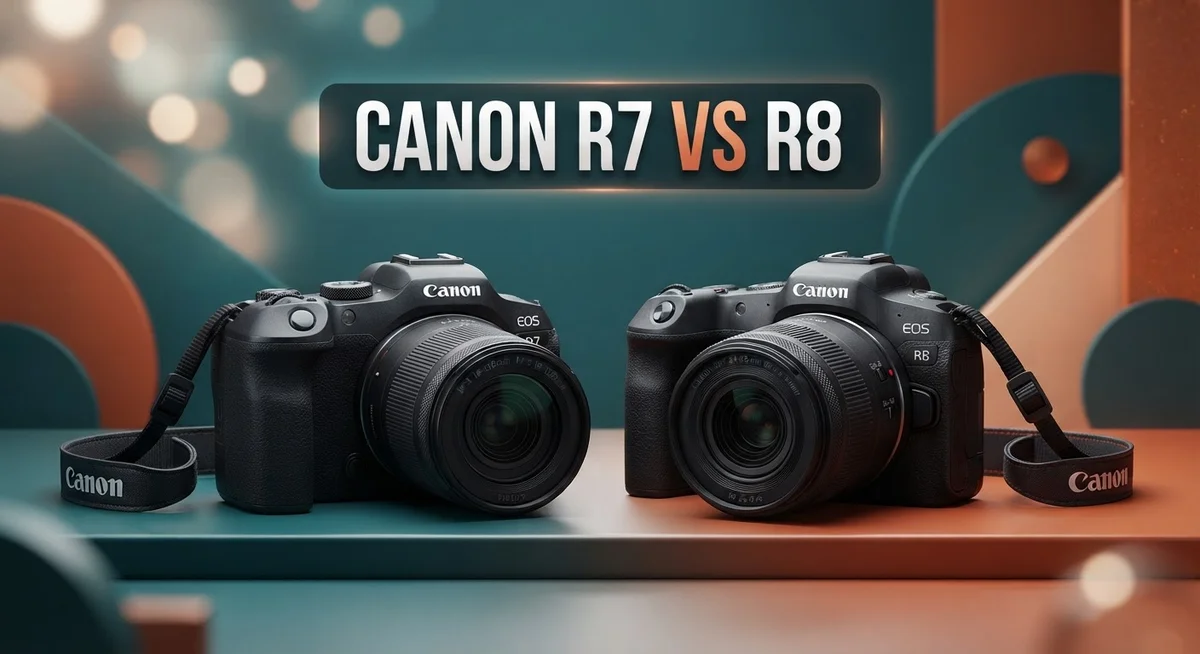
Picking a new camera can feel tricky. Canon gives you two great choices here. The R7 and R8 both pack exciting features.
But they serve different needs. The R7 uses an APS-C sensor. It targets sports and action shooters who want speed.
The R8 brings a full-frame sensor. It offers an entry point into full-frame photography for beginners and enthusiasts alike.
Which one fits your style? This guide breaks down every key difference. We compare sensors, resolution, video power, and handling.
You will see how the R7 stands out with dual card slots and strong ergonomics. You will also learn why the R8 shines in low light and video performance.
By the end, you will know exactly which camera matches your creative goals. Let’s explore what makes each one special.
In a Nutshell
The Canon R7 and R8 serve different types of photographers. Here is a quick snapshot of what each camera brings to the table.
- R7: Packs a 32.5MP APS-C sensor for sharp, detailed images. It also shoots 120fps slow motion for smooth action clips.
- R8: Uses a 24.2MP full-frame sensor. This larger sensor handles low light much better than APS-C models.
- Video power: The R8 shoots 4K at 60fps, oversampled from 6K footage. This gives cleaner, more detailed video results.
- Speed matters: The R8 also offers 180fps slow motion, beating the R7’s top frame rate.
- Storage risk: The R8 has only one SD card slot. This means no backup if a card fails mid shoot.
- Who wins: Choose the R7 for sports and wildlife work. Pick the R8 for portraits and low light shooting.
Both cameras shine in their own lane. Your shooting style should guide the final choice.
Sensor Size and Resolution
The sensor you choose fundamentally shapes how your images look and perform in different situations. Let’s dig into what makes these two cameras distinct at the sensor level.
The R7 packs a 32.5MP APS-C sensor, which means it captures more individual pixels. This higher resolution gives you extra detail when you crop images or print large formats. APS-C sensors are smaller than full-frame, so each pixel sits closer together on the chip.
The R8 uses a 24.2MP full-frame sensor. Even though it has fewer megapixels, the full-frame format means each pixel is physically larger. This difference matters a lot in low light situations.
Larger pixels gather more light. The R8’s full-frame advantage shines when you shoot in dim environments like indoor venues or during evening events. You get cleaner images with less noise at higher ISO settings. The R7 works well in bright daylight and controlled lighting, but it struggles more as light drops.
Resolution tells only part of the story. The R7’s 32.5MP sensor gives you more flexibility in post-production. You can crop tighter without losing quality. Sports and wildlife photographers love this because they often need to zoom in digitally on distant subjects.
The R8’s full-frame sensor delivers exceptional depth of field control. Backgrounds blur more smoothly with the same lens. Professional portrait photographers often prefer this look.
Dynamic range also differs between these sensors. The R8 captures a wider range from bright highlights to dark shadows in a single shot. This means less work recovering blown-out skies or crushed shadows later.
The R7 still performs admirably with dynamic range, but the full-frame sensor has a slight edge here too.
Think about your main shooting scenarios. Do you need maximum detail and resolution for cropping flexibility? The R7 wins. Do you prioritize low-light performance and that full-frame look? The R8 takes the lead.
Both sensors produce excellent image quality. Your choice depends on which strengths matter most to your photography style.

- High Image Quality: Canon EOS R7 4K digital camera features a 32.5-megapixel APS-C CMOS sensor...
- Advanced Autofocus: Dual Pixel CMOS AF technology with up to 651 AF zones; uses every pixel on the...

Last update on 2026-11-09 / Affiliate links / Images from Amazon Product Advertising API
Video Performance and Frame Rates
The R8 dominates when it comes to raw video speed. It captures slow motion at 180fps in HD, while the R7 maxes out at 120fps. This difference matters most when you freeze fast action like sports, wildlife, or racing scenes.
The R8 also shoots 4K at 60fps using oversampled 6K footage. This means Canon captures extra detail and then compresses it down. You get cleaner, sharper 4K video with less noise. The R7 can handle 4K, but without the same oversampling advantage.
Frame rate flexibility gives the R8 an edge for professional video work. Higher frame rates let you slow down footage dramatically in post production while keeping smooth playback. The R8’s 180fps opens creative doors that the R7 simply cannot match.
However, the R7 still delivers solid video performance for most creators. It shoots 120fps slow motion, which handles most action scenarios well. If you shoot documentaries, interviews, or casual content, the R7 keeps up fine.
One critical difference sits in storage. The R8 has a single SD card slot, while the R7 offers dual slots. This matters hugely during long video shoots. You cannot swap cards mid recording on the R8 without stopping. The R7 lets you keep filming while cards fill up. For continuous video work, this is a real advantage.
The full frame sensor in the R8 also helps with video quality in low light. Larger pixels pull in more light, so your footage stays clean even when you shoot indoors or at night. The R7’s APS-C sensor works well in daylight but struggles more in shadows.
Choose the R8 if you need maximum frame rates and professional slow motion capability. Pick the R7 if you value backup storage and consistent video performance across different lighting conditions. Both cameras produce beautiful video. Your shooting style determines which one fits better.
Storage and Reliability
The R7 and R8 take very different approaches to storing your footage and protecting your work. This difference matters more than many photographers realize.
The R7 gives you dual SD card slots. This means you can record simultaneously to two cards or use them sequentially. If one card fails, your backup card still holds your images. Professional photographers rely on this redundancy for critical shoots. You never lose everything when a single card malfunctions.
The R8 includes only one SD card slot. This is a significant trade off for an entry level full frame camera. You must choose between recording to one card or swapping cards between shots. There is no automatic backup happening in real time.
Reliability becomes critical when you’re shooting important events. The R7’s dual slot system reduces risk substantially. You can format one card while the other continues recording. This workflow keeps you shooting without interruption. The R8 forces you to pause, eject, and swap cards to maintain continuous shooting.
Card speed requirements differ between these cameras too. The R8’s 4K 60fps oversampled footage demands faster write speeds than the R7 can produce. You need UHS II cards for smooth R8 performance. The R7 works well with standard UHS II cards but doesn’t push them as hard.
Storage capacity planning shifts based on your shooting style. The R7’s higher resolution means larger file sizes per image. However, the R8’s advanced video features create massive video files quickly. Both cameras benefit from multiple high capacity cards rather than relying on one large card.
For backup security, the R7 simply wins. Two card slots eliminate the single point of failure that plagues the R8. Sports photographers, wedding shooters, and video professionals strongly prefer this redundancy.
If you shoot casually and don’t mind managing cards manually, the R8 works fine. But for serious work where data loss is unacceptable, the R7’s dual slot system provides genuine peace of mind. You protect your creative investment with hardware built specifically for reliability.
Top 3 Alternatives
Sony A6700

- SONY USA AUTHORIZED Includes Full SONY USA Warranty | Sony a6700 Mirrorless Alpha APS-C Camera...
- Consistently accurate exposure and color with new AE algorithm | Faster, more precise AF with...
Last update on 2026-11-09 / Affiliate links / Images from Amazon Product Advertising API
The Sony A6700 brings serious power to your photography. This camera features a 26-megapixel sensor that captures stunning detail in every shot. You get fast autofocus that locks onto subjects quickly, making it perfect for action and wildlife photography.
The A6700 shoots 4K video smoothly and handles low light situations well. Its compact size means you can carry it anywhere without feeling weighed down. The electronic viewfinder gives you a clear preview of your image before you press the shutter.
Nikon Z6 III

- Bundle Includes: Nikon Z6 III Mirrorless Camera with 24-120mm lens + Camera Bag + 128GB Memory Card
- 24.5MP PARTIALLY STACKED FULL FRAME SENSOR: The Nikon Z6 III features a newly developed 24.5MP...
Last update on 2026-11-09 / Affiliate links / Images from Amazon Product Advertising API
The Nikon Z6 III is a full-frame powerhouse designed for serious photographers. It offers 24.2 megapixels and exceptional performance in challenging lighting conditions. The autofocus system tracks moving subjects with impressive accuracy.
This camera excels at video work with advanced stabilization built in. The Z6 III feels comfortable in your hands during long shooting sessions. Nikon’s lens ecosystem gives you plenty of options to grow your kit over time.
Fujifilm X-T5

- Fujifilm X-T5 Mirrorless Digital Camera with XF 16-80mm f/4 R OIS WR Lens (USA Warranty)
- SanDisk 64GB Extreme PRO SDXC Memory Card, Vivitar SD Card Reader
Last update on 2026-11-09 / Affiliate links / Images from Amazon Product Advertising API
The Fujifilm X-T5 combines classic design with modern technology. This camera features a 40.2-megapixel sensor that produces incredibly sharp images. The film simulation modes let you achieve different looks straight out of the camera without heavy editing.
You’ll appreciate the intuitive controls and the satisfying mechanical feel of the dials. The X-T5 handles everyday photography and professional work equally well. Its compact body makes it ideal for travel and street photography. The battery life gets you through a full day of shooting.
Low-Light Performance and ISO Range
The R8’s full-frame sensor excels in low-light situations. Larger sensors collect more light from your scene, which means cleaner images when you shoot in dim conditions. This advantage matters most for events, wildlife, or night photography.
The R7 uses an APS-C sensor with smaller pixels. Smaller pixels struggle slightly in low light compared to full-frame designs. You’ll notice more noise at higher ISO values when shooting in darkness or indoors without flash.
ISO range tells you how sensitive each camera is to light. The R8 reaches higher native ISO levels than the R7. This means you can push sensitivity further on the R8 without compromising image quality. For professional work in challenging lighting, this flexibility matters.
The R7’s 32.5MP resolution creates a different challenge in low light. More megapixels mean each individual pixel captures less light. This compounds noise issues when you boost ISO. However, modern noise reduction software helps minimize this problem significantly.
The R8’s 24.2MP sensor strikes a better balance for low-light work. Fewer pixels mean each one gathers more light naturally. Combined with the full-frame design, this produces cleaner shadows and better detail retention in dark areas.
Noise performance becomes critical when you edit photos afterward. The R8 shows cleaner files at ISO 3200 and above. The R7 produces acceptable results but requires more aggressive noise reduction. This matters if you print large images or crop heavily.
For video in low light, the R8 gains another advantage. The full-frame sensor captures more light during recording. Video noise appears less obvious than in stills, but the R8 still performs better overall.
The R7 works fine for daytime shooting and well-lit indoor environments. Choose the R8 if you frequently shoot in challenging lighting conditions. Professional photographers, event shooters, and night workers should prioritize the R8’s superior low-light capability. The R7 remains an excellent choice for daylight work and controlled studio settings.
Ergonomics and Battery Life
The R7 and R8 take different approaches to how they feel in your hands and how long they keep working.
The R7 offers superior ergonomics for most shooters. Its grip feels more substantial and comfortable during extended shooting sessions. The button layout gives you quick access to key functions without stretching your fingers. If you shoot for hours at a time, the R7’s design reduces hand fatigue significantly.
The R8 has a more compact build. This makes it easier to carry around all day. However, some users with larger hands find the grip a bit snug. The smaller body trades comfort for portability.
Battery life strongly favors the R7. You get roughly 340 shots per charge with the R7. The R8 delivers around 270 shots per charge. This difference matters when you’re on location without access to power. The R7 lets you shoot longer between battery swaps.
Both cameras use the same battery type, so you can share spares if you own both. However, the R7’s efficiency means you need fewer backups during a typical shoot day.
The R8’s more compact size does have a tradeoff. Its smaller body houses a smaller battery capacity. Full frame sensors also demand more power than APS-C designs. These factors combine to reduce your shooting time per charge.
Consider your shooting style when weighing these factors. Studio photographers who work near power outlets care less about battery life. Travel photographers and sports shooters appreciate the R7’s extended runtime.
For ergonomics, test both cameras in person if possible. Hand comfort is personal. Some shooters prefer the R8’s lightweight design. Others want the R7’s more substantial feel.
The R7 wins clearly on battery life and general comfort during long sessions. The R8 appeals to photographers who value mobility over extended runtime. Think about where you shoot most often and how long you typically work between charges. This helps you decide which approach matches your needs better.
Pros and Cons
Pros
- R7: Higher 32.5MP resolution captures more detail for cropping and printing large formats
- R7: Dual SD card slots let you record to two cards simultaneously for extra security
- R8: Full-frame sensor delivers cleaner images in dim lighting and at high ISO values
- R8: Entry-level full-frame option opens professional-grade capabilities to new users
- R7: Superior battery life gives you roughly 340 shots per charge during long shooting days
Cons
- R7: APS-C sensor means smaller pixels struggle more in low-light situations compared to full-frame
- R8: Single SD card slot removes backup protection during important shoots
- R8: Lower 24.2MP resolution limits your ability to crop photos without losing quality
- R8: Smaller, more compact body may feel cramped if you have larger hands or prefer heavier cameras
Who Should Buy It
The R7 suits photographers who prioritize resolution and long shooting sessions. You get 32.5MP on an APS-C sensor, which means more detail for cropping and printing large formats. The dual SD card slots add peace of mind during important shoots.
If you shoot sports, wildlife, or fast-moving subjects, the R7 feels natural in your hands. Superior ergonomics and battery life make it ideal for full days in the field. You’ll appreciate having roughly 340 shots per charge without worrying about swapping batteries constantly.
The R8 appeals to shooters stepping into full-frame photography. You gain access to professional-grade capabilities without the learning curve of a complex system. The full-frame sensor delivers cleaner images in dim lighting and at high ISO values, which matters if you work in studios, indoors, or during evening events.
Video creators benefit from the R8’s advanced features. The 180fps slow-motion HD and 4K 60fps oversampled from 6K open creative possibilities. These tools work well for content creators, vloggers, and filmmakers who need modern video specs.
Choose the R7 if you value shooting comfort during extended sessions. Studio photographers working near power outlets won’t miss the R7’s battery advantage. However, if you move frequently or travel light, the R8’s compact build suits your style better.
The R7 works for daytime shooting and well-lit indoor environments without compromise. Upgrade to the R8 if low-light performance becomes essential to your work. Night photographers, event shooters, and indoor specialists should seriously consider full-frame capabilities.
Test both cameras in person if possible. Hold them, check the button placement, and feel the weight distribution. Your shooting habits matter more than specs alone.
The R7 remains the choice for detail seekers and action photographers. The R8 attracts those entering full-frame territory or prioritizing video features. Neither camera disappoints. Your specific needs determine which one earns a spot in your bag.
Final Verdict
Choosing between the Canon R7 and R8 comes down to your priorities. Both cameras excel in different areas, and neither is a bad choice.
Think about what you shoot most often. If speed and detail matter more to you, the R7 fits your needs. If cinematic video and low light performance matter more, the R8 fits better.
Wildlife and sports shooters should lean toward the R7. Its APS-C crop factor adds reach to your telephoto lenses. This gives you extra magnification without buying more glass.
Video creators and hybrid shooters should look closely at the R8. It records 4K at 60fps using 6K oversampling. This means sharper, more detailed footage than standard 4K capture.
The R8 also shoots slow motion at 180fps, compared to the R7’s 120fps. This makes the R8 a stronger pick for creative video work.
Think about your future plans too. The R8 opens doors to full-frame lenses and future full-frame bodies. The R7 keeps you within Canon’s APS-C ecosystem.
Neither path is wrong. Your creative goals should guide this decision, not just specs on paper.
Travel photographers might prefer the R8’s smaller size and full-frame flexibility. Event photographers who need backup security might value the R7’s dual card slots more.
Ultimately, ask yourself one question: Do you prioritize speed and durability, or low light quality and video features?
If the answer is speed and durability, choose the R7. If the answer is video quality and full-frame benefits, choose the R8.
Both cameras represent excellent choices within Canon’s mirrorless lineup. Your specific shooting style will point you toward the right one. Trust your instincts, and pick the camera that matches how you actually shoot.
Frequently Asked Questions
Which camera has better autofocus for fast action?
Both cameras deliver excellent autofocus performance. The R8 uses Canon’s latest autofocus algorithms with full-frame advantages in tracking speed. The R7 combines fast autofocus with its crop sensor’s effective magnification, which helps you frame distant subjects more easily. For sports and wildlife, the R7’s telephoto reach gives you a practical edge when tracking moving subjects across your frame.
Can I use the same lenses on both cameras?
No, they use different mounts. The R7 accepts RF mount lenses designed for APS-C sensors. The R8 uses the standard RF mount for full-frame cameras. You can adapt older Canon lenses to both, but native RF lenses perform best on their intended camera. If you already own full-frame RF lenses, the R8 works seamlessly with your collection.
Which camera is better for video work?
The R8 pulls ahead here significantly. It shoots 4K at 60fps oversampled from 6K capture, delivering exceptional detail and smooth motion. The R7 handles 4K 30fps well but lacks the R8’s advanced video specs. If video is your primary focus, the R8’s frame rates and resolution options matter more.
Does the R7 really have better battery life?
Yes, noticeably so. The R7 delivers around 340 shots per charge, while the R8 manages fewer shots due to its larger sensor and more powerful processor. On long shooting days without access to charging, the R7 keeps you working longer.
Which one should I buy?
Choose the R7 if you shoot action, wildlife, or need maximum resolution and battery endurance. Pick the R8 if you want full-frame image quality, advanced video features, and are entering professional-grade territory. Your shooting style matters most here.

Dillip is the founder and editor of Switch & Size, where he breaks down tech products, accessories, and gadgets to help readers make smarter buying decisions. With a passion for testing and comparing the latest technology, he delivers honest reviews, in-depth guides, and side-by-side comparisons that cut through the marketing noise.