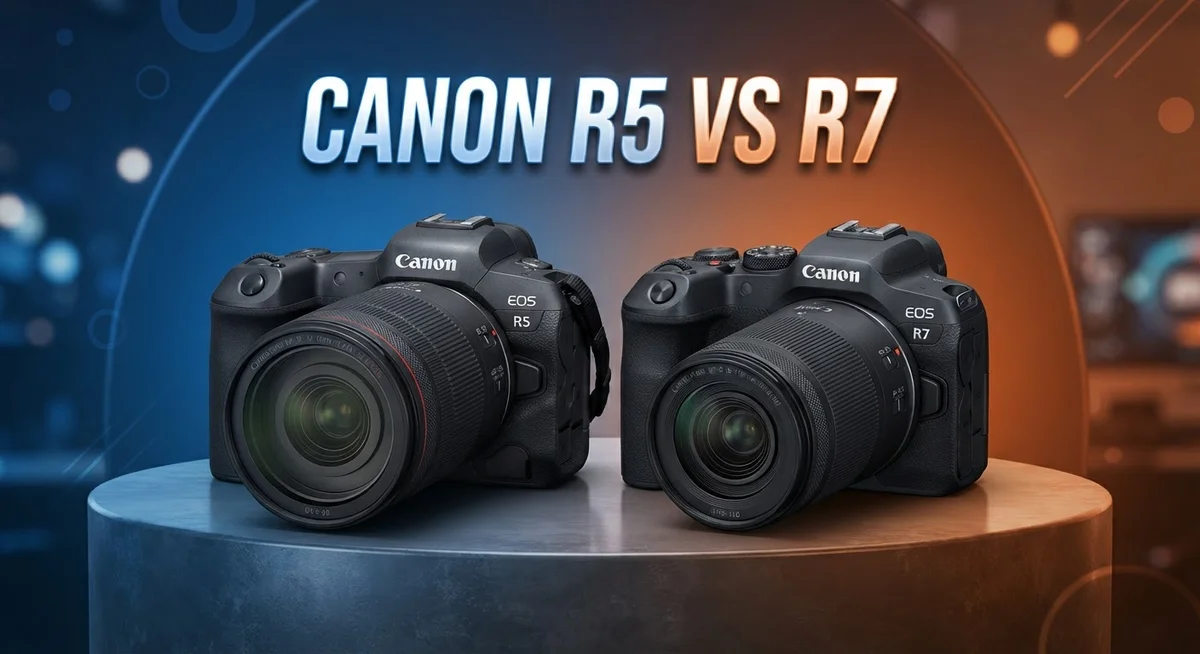
Canon R5 vs R7: Full-Frame vs APS-C Mirrorless Camera Comparison
Choosing between the Canon R5 and Canon R7 can feel tricky. Both cameras pack serious power. But they serve different photographers.
The R5 brings a full frame sensor with 45MP resolution. It shines in low light. It also gives you creamy background blur for portraits.
The R7 uses a crop sensor with 32MP. This gives your telephoto lenses extra reach. Wildlife and bird photographers love this trait.
Both cameras shoot fast. Each hits 30 fps burst speed for action shots. Autofocus performance stays sharp on both bodies.
So which camera fits your style? If you shoot everyday scenes or professional work, the R5 stands out. If birding or wildlife excites you, the R7 becomes your best friend.
Let’s break down every detail. We will compare specs, strengths, and weaknesses side by side.
In a Nutshell
Here’s a quick summary to help you decide fast.
-
Low light performance favors the R5. It handles noise better and gives you smoother results in dark settings.
-
The R7 offers extended telephoto reach thanks to its crop factor. This makes it a favorite for birding and wildlife shooters.
-
Want a lighter setup? The R7 is compact and easy to carry on long shoots.
-
The R5 gives you superior depth of field control. This helps you create that creamy background blur.
-
Autofocus lock feels snappier on the R7, which is great for fast moving subjects.
-
Above ISO 8,000, the R7’s images can look a bit muddy. The R5 stays cleaner at higher ISOs.
-
Thinking about upgrades? The Canon R5 Mark II and Canon R6 Mark II are worth checking too.
Both cameras shine in different situations. Pick the R7 for wildlife trips. Choose the R5 for everyday shots and professional work.
Sensor and Resolution
The sensor sits at the heart of any camera decision. Let’s explore what makes these two cameras different.
Full frame versus crop sensor is the biggest distinction here. The R5 uses a full frame sensor that captures light across a larger surface area. The R7 uses an APS-C crop sensor, which is physically smaller. This difference affects everything from image quality to reach.
The R5 delivers 45 megapixels on its full frame sensor. The R7 offers 32 megapixels on its crop sensor. More pixels sound better, but sensor size matters more than you might think. The R5’s larger sensor collects more light in each pixel, which means cleaner images when you shoot in dim conditions.
Noise performance strongly favors the R5. When you push the ISO higher, the R5 stays clean and sharp. The R7 struggles above ISO 8,000 to 10,000, where images start to look muddy and lose detail. If you work indoors or during sunset, the R5 gives you more flexibility.
The crop sensor on the R7 creates an interesting advantage for telephoto shooting. That crop factor acts like a built in magnifier. A 100mm lens on the R7 feels like 160mm on the R7 due to the crop. Wildlife and bird photographers love this extended reach without buying expensive long lenses.
Depth of field control tips toward the R5. Full frame sensors let you blur backgrounds more easily. You get that creamy, professional look with wider apertures. The R7 can achieve this too, but you need to work a bit harder.
Both cameras pack impressive autofocus systems. The R7’s autofocus locks onto moving subjects slightly faster, thanks to its crop sensor and processing power. The R5 offers more advanced AF features overall, including better subject tracking for professional work.
The sensor choice ultimately depends on your shooting style. Choose the R5 if you want the cleanest possible images and professional depth of field. Pick the R7 if you need telephoto reach and a lightweight setup for extended shooting sessions.

- High Image Quality: Canon EOS R7 4K digital camera features a 32.5-megapixel APS-C CMOS sensor...
- Advanced Autofocus: Dual Pixel CMOS AF technology with up to 651 AF zones; uses every pixel on the...

Last update on 2026-11-08 / Affiliate links / Images from Amazon Product Advertising API
Autofocus and Shooting Performance
Both cameras deliver 30 frames per second in burst mode, so speed is equal here. The real difference shows up in how each camera locks focus and tracks moving subjects.
The R5 uses Canon’s advanced autofocus system with more AF points spread across the full frame. This setup excels when you shoot varied subjects at different distances. You get precise focus control across the entire image, which matters for studio work, portraits, and general photography.
The R7 features a joystick control on the back, making it faster to shift focus points while shooting. This feels snappier for fast action. The crop sensor concentrates autofocus capability in a smaller area, which can mean quicker lock times on moving subjects. Wildlife and birding photographers often prefer this setup because the camera responds instantly to subject movement.
For continuous autofocus tracking, the R5 handles complex scenes better. Its full frame sensor captures more context, so the camera understands depth and distance more accurately. The R7 tracks well too, but the smaller sensor means less information for the autofocus system to process.
Shooting in low light reveals another gap. The R5 maintains focus accuracy even when light drops. The R7 struggles slightly in dim conditions because the crop sensor receives less light information. You might notice focus hunting or hesitation when shooting indoors or at dusk.
The articulating touchscreen on the R7 adds flexibility for autofocus. You can tap the screen to set focus points from unusual angles, which helps for creative compositions. The R5 uses a fixed screen, so you’re limited to back button focus or the traditional AF area selection.
Subject detection works on both cameras. Each can identify eyes, animals, and vehicles automatically. The R5 performs better with multiple subjects because it has more processing power and sensor area to analyze.
For professional video work, the R5 autofocus feels smoother and more predictable. The R7 works fine for video but can feel more aggressive with focus breathing. Choose the R5 if you need consistent autofocus across varied conditions. Pick the R7 if you want responsive, snappy focus for wildlife and fast action.
Image Quality and Low-Light Performance
The sensor difference between these two cameras shapes everything about image quality. The R5 uses a full-frame sensor while the R7 employs an APS-C crop sensor. This distinction matters most when you shoot in dim conditions or need clean images at high ISO settings.
At high ISO values, the R5 pulls ahead significantly. Its larger sensor collects more light, which means less electronic amplification and fewer visible grain patterns. The R7 starts to show noise issues above ISO 8,000 to 10,000, where images can appear muddy and lose fine detail. The R5 remains cleaner well beyond those thresholds, giving you more flexibility when you cannot use a tripod or need faster shutter speeds.
The R5 delivers 45 megapixels on its full frame sensor, while the R7 offers 32 megapixels. Higher resolution helps you crop images in post-production without losing quality. This matters if you shoot events, portraits, or any work where you might need to reframe shots later.
Depth of field control favors the R5 as well. Full frame sensors produce that creamy background blur more easily than crop sensors. If you want smooth bokeh for portraits or want to isolate subjects from busy backgrounds, the R5 gives you more options with the same lens.
The R7 does have one image quality advantage worth mentioning. Its crop factor gives you extended reach with telephoto lenses. A 100mm lens on the R7 behaves like a 160mm lens on the R5. For wildlife photographers and birders, this means you can fill the frame with distant subjects more easily without buying expensive long lenses.
In low-light video work, the R5 also outperforms the R7. Its larger sensor and advanced processing keep footage cleaner when you shoot in restaurants, venues, or outdoor evening events.
Your choice depends on your primary subjects. Everyday photography, portraits, and professional work benefit from the R5’s superior image quality. Wildlife and sports photography gain practical advantages from the R7’s telephoto reach.
Top 3 Alternatives
Sony A7R V

- This Digital Camera Bundle Includes: Sony a7R V Mirrorless Camera (Body Only) USA Model With Limited...
- Featuring a back-illuminated design, this full-frame 61MP Exmor R CMOS sensor offers a mixture of...
Last update on 2026-11-08 / Affiliate links / Images from Amazon Product Advertising API
The Sony A7R V offers exceptional resolution with its 61-megapixel sensor. This camera excels at capturing fine details in landscapes and studio work. The autofocus system performs reliably across various lighting conditions.
Sony’s color science produces natural skin tones straight from the camera. The build quality feels premium and weather-sealed for outdoor adventures. Battery life is decent for a full-frame mirrorless option.
Nikon Z9

- 45.7MP Stacked CMOS sensor and EXPEED 7 image processing. Fast powerful AF that can keep up with the...
- Subject detection uses deep learning to automatically detect and track people, cats, dogs, birds...
Last update on 2026-11-08 / Affiliate links / Images from Amazon Product Advertising API
The Nikon Z9 brings professional-grade performance to demanding photographers. Its 45.7-megapixel sensor balances resolution with speed effectively. The autofocus system tracks subjects with impressive accuracy.
This camera handles fast continuous shooting without breaking a sweat. The ergonomic design fits comfortably in your hands during long sessions. Nikon’s lens ecosystem provides excellent variety for different shooting styles.
Canon EOS R6

- FULL-FRAME HYBRID PERFORMANCE - Canon EOS R6 Mark II features a 24.2MP full-frame CMOS sensor, DIGIC...
- RF 50MM F1.8 STM PRIME LENS - Added Canon RF 50mm f/1.8 STM lens delivers a bright f/1.8 aperture...
Last update on 2026-11-08 / Affiliate links / Images from Amazon Product Advertising API
The Canon EOS R6 delivers versatile performance for hybrid shooters. Its 20-megapixel sensor captures excellent detail while keeping file sizes manageable. The autofocus system responds quickly to moving subjects.
Canon’s color rendering produces pleasing results for both photos and video. The camera body feels solid and reliable in professional settings. The lens lineup offers plenty of options for various creative needs.
Each camera serves different photographer needs. The Sony excels at high-resolution work. The Nikon prioritizes speed and tracking. The Canon balances features for mixed photography and video projects. Your choice depends on your specific shooting requirements and workflow preferences.
Ergonomics and Handling
The way you hold and operate a camera matters more than most people realize. Both the R5 and R7 feel different in your hands, and that difference shapes your shooting experience.
The R5 is larger and heavier because of its full-frame body. Your fingers wrap around a bigger grip, which many photographers find comfortable during long shoots. The button layout spreads across more space, so your thumb and fingers have room to work without fumbling. If you have larger hands, this extra size feels natural.
The R7 keeps things compact and lightweight. This camera sits nicely in smaller hands and fits easily into camera bags. Traveling photographers appreciate how the R7 doesn’t add much weight to their kit. You can shoot for hours without arm fatigue, which matters during wildlife outings or events.
Here’s where things get interesting for actual operation. The R7’s joystick control on the back lets you shift focus points quickly while looking through the viewfinder. Your thumb moves the joystick left, right, up, or down to select your focus area. This feels faster than using the R5’s control ring, especially when action happens fast.
The R7’s articulating touchscreen adds another advantage. You can flip the screen out and shoot from unusual angles. Overhead shots, low-angle compositions, and creative framing become easier. The R5 has a fixed screen, so you’re limited to eye-level or chest-level shooting.
Both cameras offer solid button customization. You can program shortcuts to match your shooting style. The R5 gives you more real estate for these buttons, while the R7 concentrates them efficiently.
Ergonomics favor the R7 for quick focus adjustments and flexible screen angles. The joystick and touchscreen make it faster to reposition your focus point during fast-paced shooting. The R5 wins for comfort during extended sessions, especially if you prefer a bigger grip and more button spacing. Your hand size and shooting style should guide this choice.
Telephoto Reach and Versatility
When you shoot wildlife or birds, telephoto reach becomes your most important tool. The R7 wins here because its APS-C crop sensor gives you an effective 1.6x magnification boost on any lens you attach. A 100mm lens on the R7 acts like a 160mm lens on the R5. This crop factor means you get closer to distant subjects without buying longer, heavier glass.
The R5 takes a different approach. Its full-frame sensor captures a wider field of view, so you see more of the scene. This works great for landscapes, events, and general photography. When you need telephoto reach on the R5, you must invest in longer, more expensive lenses to match what the R7 delivers naturally.
For birding specifically, the R7 becomes the obvious choice. Your existing telephoto lenses suddenly feel more powerful. A 200mm lens becomes 320mm effective. This extended reach lets you shoot smaller birds from greater distances without disturbing them.
The R5 shines in versatility for different shooting styles. Professional photographers who shoot weddings, portraits, and commercial work appreciate the full-frame flexibility. You get better depth-of-field control and wider angle coverage without lens limitations.
Consider your lens collection too. If you already own telephoto lenses, the R7 maximizes their potential immediately. You don’t need to buy new glass right away. The R5 requires you to think about your full-frame lens strategy from the start.
Autofocus performance adds another layer here. The R7’s joystick control makes it faster to track moving wildlife subjects across the frame. The R5’s advanced AF system works smoothly, but the R7’s ergonomic advantage matters when you’re tracking fast-moving birds in flight.
Your shooting subjects determine which camera serves you better. Wildlife photographers and birders should lean toward the R7. General professionals and content creators benefit more from the R5’s full-frame versatility. Both cameras deliver excellent results, but telephoto reach and shooting style should guide your decision.
Pros and Cons
Pros
- R5 delivers superior low-light performance with less noise and grain at high ISO
- R5 gives you better depth-of-field control for professional portrait and studio work
- R7 provides extended telephoto reach thanks to its crop sensor, perfect for wildlife and birding
- R7 weighs less and stays compact, making it easier to carry all day
- R7 features a joystick and articulating touchscreen for faster autofocus adjustments
Cons
- R5 requires expensive full-frame lenses to unlock its potential
- R7 struggles with image quality above ISO 8,000 to 10,000, producing muddy results
- R7 offers only 32 megapixels versus the R5’s 45 megapixels, limiting crop flexibility in post-production
- R5 loses telephoto reach compared to the R7’s crop factor advantage
Who Should Buy It
Professional photographers who demand superior image quality in all lighting conditions should pick the R5. You get 45 megapixels of resolution and excellent low-light performance. This sensor excels when you work in studios, during golden hour shoots, or at indoor events. The full-frame advantage means cleaner files at high ISO settings.
Portrait and fashion photographers benefit most from the R5’s capabilities. Depth-of-field control separates your subjects from backgrounds more effectively. You can use wider apertures and still maintain sharpness exactly where you want it. The larger sensor gives you more creative freedom.
Video creators should consider the R5 if you shoot indoors or during evening sessions. The sensor handles low-light video work without excessive noise or color shifts. Your footage stays clean and professional looking.
Travel photographers face a real choice here. Do you value resolution and image quality or portability? The R5 demands more from your camera bag. The R7 lets you pack lighter while still capturing excellent images during daylight hours.
Content creators who focus on YouTube, Instagram, or social media can thrive with either camera. Both shoot 4K video smoothly. Both have solid autofocus for vlogging. The R7’s articulating screen gives you more flexibility for self-recording and low-angle shots.
Hobbyists and enthusiasts should think about your current lens collection. If you already own Canon RF lenses, either camera works well. If you’re starting fresh, the R7 keeps your overall investment lower since you need fewer expensive full-frame lenses.
Hybrid shooters who mix stills and video should lean toward the R5. Professional-grade performance across both disciplines matters more than crop sensor advantages. You get consistency in color science and autofocus behavior.
Wildlife photographers and serious birders should choose the R7 instead. The crop sensor gives you extra telephoto reach without buying longer, heavier lenses. That advantage outweighs the resolution difference for your specific work.
Real estate and architectural photographers prefer the R5. The resolution lets you crop images after shooting. Full-frame geometry handles wide-angle lenses better for interior spaces.
Your shooting style ultimately determines the right choice. Ask yourself what matters most: image quality, portability, telephoto reach, or versatility.
Final Verdict
Choosing between these two cameras comes down to your main goal. Both models pack serious power. But each one serves a different photographer.
The Canon R5 stands out as the stronger all round performer. It handles low light with ease. It gives you crisp detail and smooth tones in almost any setting.
If you shoot portraits, weddings, or studio work, the R5 fits your needs. It also supports hybrid shooters who move between photos and video often.
The Canon R7 shines in a different way. It rewards photographers who chase fast action outdoors. Birders and wildlife shooters get real benefits from its reach and speed.
Think about where you shoot most. If you spend hours in forests or fields tracking animals, the R7 becomes your natural pick. Its size and reach make long days easier.
If you work indoors, in studios, or under mixed lighting, the R5 gives you more control. You get better results when light gets tricky.
Neither camera is a wrong choice. Each one excels in its own space. The R7 pushes you toward specialized action work. The R5 pushes you toward broad, all purpose excellence.
Your lens collection also matters here. If you already own RF lenses built for full frame use, the R5 makes more sense. If you plan to build a system around telephoto glass, the R7 pairs well with that plan.
Some photographers even choose to own both. The R5 handles studio and travel work. The R7 takes over during wildlife trips.
In the end, ask yourself one simple question. Do you need top image quality across many situations, or do you need speed and reach for a specific niche?
Your answer points you straight to the right camera. Trust your shooting style, not just the spec sheet. That choice will serve you far better over time.
Frequently Asked Questions
Does the R5 really perform better in low light than the R7?
Yes, the R5 has a real advantage here. Its full-frame sensor captures more light and produces cleaner images when you shoot in dim conditions. The R7’s smaller APS-C sensor struggles above ISO 8,000 to 10,000, where results become muddy and noisy.
If you shoot indoors, during evening sessions, or in studios with mixed lighting, the R5 gives you cleaner files and more flexibility in post-production.
Which camera has better autofocus?
Both cameras focus quickly, but they excel in different ways. The R7 locks focus faster on moving subjects outdoors. It also includes a joystick and articulating touchscreen, which make autofocus adjustments quicker during fast-paced shooting.
The R5 offers advanced AF systems that work well for stationary subjects and controlled environments. For action and wildlife, the R7 has the edge.
Can I use the same lenses on both cameras?
Not really. The R5 uses full-frame RF lenses, while the R7 uses APS-C RF lenses. Full-frame lenses work on the R7, but you lose the benefit of the R5’s larger sensor.
If you already own RF lenses built for full-frame use, the R5 makes more sense. Starting fresh with either system? Consider which lenses match your shooting style.
Why would a wildlife photographer choose the R7 over the R5?
The R7’s crop sensor acts like a built-in magnifier. A 100mm lens on the R7 behaves like 160mm on the R5. This extended reach helps you photograph distant birds and animals without buying expensive telephoto lenses.
The R7 also stays compact and lightweight, so you can carry it all day without fatigue.

Dillip is the founder and editor of Switch & Size, where he breaks down tech products, accessories, and gadgets to help readers make smarter buying decisions. With a passion for testing and comparing the latest technology, he delivers honest reviews, in-depth guides, and side-by-side comparisons that cut through the marketing noise.