Canon R10 vs R50: Complete Mirrorless Camera Comparison Guide
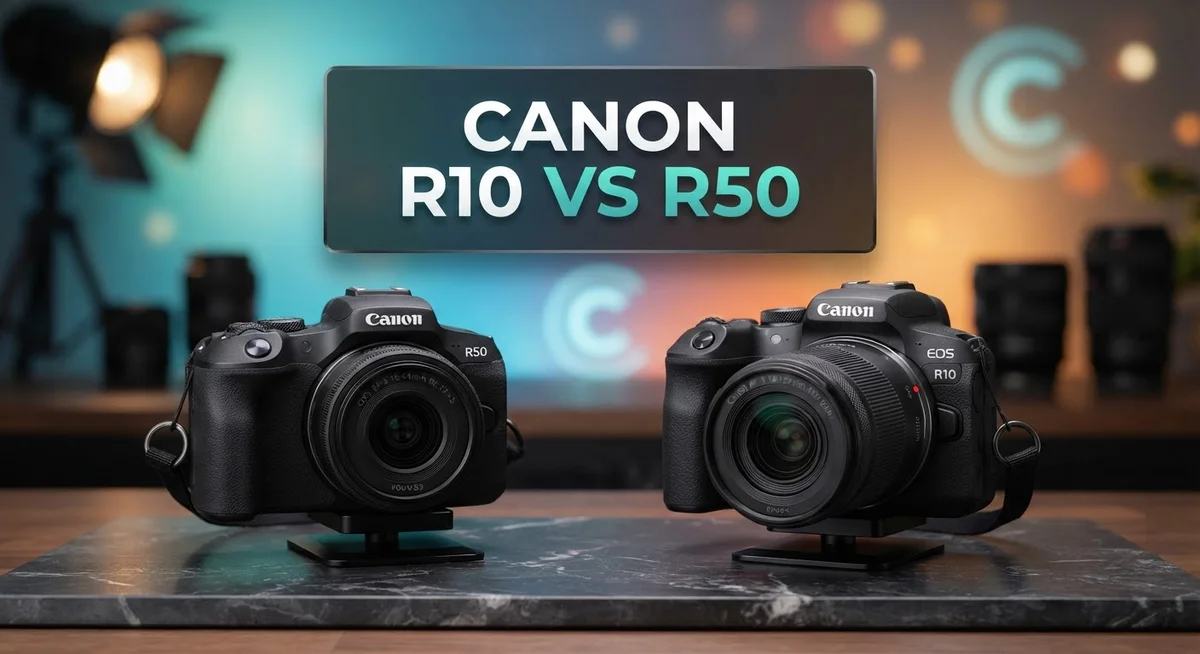
Picking a camera can feel tricky. Canon R10 and Canon R50 both grab attention for good reasons.
These two APS-C mirrorless cameras share the same image quality. They also match in video performance and autofocus smarts.
But they differ in key ways that matter for your shooting style. The R10 brings faster burst speeds and physical dials for hands on control.
The R50 stays light and compact. It fits easily in a bag and suits simple, grab and go shooting.
So which one fits your needs? This guide breaks down specs, pros, and cons for both cameras.
You will see how they compare to rivals like the Sony A6400 and Nikon Z50 II. By the end, you will know exactly which Canon camera matches your photography goals.
In a Nutshell
-
Sensor and image quality stay identical on both cameras. You get the same clean photos and sharp video no matter which one you pick.
-
The R10 wins on speed. It shoots up to 23fps, making it a strong pick for fast action or wildlife shots.
-
The R50 stays light at just 375g. It slips into a small bag and feels less bulky during long days out.
-
Physical controls set these two apart. The R10 gives you more dials and buttons to adjust settings fast. The R50 keeps things simple with fewer manual controls.
-
Video shooters should note the R10 records 4K at 60fps, though with a crop. This gives sharper detail for creators who edit footage often.
-
Think about your shooting habits. Pick the R10 for speed and control. Choose the R50 for ease and portability. Both remain solid choices against rivals like the Canon R7 or Sony ZV-E10.
Sensor and Image Quality
Both cameras pack the same APS-C sensor, so you get identical image quality from either one. They produce sharp photos with excellent color accuracy and dynamic range. The sensor size means you capture more light than smaller cameras, which helps in low light situations.
Raw files from both cameras are identical in quality. Your editing options remain the same whether you shoot the R10 or R50. Noise performance stays consistent across both models at higher ISOs.
The real difference shows up in how you capture images, not the final quality. The R10 shoots at 23 frames per second for continuous shooting. This matters if you photograph sports, wildlife, or fast action. The R50 manages 15 frames per second, which still handles most situations well.
For video, the R10 offers 4K recording at 60fps with a crop applied. The R50 can record 4K, but at slower frame rates. If you need smooth slow motion or fast action video, the R10 gives you more options. Both cameras deliver excellent video quality with accurate autofocus during recording.
Color science remains the same on both bodies. You’ll notice no difference in skin tones, whites, or overall color rendering. The image processors work identically, so your JPEG outputs look the same.
ISO performance is virtually identical between these two. You can push both cameras to high sensitivities without visible quality loss. Dynamic range captures shadows and highlights equally well on each model.
The sensor resolution stays the same at 24.2 megapixels. This gives you enough detail for large prints and cropping flexibility. Neither camera feels limited for resolution.
Bottom line: Sensor and image quality are a tie. Both cameras produce beautiful photos and videos. Your choice comes down to speed and portability instead. If you need fast burst shooting for action, pick the R10. If you want a lighter camera that still delivers great images, the R50 makes sense. Image quality won’t be your deciding factor here.

- Includes Versatile 18–45mm Lens: Covering wide to standard focal lengths, this compact zoom lens...
- Oversampled 4K with Dual Pixel AF: Enjoy sharp, smooth footage with reliable subject tracking...
Last update on 2026-11-08 / Affiliate links / Images from Amazon Product Advertising API
Autofocus and Video Performance
Autofocus performance stays identical on both cameras. Both the R10 and R50 use Canon’s Dual Pixel CMOS AF system. You get the same autofocus speed, accuracy, and subject tracking on either body.
The real difference appears in continuous shooting speed. The R10 fires at 23 frames per second during burst mode. The R50 maxes out at 15 frames per second. If you shoot fast action or sports, the R10 gives you more shots in a shorter time window.
For video work, the R10 pulls ahead with more frame rate options. It records 4K video at 60fps, though the image gets cropped. The R50 handles 4K at 30fps without a crop. This matters if you want smooth slow motion or fast paced footage. Both cameras shoot Full HD at up to 120fps for dramatic slow motion effects.
Video autofocus works the same on both models. You get smooth, continuous focus tracking during recording. The Dual Pixel system keeps subjects sharp as they move across the frame. Neither camera struggles with focus hunting or hunting delays during video capture.
Buffer capacity differs slightly between these two. The R10 maintains its 23fps speed longer before the buffer fills. The R50 fills up faster at 15fps. This means the R10 lets you keep shooting longer in burst mode before the camera pauses.
For video creators, the R10 offers more flexibility. You can shoot 4K at higher frame rates for professional looking footage. You get better options for color grading and slow motion work. The R50 still produces excellent video quality. It just gives you fewer frame rate choices.
For photographers, burst speed matters most. The R10’s faster continuous shooting helps with wildlife, sports, and unpredictable moments. The R50 still captures plenty of frames at 15fps. Most casual photographers find this speed more than adequate for their needs.
Both cameras deliver sharp autofocus and smooth video. Your choice depends on whether you need the R10’s extra speed or the R50’s simplicity.
Design, Ergonomics, and Portability
The R10 and R50 take very different approaches to how a camera feels in your hands. The R50 is genuinely compact. It weighs just 375 grams and measures 68.8mm deep. You can slip it into a small bag without thinking twice. The R10 is noticeably larger and heavier. If you carry your camera all day, this difference adds up fast.
Button placement tells you a lot about each camera’s purpose. The R10 has more physical controls scattered across the body. You get dedicated dials and buttons for common settings. This means less menu diving during a shoot. The R50 simplifies things. It relies more on touchscreen controls and menus. Beginners find this less overwhelming. Experienced shooters often prefer the R10’s layout.
Grip comfort differs between them too. The R10’s larger body gives your hand more to hold onto. People with bigger hands usually prefer this feel. The R50’s smaller grip takes some getting used to. Your pinky might hang off the bottom. That said, many photographers adapt quickly to compact designs.
The R50 wins for travel and casual shooting. Throw it in a backpack with a lens or two. You won’t feel weighed down. The R10 suits photographers who want a more traditional mirrorless experience. Its heft and control layout feel familiar if you’ve used larger cameras before.
Weather sealing matters here too. The R10 offers better protection against dust and moisture. If you shoot outdoors in tough conditions, this protection is valuable. The R50 has basic sealing. It handles light rain okay but isn’t built for harsh environments.
Your shooting style should guide this choice. Hikers and travel photographers gravitate toward the R50. Studio shooters and those who value physical controls pick the R10. Both cameras mount the same RF lenses. Both use the same batteries and memory cards. The ergonomic difference is real, but not a dealbreaker either way. Test both if you can. Hold them. Feel the buttons. Your comfort matters more than specs.
Top 3 Alternatives
Sony A6700

- 26.0MP APS-C format Exmor R back-illuminated CMOS sensor
- BIONZ XR processing power for exceptional image quality

Last update on 2026-11-08 / Affiliate links / Images from Amazon Product Advertising API
The Sony A6700 brings fast autofocus performance to your creative projects. This camera excels at tracking moving subjects with its advanced eye-tracking system. You get a 26MP sensor that captures sharp details in various lighting conditions.
The electronic viewfinder refreshes quickly, so you see your shot in real-time. Video recording reaches 4K quality at high frame rates, making it suitable for content creators. The compact body fits comfortably in your hands during extended shooting sessions.
Nikon Z50 II

- Go Beyond Your Phone: Capture lifelike colors and incredible details from dawn to dusk thanks to a...
- Find Your Aesthetic: At the press of the Picture Control button, choose from 31 built-in presets...
Last update on 2026-11-08 / Affiliate links / Images from Amazon Product Advertising API
Nikon’s Z50 II offers excellent image quality with its 20.9MP sensor. The camera features a compact Z-mount design that keeps your overall setup lightweight. You’ll appreciate the intuitive menu system that new users find easy to navigate.
Battery life performs well during full days of shooting. The camera connects wirelessly to your smartphone for quick image transfer. Video capabilities include 4K recording with solid stabilization features built in.
Fujifilm X-S20

- FUJIFILM X-S20 Mirrorless Camera with XC 15-45mm f/3.5-5.6 OIS PZ Lens (USA Warranty) 16781943
- SanDisk 128GB SDXC Extreme PRO Memory Card, Vivitar Memory Card Wallet, SD Card Reader
Last update on 2026-10-12 / Affiliate links / Images from Amazon Product Advertising API
Fujifilm’s X-S20 stands out with its unique film simulation modes. These presets give your photos distinctive looks straight from the camera, reducing editing time. The 26MP X-Trans sensor delivers excellent color reproduction and fine detail.
The retro design appeals to photographers who value aesthetics alongside function. Autofocus performance handles both stills and video smoothly. You get solid battery endurance and a helpful articulating screen for creative angles.
Each option provides different strengths. Sony emphasizes autofocus speed and tracking. Nikon focuses on reliability and battery efficiency. Fujifilm prioritizes color science and creative presets. Your choice depends on which features matter most to your photography style.
Burst Shooting and Continuous Performance
The burst shooting capabilities show a clear difference between these two cameras. The R10 captures at 23 frames per second, while the R50 shoots at 15 frames per second. This gap matters most when you photograph fast action like sports, wildlife, or unpredictable moments.
The R10’s faster burst rate lets you grab more shots in a single second. You get better odds of catching the perfect expression or peak action. The R50’s 15fps still handles most everyday situations well, but it gives you fewer chances to nail split second moments.
Buffer capacity also differs between them. The R10 holds more frames in its buffer before the camera slows down. This means you can shoot longer bursts without waiting for the camera to catch up. The R50’s buffer fills faster, forcing you to pause between sequences.
For continuous performance, the R10 performs better during extended shooting sessions. If you shoot bursts repeatedly over an hour, the R10 maintains speed longer. The R50 works fine for occasional bursts, but sustained high speed shooting can slow it down.
Think about what you actually shoot. Sports photographers and wildlife shooters should lean toward the R10. Event photographers who need fast bursts will also appreciate the extra frames per second. The R50 works great for portraits, landscapes, and general photography where you’re not chasing fast action.
Real world shooting shows the difference most clearly. Take 50 shots of a running child with each camera. The R10 gives you more keepers because it captures more moments. The R50 still gets good shots, but fewer options to choose from.
The R10 is built for photographers who demand speed and reliability. The R50 suits those who shoot bursts occasionally and value simplicity. Your shooting habits should drive this choice. Ask yourself how often you need continuous shooting power. If bursts happen daily in your work, the R10 wins. If bursts happen weekly or less, the R50 handles your needs just fine.
User Experience and Learning Curve
The learning curve for each camera depends on your experience level and shooting habits. Both cameras share Canon’s menu system, so switching between them feels familiar.
The R50 wins for absolute beginners. Its compact size means fewer buttons to overwhelm you. The simplified control layout lets you focus on learning exposure and composition without fighting the camera. New photographers appreciate the straightforward interface. You can pick it up and start shooting within minutes.
The R10 requires a bit more patience to master. It has more physical controls scattered across the body. Intermediate users find this helpful because frequently used settings sit within reach. Beginners might feel confused by the extra buttons at first. However, once you understand the layout, you gain faster access to important functions.
Menu navigation stays nearly identical on both models. Canon uses the same logical structure across their lineup. If you learn one, you instantly understand the other. This means upgrading from R50 to R10 later won’t feel like learning a new system.
Autofocus operation feels the same on both cameras. Both use the same eye detection and tracking technology. You get identical real time tracking performance. The learning process for focus modes takes the same time regardless of which body you choose.
Video operation differs slightly between them. The R10 offers more frame rate options, which adds complexity. The R50 keeps video settings simpler for entry level creators. If you plan to shoot video, the R10 demands more understanding of frame rates and codecs.
Physical ergonomics affect how quickly you adapt. The R10’s larger grip feels more natural for people with bigger hands. The R50’s smaller frame suits those with smaller hands better. Comfort during extended shooting sessions matters because you’ll practice more if the camera feels good.
Button customization helps both cameras. You can reassign functions to match your workflow. This flexibility means either camera can adapt to your learning style. The R50 gives you fewer buttons to customize, keeping things simple. The R10 offers more customization options for users who want control.
Your previous camera experience matters most. Former DSLR users adapt faster to the R10’s layout. Smartphone photographers find the R50 more intuitive. Neither camera has a steep learning curve compared to professional equipment.
Pros and Cons
Pros
- R10: 23fps burst shooting captures fast action and gives you more frames to choose from
- R10: Physical controls feel solid and responsive for intermediate photographers
- R50: Weighs only 375g and measures 68.8mm deep, making it genuinely portable
- R50: Simple menu structure and fewer features mean less to learn as a beginner
- Both: Identical autofocus performance and image quality despite the size difference
Cons
- R10: Larger body and heavier weight make it less convenient for travel and daily carry
- R50: 15fps burst speed limits your options when shooting fast moving subjects
- R50: Fewer advanced features mean you’ll outgrow it faster as your skills improve
- R10: More complex control layout requires time to master compared to entry level cameras
Who Should Buy It
The R10 suits photographers who shoot sports, wildlife, or fast action sequences. You need this camera if you chase moving subjects regularly. The 23fps burst rate means you capture more frames per second. This matters when timing is everything.
Choose the R10 if you want physical control over your settings. The larger body gives you more buttons and dials to work with. You can adjust exposure, ISO, or focus modes without diving into menus. Intermediate photographers appreciate this hands-on approach.
The R10 works well if you plan to grow your skills over time. Advanced shooting modes and customization options keep you engaged as you improve. You won’t feel limited by the camera’s capabilities next year.
The R50 is perfect for travelers and casual photographers. You slip it into a backpack without thinking twice. At 375 grams, it weighs less than a water bottle. The compact 68.8mm depth fits easily into small bags.
Pick the R50 if you’re just starting your photography journey. The simpler menu system means fewer options to confuse you. You focus on learning composition and light instead of wrestling with settings. Beginners progress faster when the camera stays out of the way.
The R50 makes sense if you shoot mostly stills for personal projects. Social media content, family photos, and casual travel photography all work beautifully. You don’t need the burst speed or advanced features for these situations.
Both cameras produce identical image quality and autofocus performance. The difference lies in what you do with the camera, not what the camera can do. Think about your typical shooting day. Do you chase fast action or enjoy leisurely photography? Do you want quick access to controls or prefer simplicity?
Your experience level matters most. Beginners benefit from the R50’s straightforward approach. Intermediate photographers who demand speed and reliability should lean toward the R10. Consider how you actually use cameras, not just what’s theoretically possible.
Final Verdict
Choosing between these two cameras comes down to your shooting style. Both models share the same sensor and autofocus system. This means image quality never becomes a deciding factor.
Think about where you take your camera most often. If you travel light or shoot family moments, the R50 fits your lifestyle better. Its smaller frame slips into daily bags without hassle.
If you chase action shots or shoot events regularly, the R10 gives you an edge. Faster burst rates mean you catch moments others miss.
Consider your future goals too. Photographers who plan to add lenses or explore genres like sports and wildlife should lean toward the R10. It offers room to grow without hitting a wall.
Casual shooters who want reliable results without extra complexity will enjoy the R50. It handles everyday photography, social content, and travel diaries with ease.
Content creators focused on vlogging or quick social posts often prefer the R50’s compact shape. It stays comfortable during long handheld sessions.
Photographers who juggle multiple genres, like portraits and action shots, benefit from the R10’s flexibility. Its shooting speed adapts to varied situations better.
Compare both against competitors like the Sony A6400 or Nikon Z50 II before finalizing your pick. This helps you confirm which features matter most for your specific needs.
Test both cameras in person if possible. Hold each one and check how it feels in your hands. Comfort often influences your shooting experience more than specs on paper.
Your decision ultimately depends on personal priorities. Speed and control point toward the R10. Simplicity and portability point toward the R50.
Both cameras deliver strong results for their intended users. Pick the one that matches your daily habits and long term photography goals. That choice will serve you well for years ahead.
Frequently Asked Questions
Which camera is better for beginners?
The R50 is the smarter choice for beginners. It has fewer buttons and menu options, so you spend less time hunting for settings and more time learning photography basics. The simple layout means you won’t feel overwhelmed by features you don’t yet understand.
The R10 offers more physical controls, which some beginners find helpful for hands-on learning. However, this extra complexity can slow down your initial progress.
Can I shoot fast action with the R50?
The R50 can handle action, but it has limits. Its 15fps burst speed captures fewer frames per second than the R10. This matters most when you shoot sports, wildlife, or unpredictable moments where timing is everything.
If your action shots are occasional and not your main focus, the R50 performs fine. For consistent fast-action shooting, the R10 is the better fit.
Is the R50 truly portable enough for travel?
Yes. The R50 weighs only 375g and measures 68.8mm deep, making it one of the most compact options in its class. It fits easily into backpacks, crossbody bags, or even large jacket pockets.
The R10 is noticeably larger and heavier, which adds up during long travel days. If portability matters to you, the R50 wins by a clear margin.
Will I outgrow the R50 quickly?
That depends on your goals. If you shoot casually for personal projects or social media, the R50 stays relevant for years. Its image quality matches the R10 exactly.
If you plan to shoot multiple genres like portraits plus sports, or if you want extensive manual control, you may outgrow it sooner. The R10 offers more room to grow into advanced techniques and shooting styles.

Dillip is the founder and editor of Switch & Size, where he breaks down tech products, accessories, and gadgets to help readers make smarter buying decisions. With a passion for testing and comparing the latest technology, he delivers honest reviews, in-depth guides, and side-by-side comparisons that cut through the marketing noise.