Canon RP vs R10: Full-Frame vs APS-C Mirrorless Camera Comparison
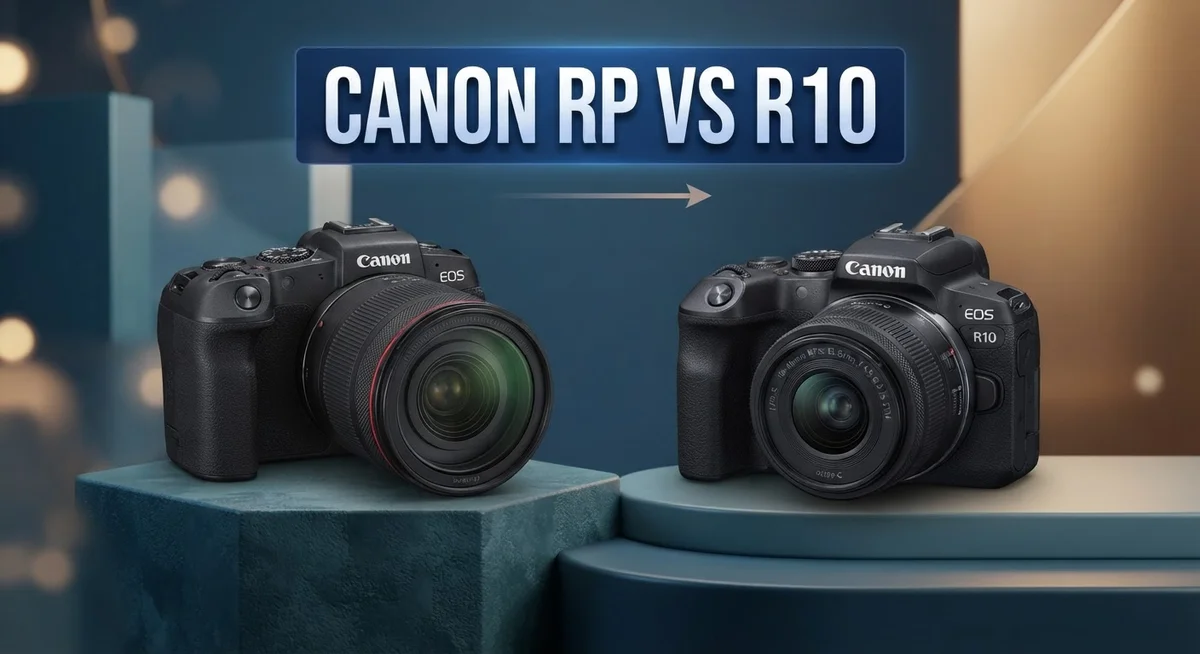
Choosing a camera can feel tricky. The Canon RP and Canon R10 both grab attention for different reasons. Each one suits a different type of photographer.
The RP brings a full-frame sensor to the table. It works well for low light shots and portraits. Photographers who love smooth backgrounds will enjoy this camera.
The R10 packs a punch with its APS-C sensor. It offers faster autofocus and better video quality. This camera fits people who shoot action or vlogs.
Both cameras have strong points. Both also have some drawbacks.
This guide breaks down the specs, pros, and cons of each model. You will see how they perform in real situations.
By the end, you will know which camera matches your style. Let’s explore what makes the RP and R10 stand out.
In a Nutshell
Here is a quick summary to help you decide fast.
-
The Canon RP shines in low light. Its full-frame sensor gives you cleaner images in dim settings. It also works great for portrait shooters who want soft backgrounds.
-
The Canon R10 wins on speed. It has a faster processor and sharper autofocus. This makes it a solid pick for action or wildlife shots.
-
Video lovers should note the R10’s edge. It shoots 4K at 30fps with oversampling and even hits 4K 60fps. The RP falls behind here.
-
The RP feels older in daily use. Menus and autofocus can feel sluggish compared to newer Canon models.
-
The R10 stays light and compact. This helps for travel but may feel small if you have larger hands.
-
If neither fits your needs, check the Canon R50 or R100. Both offer simpler alternatives in the same lineup.
Each camera brings something different. Your choice depends on what you shoot most.
Sensor and Image Quality
The sensor sits at the heart of any camera, and these two models take different paths. The RP uses a full-frame sensor, which captures more light across a larger surface. This means better performance when you shoot in dim conditions or push your ISO higher without losing quality.
The R10 features an APS-C sensor with 24.2 megapixels. Its smaller frame means each pixel sits closer together, which affects how it handles shadows and grain. For everyday shooting in good light, you will see sharp, vibrant images from both cameras.
Low light is where the RP pulls ahead. Full-frame sensors gather more light naturally, so portraits at sunset or indoor events show cleaner results with fewer dark patches. If you often shoot in studios, venues, or evening settings, the RP’s sensor advantage matters.
The R10 trades raw light sensitivity for processing speed. Its newer processor works faster, which helps with autofocus accuracy and overall image processing. You will notice quicker menu response and snappier performance when switching between modes or reviewing shots.
Color science differs between them too. The RP relies on older Canon algorithms, while the R10 uses modern color rendering. Skin tones, greens, and reds look slightly different on each camera. Some photographers prefer the warmer tone of the RP. Others like the R10’s fresher, more current color profile.
Resolution tells part of the story. The R10 offers 24.2MP, which works well for prints up to poster size and social media. The RP provides similar resolution, so both handle standard workflows without struggle. Neither camera feels limited for typical use.
Crop factor matters for your lenses. The RP’s full-frame sensor means lenses show their true focal length. The R10’s crop sensor magnifies focal lengths by 1.6x, so a 50mm lens feels like 80mm. This helps with zoom reach but can feel cramped for wide-angle shots.
For image quality in bright daylight, both cameras produce excellent results. The real difference emerges in challenging light and how each sensor responds to your editing choices.

- HIGH IMAGE QUALITY: Canon’s 24.2 Megapixel (APS-C) CMOS sensor delivers stunning resolution to...
- DIGIC X IMAGE PROCESSOR: Powers 4K video capture and reduces noise, so you can continuously shoot...

Last update on 2026-11-08 / Affiliate links / Images from Amazon Product Advertising API
Autofocus and Processing Speed
The autofocus system separates these two cameras in real world shooting. The R10 uses Canon’s latest Dual Pixel CMOS AF technology, which locks onto subjects faster and tracks movement with precision. The RP relies on older autofocus hardware, so it takes longer to find focus, especially in challenging light.
When you hold the R10 to your eye, menus respond instantly. The processor inside handles calculations quicker, so you spend less time waiting and more time shooting. The RP feels sluggish by comparison. You will notice the delay when scrolling through settings or reviewing images.
Burst shooting speed matters for action and wildlife. The R10 fires at 15 frames per second with continuous autofocus, keeping moving subjects sharp throughout the sequence. The RP manages 5 frames per second, which works fine for still subjects but falls short for dynamic scenes.
Processing speed also affects video performance. The R10 captures 4K video at 30 frames per second with oversampling, which means it uses extra pixels to create sharper footage. It also handles 4K at 60 frames per second without oversampling. The RP maxes out at 1080p video, making it less suitable for serious videography.
Autofocus during video recording shows another gap. The R10 tracks subjects smoothly as they move across the frame. The RP struggles with continuous autofocus video, often hunting for focus or losing lock on moving subjects.
The R10 also processes images faster after capture. File writing happens quicker, so the buffer clears faster between shots. This matters when you shoot back to back photos at events or sports.
The RP still focuses accurately in good light and works fine for static subjects like landscapes or posed portraits. However, if you shoot fast moving subjects, record video frequently, or want snappy menu navigation, the R10’s modern processor and autofocus system deliver a smoother experience overall.
Video Capabilities
The R10 delivers superior video performance across multiple formats. This camera shoots 4K video at 30 frames per second with oversampling, which means it captures extra detail and then compresses it down for cleaner footage. You also get 4K at 60 frames per second without oversampling, perfect for slow motion work or fast action scenes.
The RP struggles with video by comparison. It lacks the modern codec support and frame rate options that serious video creators expect. If you shoot video regularly, the R10 pulls significantly ahead in this category.
Autofocus during video recording shows another major difference. The R10 uses Canon’s latest autofocus technology, so it tracks moving subjects smoothly while you record. The RP’s older autofocus system works but feels sluggish when you need continuous focus adjustments during video.
Processing speed affects video quality too. The R10’s newer processor handles video encoding faster, which reduces the chance of dropped frames or stuttering. This matters when you’re capturing fast movement or working in demanding lighting conditions.
The R10 also excels at stabilization during video capture. Its faster processor helps the in-body stabilization work more effectively, keeping your footage smooth even without a tripod. The RP’s stabilization works, but it’s noticeably less responsive.
File management differs between these cameras. The R10 writes video files to the memory card faster, so you can record longer sequences without buffer issues. The RP takes longer to write files, which can interrupt your shooting if you’re pushing the camera hard.
Color rendering in video favors the R10 as well. Its modern color science produces more accurate skin tones and vibrant colors straight from the camera. The RP relies on older algorithms, so you’ll spend more time color correcting in post-production.
For vlogging, short films, or any video work, the R10 is the clear winner. The RP works for occasional video clips, but it’s not built for serious video creators. If video matters to your workflow, this advantage alone makes the R10 worth considering.
Top 3 Alternatives
Sony A6400

- 20.1MP stacked back illuminated 1" Exmor RS CMOS sensor w/ DRAM, large aperture 24-70mm1 F...
- Enhanced subject capture: wide 425 Phase/ 425 contrast detection points over 84 percent of the...
Last update on 2026-11-08 / Affiliate links / Images from Amazon Product Advertising API
The Sony A6400 brings fast autofocus performance to your creative work. This camera excels at tracking moving subjects with 425 phase-detection points. You get real-time eye autofocus that locks onto people and animals instantly.
The compact body fits easily into your camera bag. A 24.2-megapixel sensor captures sharp images in various lighting conditions. The flip-up screen helps you frame shots from unusual angles.
Nikon Z50

- Compact, lightweight and durably constructed mirrorless camera
- First DX-format mirrorless camera to use a large 55 millimeter lens mount, offering advantages in...
Last update on 2026-11-08 / Affiliate links / Images from Amazon Product Advertising API
The Nikon Z50 offers smooth 4K video recording with excellent stabilization. This mirrorless camera includes in-body image stabilization, which reduces camera shake during handheld shooting.
You’ll appreciate the intuitive menu system and comfortable grip. The 20.9-megapixel sensor delivers clean images with accurate colors. Nikon’s Z-mount gives you access to modern lenses designed for this system.
Fujifilm X-S10

- It’s All About How It Feels: X-S10 has been designed to provide on-the-go photographers with...
- Making State-of-the-Art Simple: Designed to be simple and minimalist on the outside, X-S10 still...
Last update on 2026-11-08 / Affiliate links / Images from Amazon Product Advertising API
The Fujifilm X-S10 stands out with film simulation modes that mimic classic film stocks. These built-in presets let you achieve vintage looks straight from the camera without heavy editing.
The body weighs just 557 grams, making it ideal for travel photography. A 26.1-megapixel sensor captures fine details in your images. The camera includes in-body stabilization and connects easily to your smartphone for quick file transfers.
Each option provides different strengths. Choose based on your specific needs—whether that’s autofocus speed, video features, or creative image processing. All three cameras perform well in their respective categories and suit photographers looking for alternatives in this market segment.
Design, Ergonomics, and Portability
The Canon RP features a full-frame body with classic DSLR proportions. Its grip sits comfortably in most hands, and the layout follows Canon’s traditional design language. The R10 takes a different approach with its smaller, mirrorless frame built for compact travel.
Size and weight matter for daily shooting. The R10 weighs significantly less and fits easily into camera bags or backpacks. If you travel frequently or shoot handheld for extended periods, the R10 reduces fatigue. The RP’s heftier build appeals to photographers with larger hands who prefer a more substantial feel.
The R10’s compact design comes with a trade off. Smaller bodies can feel cramped for people with bigger hands. Button placement on the R10 requires more precision during operation. The RP spreads controls across a wider surface, making menu navigation easier during extended sessions.
Ergonomics shift based on your shooting style. The RP’s traditional grip angle suits portrait and landscape work. You can rest your pinky finger naturally on the body. The R10’s grip is shallower and requires a different hand position for stability.
Weather sealing differs between these models. The RP offers basic dust and moisture resistance. The R10 provides improved sealing around buttons and dials, making it more reliable in challenging conditions.
The viewfinder experience shapes your daily interaction with each camera. The RP uses an optical viewfinder, showing you light passing through the lens directly. The R10 employs an electronic viewfinder that displays a digital preview. This changes how you frame shots and monitor exposure in real time.
Button responsiveness reflects each camera’s age and technology. The R10 feels snappier throughout the menu system. Scrolling through settings happens instantly. The RP requires slightly longer waits between button presses and screen responses.
Portability clearly favors the R10. It slips into smaller bags and causes less shoulder strain during all-day shoots. The RP works better if you prioritize comfort over compact size. Your hand size and shooting environment should guide your choice between these two approaches.
Lens Ecosystem and Cost of Ownership
The lens ecosystem shapes your long-term shooting experience with either camera. Canon’s RF mount serves both the RP and R10, but the sensor size creates different practical outcomes.
The RP uses full-frame RF lenses. These lenses work without any crop factor, so you get the exact focal length printed on the barrel. A 50mm lens behaves as a true 50mm. Canon offers around 40 RF lenses currently, covering wide angles, standard primes, and telephoto options. Full-frame glass delivers consistent performance across your entire collection.
The R10 uses APS-C RF S lenses. These smaller lenses mount on the same RF system but apply a 1.6x crop factor. A 50mm RF S lens becomes equivalent to an 80mm on the R10. This crop actually helps for wildlife and sports since you gain extra reach without buying longer glass. Canon has fewer APS-C options (around 10 dedicated RF S lenses), but you can also use full-frame RF lenses on the R10 with the crop applied.
Compatibility differs between the two. The R10 accepts every RF lens ever made. The RP only uses full-frame RF lenses, so APS-C specific glass won’t mount. This matters if you already own RF S lenses or plan to buy them later.
Building a lens collection costs differently. RF S lenses tend to be smaller and lighter than their full-frame counterparts. You’ll spend less on APS-C glass overall if you choose the R10. Full-frame RF lenses command higher prices due to their larger optical designs and wider apertures.
Resale value favors the RP slightly. Full-frame lenses hold their value better in the used market. APS-C lenses see faster depreciation since fewer photographers use that format long-term.
Future-proofing matters too. If you might upgrade to a full-frame Canon later, RP lenses transition smoothly. R10 lenses require different glass when you move to full-frame, meaning additional investment.
Choose the RP if you want one lens collection that works forever. Choose the R10 if you prefer lighter gear and lower entry costs into the RF system.
Pros and Cons
Pros
- RP excels in low light situations thanks to its full-frame sensor capturing more light
- RP gives you access to full-frame RF lenses without any crop factor affecting your composition
- R10 features a much faster processor that keeps menus and settings responsive
- R10 offers superior autofocus performance during both photos and video recording
- R10 is lightweight and compact, making it easy to carry for extended shooting sessions
Cons
- RP uses older technology with slower autofocus and menu navigation compared to the R10
- RP’s video capabilities are limited and lack the advanced features found on newer models
- R10’s smaller body can feel cramped if you have larger hands or prefer a traditional grip
- R10’s APS-C sensor produces more noise in low light compared to the RP’s full-frame advantage
Who Should Buy It
The Canon RP suits photographers who prioritize image quality in dim environments. If you shoot indoors, during golden hour, or in studios without constant lighting, the full-frame sensor captures significantly more light. You’ll notice cleaner images at higher ISO values. This camera also appeals to portrait specialists who want the shallow depth of field that full-frame lenses naturally provide.
The Canon R10 fits content creators who need speed and modern features. Vloggers, YouTube creators, and hybrid photo-video shooters benefit from its 4K 60fps capability and advanced autofocus tracking. The faster processor means your menus respond instantly. Button presses feel snappier. This camera works best for people juggling multiple tasks during a shoot.
Choose the RP if you plan to invest heavily in lenses over the next decade. Full-frame RF glass holds value better. Your lens collection remains relevant as Canon continues expanding this mount. You’ll appreciate the traditional ergonomics if you’ve used DSLRs before. The familiar grip angle and button layout reduce your learning curve.
Pick the R10 if you travel frequently or shoot on foot all day. Its lightweight body prevents fatigue during extended sessions. Hiking photographers, street shooters, and adventure vloggers find this size ideal. The compact design fits into smaller backpacks without taking up precious space.
The RP serves photographers who shoot mostly stills. Landscapes, portraits, and studio work shine with this camera. You’ll love the full-frame perspective without crop limitations. Wedding photographers transitioning from DSLRs often choose this model.
The R10 excels for photographers who want everything in one package. You need sharp autofocus during fast action. You want reliable video performance. You prefer modern technology that feels responsive. Beginners exploring both photos and videos benefit from this camera’s versatility.
Think about your daily shooting routine. Do you work in low light frequently? Full-frame makes sense. Do you record video constantly? The R10’s processor and autofocus matter more. Are you building a lens collection? Full-frame offers better long-term flexibility. Do you move around constantly? The R10’s portability wins.
Final Verdict
Choosing between the Canon RP and R10 comes down to your shooting style. Both cameras serve different needs.
The Canon RP works best for photographers who value image quality above everything else. Its full-frame sensor delivers stunning results in low light.
If you shoot weddings, events, or portraits in dim venues, the RP handles these situations with grace. The sensor size gives you creamy backgrounds and clean images even when light gets scarce.
The Canon R10 fits a different type of shooter. It appeals to people who want speed, versatility, and modern features in one small body.
Vloggers, sports photographers, and travel enthusiasts often prefer the R10. Its fast autofocus tracks moving subjects well, and its video specs support content creation across platforms.
Think about what you photograph most often. Still photographers who print large images or shoot in challenging light should lean toward the RP.
Creators who need quick autofocus, smooth video, and a body that travels easily should pick the R10. Neither camera is wrong for beginners, but each shines in different scenarios.
Consider your future plans too. If you see yourself upgrading lenses and building a serious photography setup, the RP gives you a foundation that grows with you.
If you want a camera that handles everyday tasks without fuss, the R10 delivers that convenience. Its blend of speed and portability suits people who shoot on the move.
Some photographers even use both systems for different projects. This is common among hybrid shooters who need full-frame quality for some jobs and crop sensor speed for others.
There is no universal winner here. Your specific needs decide which camera fits your bag.
Take a moment to think about your typical shoot. Ask yourself what matters more: sensor performance or speed and features.
Whichever camera you choose, both models represent Canon’s mirrorless lineup well. They simply target different types of photographers with different priorities.
Frequently Asked Questions
Which camera handles low light better?
The Canon RP wins in low light situations. Its full-frame sensor captures more light than the R10’s APS-C sensor. You’ll notice cleaner images with less noise when shooting in dim venues, studios, or evening events.
The R10 still performs well in low light, but it needs higher ISO settings to match the RP’s results. If you shoot weddings, portraits, or indoor events regularly, the RP gives you an advantage.
Does the R10 have better autofocus?
Yes. The R10 features superior autofocus compared to the RP. It locks onto subjects faster during both photo and video shooting. The R10’s processor handles focus tracking more smoothly and accurately.
The RP uses older autofocus technology. It works fine for still subjects, but struggles with moving targets. If you shoot sports, wildlife, or fast-moving subjects, the R10 responds better.
Which camera is better for video?
The R10 dominates video capabilities. It shoots 4K at 60fps and offers oversampled 4K at 30fps for higher quality. The menus respond instantly, making adjustments quick and easy during recording.
The RP records video but lacks these advanced features. Its video capabilities feel limited compared to modern standards. Content creators and vloggers should choose the R10.
Is the R10 easier to carry around?
Absolutely. The R10 is lightweight and compact. It fits easily into camera bags and backpacks. If you travel frequently or shoot on foot all day, this smaller body reduces fatigue.
The RP is slightly larger. For photographers who stay in one location or use a tripod, size matters less.

Dillip is the founder and editor of Switch & Size, where he breaks down tech products, accessories, and gadgets to help readers make smarter buying decisions. With a passion for testing and comparing the latest technology, he delivers honest reviews, in-depth guides, and side-by-side comparisons that cut through the marketing noise.