
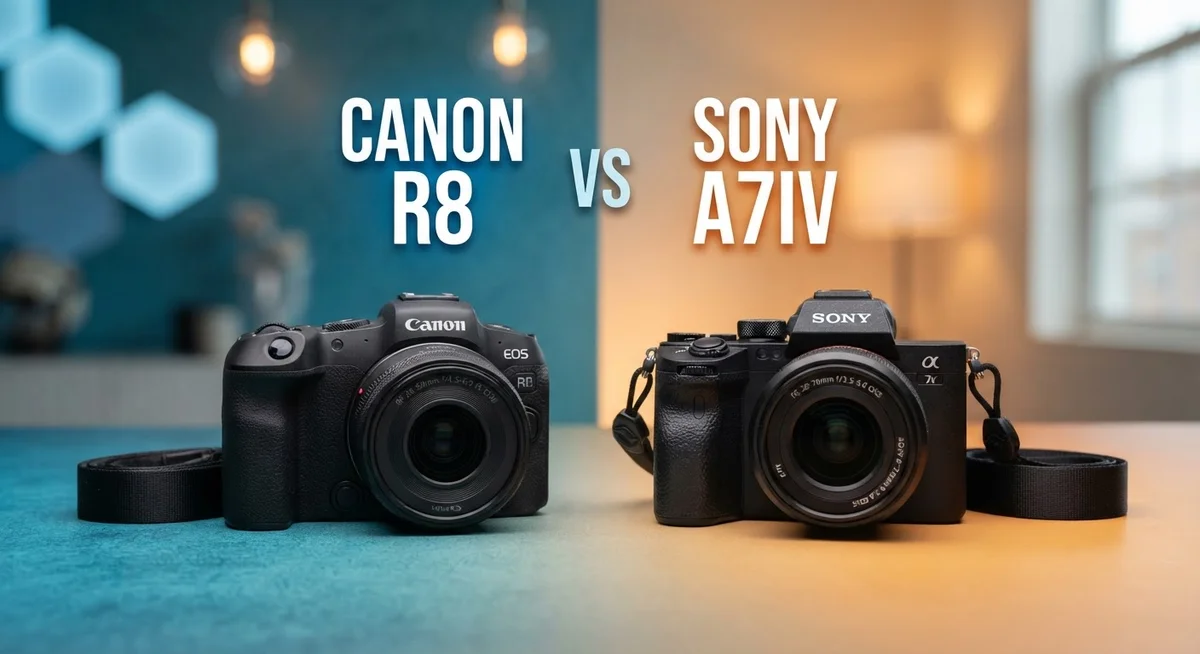
Canon R8 vs Sony A7IV: Full-Frame Mirrorless Camera Comparison
Picking a new full frame camera feels exciting but tricky. Two strong choices stand out today: the Canon R8 and the Sony A7IV. Both cameras pack impressive tech into compact bodies.
The Canon R8 shines with its lightning fast sensor readout. This makes it a great pick for concerts and fast action shots. It also carries Canon’s famous color science.
The Sony A7IV counters with a higher resolution sensor and better low light skills. Its battery life also lasts longer, giving you more shots per charge.
So which camera fits your style better? This guide breaks down specs, strengths, and weaknesses side by side. You will see clear differences in speed, resolution, and battery performance.
Let’s explore what makes each camera unique and help you choose the right tool for your next shoot.
In a Nutshell
Here’s a quick summary to help you decide fast:
-
Speed matters: The Canon R8 reads its sensor in just 14ms. This makes it a top pick for sports, concerts, and fast moving subjects.
-
Resolution wins: The Sony A7IV packs 33MP. You get more detail for large prints or heavy cropping.
-
Low light performance: Sony’s BSI sensor and 51,200 native ISO give it an edge in dim venues or night shoots.
-
Battery life: The A7IV lasts longer per charge, rated for 580 shots. This suits long events without frequent battery swaps.
-
Video caution: Sony’s slower readout can cause rolling shutter artifacts in fast motion clips. Canon handles this better.
-
Color and glass: Canon’s color science stands out straight from the camera. Its lens lineup also gives you plenty of creative options.
-
Bottom line: Pick the R8 for speed and action work. Choose the A7IV for resolution, low light, and longer shooting sessions.
Sensor and Resolution
The sensor is where these two cameras show their biggest differences. Canon packed a 24MP full frame CMOS into the R8, while Sony went with 33MP in the A7IV. Both are excellent, but they serve different photographers.
Canon’s speed advantage comes from its Digic X processor and lightning fast 14ms sensor readout. This means the R8 captures action without the rolling shutter distortion that slower sensors sometimes create. If you shoot concerts, sports, or fast moving subjects, this speed matters. The R8 also maxes out at 1/4000 shutter speed, which is still plenty for most daylight work.
Sony’s resolution edge gives you more pixels to work with in post production. The 33MP sensor lets you crop tighter and still maintain sharp details. The A7IV uses a back illuminated (BSI) CMOS design, which pulls in more light compared to traditional sensors. This design choice makes a real difference in dim rooms, studios, or evening shoots.
The processors tell another story. Canon’s Digic X excels at color accuracy and detail rendering. Sony’s Bionz XR processor focuses on dynamic range and shadow recovery. Both are strong, just with different strengths.
Native ISO performance also splits these cameras. The A7IV starts at ISO 51,200 natively, while the R8 sits lower. For nighttime work or video in low light, Sony pulls ahead. The A7IV’s sensor readout takes 26.8ms though, which means potential rolling shutter in video or fast panning shots.
Resolution isn’t everything. The R8’s 24MP is still plenty for large prints and professional work. You lose some cropping flexibility, but gain speed and cleaner action sequences. The A7IV’s 33MP appeals to studio shooters, product photographers, and anyone who prints huge or crops frequently.
Your choice depends on what you shoot most. Need fast action without artifacts? The R8’s sensor speed wins. Shooting in tight spaces or wanting maximum detail? The A7IV’s resolution and low light skills take over.

- 33MP full-frame Exmor R back-illuminated CMOS sensor.Operating temperature : 0 to 40 °C (32 to...
- 8x more powerful, next generation BIONZ XR image processing engine

Last update on 2026-11-08 / Affiliate links / Images from Amazon Product Advertising API
Autofocus and Processing Power
The Digic X processor in the Canon R8 handles autofocus calculations at lightning speed. This chip excels at tracking fast moving subjects during sports and wildlife photography. The Sony A7IV uses the Bionz XR processor, which takes a different approach to autofocus performance.
Canon’s 14ms sensor readout speed gives it a huge advantage for action work. Your camera captures images faster, which means fewer missed moments during rapid shooting sequences. Sony’s 26.8ms readout is slower, making it less ideal for burst shooting in demanding situations.
The autofocus systems themselves work differently too. Canon’s R8 focuses on speed and accuracy for moving subjects. Sony’s A7IV focuses on resolution and detail capture. Both cameras use phase detection autofocus, but their processing power distributes this work in unique ways.
Processing power affects more than just autofocus. The Digic X chip helps the R8 maintain consistent performance during long shooting sessions. The Bionz XR processor gives the A7IV better low light autofocus capability. It adapts better when light levels drop significantly.
Your shooting style determines which processor suits you best. Fast action photographers benefit from the R8’s quick sensor readout and responsive autofocus. The camera locks onto moving subjects with minimal lag. Detail focused photographers appreciate the A7IV’s processing strength in challenging lighting conditions.
Both cameras offer continuous autofocus during video recording. The R8’s faster readout means smoother tracking in motion footage. The A7IV’s higher resolution sensor captures more information, even if the readout is slower.
Real world performance shows clear differences. Concert photographers praise the R8’s ability to track performers under stage lights. Wildlife shooters appreciate both cameras but favor the R8 for birds in flight. Studio photographers often choose the A7IV for its superior low light autofocus and resolution benefits.
The processor you choose impacts your entire workflow. Faster processing means quicker image capture and faster buffer clearing. Better processing means smarter autofocus decisions in tricky situations. Consider which matters more for your photography needs.
Video and Readout Performance
Video performance separates these two cameras in meaningful ways. The Canon R8 delivers faster sensor readout at 14ms, which matters when you’re shooting fast action or concert footage. This speed reduces rolling shutter artifacts and keeps motion smooth on screen. The Sony A7IV takes 26.8ms to read its sensor, nearly double the time. In practice, this means Sony footage can show slight distortion during rapid pans or quick subject movement.
Frame rates tell part of the story, but sensor speed tells another. Canon’s Digic X processor works alongside that quick readout to minimize the jello effect you sometimes see in video. This combination makes the R8 better for dynamic shooting situations where things move fast.
Sony compensates with different strengths. The A7IV’s 33MP resolution gives you more detail to crop and reframe in post production. You can zoom into footage without losing as much quality. The higher pixel count also means you capture more information overall, which helps in color grading and editing.
Low light video performance favors Sony. The BSI sensor design and native ISO range up to 51,200 let you shoot in darker venues without excessive noise. Concert halls, indoor events, and night scenes become easier to handle. Canon’s sensor handles low light well too, but Sony edges ahead for video in dim conditions.
Rolling shutter becomes noticeable in Sony footage when you pan quickly or track moving subjects. This is the trade off for having more resolution and better low light capability. If you shoot mostly stationary subjects or move the camera slowly, this won’t bother you.
Choose the R8 if fast action and smooth motion matter most. Wedding receptions, sports events, and dynamic situations benefit from that 14ms readout speed.
Pick the A7IV if resolution and low light video are priorities. Documentary work, indoor events, and situations where you need to crop in post favor Sony’s approach.
Top 3 Alternatives
Nikon Z6 III

- VIDEO - 6K/60p Internal N-RAW video recording + oversampled 4K UHD, 4K/120p, Full HD/240p slow...
- BEST IN CLASS EVF - Max brightness of 4000 nits gives a clear, vibrant view even in very bright...
Last update on 2026-11-08 / Affiliate links / Images from Amazon Product Advertising API
The Nikon Z6 III brings excellent autofocus performance to full-frame mirrorless photography. This camera features advanced subject tracking that works across humans, animals, and vehicles. The sensor delivers clean images even in low light situations.
Build quality feels premium with weather sealing that protects against dust and moisture. Battery life runs longer than many competitors, so you shoot more between charges. The viewfinder provides a clear, lag-free experience for composing shots.
Panasonic Lumix S5II

- Enhanced Imaging Power: The Panasonic Lumix S5II Mirrorless Camera is tailor-made for discerning...
- Cinematic Video Excellence: Elevate your filmmaking with the Lumix S5 II's impressive video...
Last update on 2026-10-07 / Affiliate links / Images from Amazon Product Advertising API
Panasonic’s Lumix S5II offers exceptional video capabilities for creators who need both stills and motion. The camera records in various formats including high-quality codecs that professionals prefer. Autofocus performance has improved significantly compared to earlier models.
The body remains compact and lightweight, making it easy to carry on long shoots. In-body stabilization helps reduce blur when shooting handheld. The menu system feels intuitive once you learn the basics, and customization options run deep.
Canon EOS R6

- FULL-FRAME HYBRID PERFORMANCE - Canon EOS R6 Mark II features a 24.2MP full-frame CMOS sensor, DIGIC...
- RF 50MM F1.8 STM PRIME LENS - Added Canon RF 50mm f/1.8 STM lens delivers a bright f/1.8 aperture...
Last update on 2026-11-08 / Affiliate links / Images from Amazon Product Advertising API
Canon’s EOS R6 combines reliable performance with a familiar ecosystem. The autofocus system tracks subjects smoothly across the frame. Thermal management keeps the camera running during extended video sessions without overheating issues.
The battery system uses standard Canon batteries, which many photographers already own. Lens availability remains extensive since Canon has built a large RF mount collection. The camera handles both photography and videography well, making it versatile for various shooting styles. Image quality remains consistent across different lighting conditions.
Color Science and Image Quality
Color science determines how your camera renders skin tones, greens, and reds straight out of the camera. The Canon R8 excels here with its refined color profiles that photographers love for portraits and weddings. Sony’s A7IV takes a different approach, offering more neutral colors that some shooters prefer for flexibility in post production.
The 24MP sensor in the Canon R8 captures clean, vibrant colors with minimal noise at base ISO. Canon’s Digic X processor applies smart color processing that feels natural without looking oversaturated. Many photographers find they need less editing time with Canon files.
Sony’s 33MP resolution gives you more detail to work with, but this comes with trade offs. The higher pixel count means more information in shadows and highlights. However, Sony files often need more color grading to match the punch that Canon delivers automatically.
Dynamic range tells another story. The Canon R8 handles bright skies well, preserving detail in clouds without losing shadow information. Sony’s BSI sensor design gives the A7IV a slight edge in extreme conditions where you need to recover blown highlights.
Straight from the camera, Canon’s JPEGs look more finished and ready to share. Sony’s JPEGs appear flatter, which some call clinical and others call versatile. If you shoot RAW files, this difference matters less since you control the final look.
Skin tone rendering favors the Canon R8 for most complexions. The camera’s color science leans warm and flattering, which is why portrait photographers gravitate toward it. The A7IV renders skin more neutrally, requiring adjustment if you want that warm, inviting feel.
Lens color characteristics also play a role. Canon’s RF lens lineup produces consistent colors across the range. Sony’s E mount lenses vary more in color rendering, so your choice of glass affects the final image more than with Canon.
Choose the R8 if you want beautiful colors immediately. Pick the A7IV if you prefer starting with neutral tones and building your look in post production. Both cameras produce excellent images. Your editing style and shooting preferences should guide your decision here.
Battery Life and Ergonomics
Battery performance matters when you’re shooting all day. The Sony A7IV delivers 580 shots per CIPA charge, which gives you real staying power during long sessions. The Canon R8 falls short here with a weaker battery capacity.
This difference becomes obvious during events. You’ll swap batteries more often with the R8. Sony’s advantage means fewer interruptions and more peace of mind.
Ergonomics tell a different story. Both cameras feel good in your hands, but they handle differently. The Canon R8 sits slightly smaller and lighter, which some shooters prefer for travel and extended handheld work.
The grip design on each camera affects your comfort level. The R8’s grip feels more compact, while the A7IV offers a deeper hold. Your hand size and shooting style determine which feels better. Try both before deciding.
Button placement matters more than people realize. The R8 groups controls in logical spots for fast operation. The A7IV spreads functions across more menus, requiring extra navigation for some settings.
Weather sealing protects your investment. Both cameras offer solid dust and moisture resistance. You can shoot in light rain without worry. Heavy downpours demand extra caution with either model.
Weight distribution affects fatigue during long shoots. The R8 stays lighter overall, reducing shoulder and neck strain. The A7IV weighs more but distributes that weight evenly. Lighter doesn’t always mean better—it depends on your setup.
Battery grip options expand your choices. Both cameras support optional battery grips for extended shooting. The R8’s grip adds minimal bulk. The A7IV’s grip provides more substantial improvements.
Choose the R8 if you value compact size and quick button access. Pick the A7IV if battery life is your top concern and you don’t mind the extra weight. Your shooting environment and session length should guide this decision. Test both cameras in your typical shooting conditions to feel the real difference.
Pros and Cons
Canon R8 Pros
- Fastest sensor readout at 14ms makes fast action and concert photography smooth without motion artifacts
- Excellent color science delivers vibrant, finished JPEGs straight from the camera
- Strong Canon RF lens catalog gives you plenty of options for different shooting styles
- Compact, lightweight design reduces fatigue during all day events
- Quick button access and intuitive menu layout speed up your workflow
Canon R8 Cons
- Lower 24MP resolution means less detail to crop or enlarge later
- Slower 1/4000 max shutter speed limits your options in bright sunlight with fast lenses
- Weaker battery life requires extra batteries or a grip for extended shoots
Sony A7IV Pros
- Higher 33MP resolution captures more detail and gives you flexibility in post production
- Superior low light performance with native ISO 51,200 handles dark venues and night scenes
- Better battery life at 580 shots per charge means fewer battery swaps during events
- BSI sensor technology improves shadow detail and reduces noise in challenging lighting
Sony A7IV Cons
- Slower 26.8ms sensor readout causes rolling shutter artifacts when panning or tracking fast motion
- Video performance prioritizes resolution over motion smoothness compared to stills shooting
- Processing speed affects autofocus tracking during rapid subject movement
Who Should Buy It
The Canon R8 works best for photographers who shoot fast action, concerts, and sports. Your 14ms sensor readout eliminates motion artifacts that plague slower cameras. If you’re in a dark venue or arena, this speed advantage keeps your images sharp and clean. The compact, lightweight design means your arms won’t fatigue during long events.
You’ll also appreciate the intuitive button layout. Reaching controls becomes second nature quickly. The strong RF lens catalog gives you plenty of options for different shooting styles without breaking your workflow.
The Sony A7IV suits photographers who need maximum resolution and detail. Your 33MP sensor captures more information, so cropping and enlarging becomes easier. If you shoot landscapes, architecture, or studio work, this extra resolution pays dividends.
Low light performance matters to you if you work in challenging conditions. The BSI sensor and higher native ISO (51,200) handle dim environments better than the R8. Your battery lasts longer too. A 580 shot CIPA rating means fewer battery swaps during full day shoots.
Choose the R8 if you shoot fast moving subjects regularly. Concert photographers, sports shooters, and event videographers benefit most from the faster readout. You want finished colors straight from the camera without heavy editing. Portability matters to you because you move between locations frequently.
Pick the A7IV if you need resolution above all else. Landscape and fashion photographers find the extra megapixels essential. You prefer shooting in low light without pushing ISO too high. Battery life concerns you less because you plan shoots carefully. You’re willing to spend time in post processing to achieve your vision.
Both cameras serve different photographers well. Your shooting style determines which one fits better. Consider what you shoot most often. Think about your typical lighting conditions. Decide whether resolution or speed matters more to your workflow. The right choice becomes clear once you identify your primary needs and shooting scenarios.
Final Verdict
Picking between these two cameras comes down to your main shooting style. Both models deliver professional results, but they shine in different situations.
The Canon R8 fits photographers who chase movement. Sports shooters, event photographers, and street photographers benefit most from its fast readout speed. If your work involves quick subjects and tight schedules, this camera keeps pace with you.
The Sony A7IV fits creators who need flexibility. Landscape photographers, studio portrait artists, and hybrid shooters who mix photo and video get more from this system. The extra resolution gives you room to crop, print large, or deliver detailed client work.
Think about your future projects too. If you plan to expand into video work, the A7IV handles that transition smoothly. Its autofocus tracking and codec options support serious video projects better than the R8’s stills focused design.
If you already own Canon lenses or prefer Canon’s ecosystem, staying with the R8 makes sense. Switching systems costs time and effort beyond just the camera body. The same logic applies to Sony shooters eyeing the A7IV.
Consider how you deliver images too. Photographers who upload straight from camera to client will love the R8‘s color output. Those who prefer heavy editing control might lean toward the A7IV‘s raw file flexibility instead.
Neither camera fails at its core job. Both produce sharp, professional images that satisfy client and personal work alike. Your specific workflow, not spec sheets alone, should guide this decision.
Ask yourself these questions:
– Do you shoot more stills or video?
– Does resolution matter more than speed for your work?
– Which lens ecosystem do you already own?
Answer these honestly, and your choice becomes clear. Trust your shooting habits over marketing claims. The camera that matches your daily routine will always outperform the one with better paper specs alone.
Frequently Asked Questions
Which camera handles fast action better, the Canon R8 or Sony A7IV?
The Canon R8 wins here. Its sensor reads data in just 14ms, making it ideal for concert photography and sports. You get smooth, artifact-free images even when subjects move quickly. The Sony A7IV takes 26.8ms to read the sensor, which can cause motion artifacts in fast-paced situations.
The R8’s speed gives you cleaner results when tracking moving subjects. If you shoot fast action regularly, this matters a lot.
Does the Sony A7IV really have better low light performance?
Yes. The Sony uses a back-illuminated sensor (BSI), which captures more light than the Canon’s front-illuminated design. You’ll see cleaner images at high ISOs in dim conditions.
The Sony also has a native ISO of 51,200 compared to the Canon’s lower native range. This means the A7IV handles nighttime events, indoor concerts, and dark venues more gracefully.
Which camera gives you more detail in your photos?
The Sony A7IV captures significantly more detail. It shoots at 33MP versus the Canon’s 24MP. This extra resolution lets you crop heavily and still maintain sharpness.
More megapixels mean larger prints look better too. If detail and flexibility matter to your work, the Sony excels here.
Can the Canon R8 keep up with battery life?
No. The Canon R8 offers around 280 shots per charge. The Sony A7IV delivers 580 shots on a single battery.
For all-day shoots, you’ll need spare batteries or a grip with the R8. The Sony lets you work longer between charges.
Which camera is better for video work?
The Sony A7IV performs better for video. Its higher resolution and superior low-light handling make it more versatile. The Canon R8 prioritizes still photography and fast action capture.
If video is your main focus, choose the Sony.

Dillip is the founder and editor of Switch & Size, where he breaks down tech products, accessories, and gadgets to help readers make smarter buying decisions. With a passion for testing and comparing the latest technology, he delivers honest reviews, in-depth guides, and side-by-side comparisons that cut through the marketing noise.


