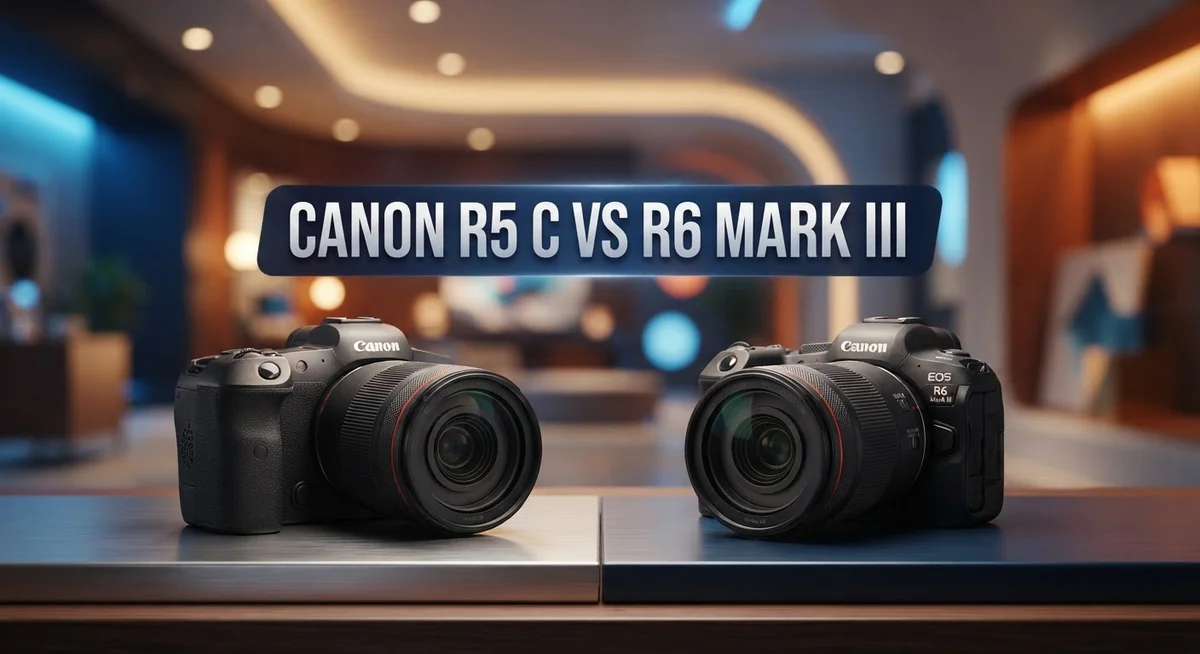
Canon R5C vs R6 Mark III: Professional Camera Comparison Guide
Choosing between the Canon R5C and R6 Mark III feels tricky. Both cameras pack serious power for photos and video.
But they serve different creators. Each one shines in its own way.
The R6 Mark III brings a 45MP stacked sensor and 30fps bursts. It handles wildlife and sports with ease.
The R5C focuses on cinema. It offers unlimited 7K recording and professional codecs for filmmakers.
So which one fits your work? That depends on your goals.
Do you shoot fast action and stills? Or do you need broadcast quality video?
This guide breaks down every spec, pro, and con. We compare sensors, video capabilities, and handling.
By the end, you will know exactly which camera matches your creative needs. Let’s dive into the details.
In a Nutshell
Here is a quick snapshot to help you decide fast.
-
The R6 Mark III suits photographers who also shoot video on the side. It handles sports, wildlife, and events with speed and clarity.
-
The R5C suits video professionals first. Its cinema tools and unlimited 7K recording make it a strong choice for filmmakers and broadcast teams.
-
Audio matters here. The R5C includes full-size XLR inputs. This makes it easier to connect professional microphones without extra adapters.
-
Sensor design differs too. The R6 Mark III uses a stacked sensor for faster readout. This helps reduce rolling shutter during fast motion.
-
Think about your daily workflow. Photographers who need quick stills and occasional clips will feel at home with the R6 Mark III.
-
Filmmakers who need long uninterrupted takes will prefer the R5C’s cinema focused build.
-
Both cameras compete closely with the Canon R5 and Canon C50, so compare your specific needs before choosing.
Sensor and Image Quality
The sensor is where these two cameras show their biggest differences. The R6 Mark III uses a 45MP back-illuminated stacked sensor. This design lets it capture images faster and with less rolling shutter. You get cleaner shots in fast action scenes.
The R5C takes a different path. It prioritizes video over stills. Its sensor still delivers excellent image quality, but the camera itself is built around cinema workflows. The real advantage here is unlimited 7K recording at both 30fps and 60fps.
Let’s talk about resolution in video. The R6 Mark III maxes out at 8K 60p internally. That sounds impressive, but the R5C gives you 7K at unlimited length. For most projects, 7K is more than enough. The key difference? The R5C won’t stop recording due to file size limits.
Image stabilization matters for both. The R6 Mark III offers 8.5 stops of in-body stabilization. This helps when you handheld video or shoot with longer lenses. The R5C also has solid stabilization, but it’s not the main selling point.
Color science and codecs separate these cameras too. Both support C-Log 2 for color grading flexibility. The R5C includes cinema codecs that professionals expect. The R6 Mark III focuses on hybrid shooting. You get great stills and solid video, but it’s not optimized for broadcast standards alone.
Low light performance favors the R6 Mark III. Its stacked sensor reads data faster, which reduces noise at high ISOs. If you shoot in dim conditions often, this matters.
The R5C shines when you need professional codec options and unlimited recording time. The R6 Mark III excels when you need fast continuous shooting and balanced photo quality. Think about your main priority. Do you need stills or video first? That answer guides your choice more than raw specs.

- 32.5MP full-frame CMOS Image Sensor and DIGIC X Image Processor.
- Up to 40-fps Photo Shooting with 20-frames of pre-continuous shooting.

Last update on 2026-11-08 / Affiliate links / Images from Amazon Product Advertising API
Video Capabilities and Recording Formats
The R6 Mark III records 8K video at 60fps internally, which means you get cinema quality without needing external recorders. The R5C takes a different approach with 7K recording at both 30fps and 60fps, offering unlimited takes without the thermal limits that plague many cameras.
Frame rates tell part of the story. The R6 Mark III delivers smooth 30fps continuous shooting for stills, while its video engine handles 8K at 60p with impressive stability. The R5C prioritizes cinema workflows, giving you 7K at your choice of frame rates with professional flexibility built in.
Recording formats matter significantly for your post-production process. The R6 Mark III uses Canon’s standard video codec suite with C-Log 2 for color grading. The R5C steps into professional territory with cinema-specific codecs and full broadcast compatibility. If you work with colorists or need DCI standards, the R5C speaks their language natively.
Audio connections reveal the intended user. The R5C includes full-size XLR inputs, which means you can plug in professional microphones directly without adapters. The R6 Mark III uses a 3.5mm jack, requiring external preamps for serious sound work. This single feature shows Canon built the R5C for crews, not solo shooters.
Battery life affects real-world shooting. Both cameras drain power quickly during video, but the R5C’s cinema focus means longer planned shoots with backup batteries. The R6 Mark III works better for hybrid sessions where you switch between photos and video frequently.
Overheating remains a concern on both models, though users report the R5C handles extended takes better than expected. The R6 Mark III manages heat well for its power output, making it reliable for event coverage.
Color science and codecs ultimately decide your workflow. Choose the R6 Mark III if you shoot hybrid content and prefer Canon’s intuitive interface. Pick the R5C when cinema quality and professional codec options drive your decisions. Your editing software and delivery requirements should guide this choice.
Autofocus, Stabilization, and Handling
The autofocus systems in both cameras reflect their different purposes. The R6 Mark III uses Canon’s latest AF technology with improved tracking across the frame. You get fast, reliable focus for both stills and video. The system locks onto subjects quickly and maintains contact during movement.
The R5C also delivers solid autofocus performance. However, it prioritizes video stability over photo-specific features. The focus system works well for cinema work, but photographers switching from the R6 Mark III may notice slightly different behavior in fast-action scenarios.
Image stabilization shows a clear winner here. The R6 Mark III features 8.5 stops of in-body stabilization (IBIS). This means handheld video looks smooth even without a tripod. You can shoot longer lenses and still maintain clean footage. The stacked sensor design helps the camera process motion data faster.
The R5C includes stabilization, but it ranks lower than the R6 Mark III. If you plan handheld work, the R6 Mark III gives you more freedom. You’ll need steadier hands or support gear with the R5C.
Handling differences matter for your daily work. The R6 Mark III weighs less and feels more balanced for hybrid shooting. The grip fits standard hands well. The button layout follows familiar Canon patterns, so you navigate menus quickly.
The R5C feels heavier due to its cinema features. Full-size XLR inputs add bulk to the body. The design prioritizes professional audio and video workflows over lightweight portability. If you shoot from a tripod or shoulder rig most of the time, this build works fine.
Ergonomics favor the R6 Mark III for mixed use. You can hold it comfortably for extended photo sessions. The R5C demands more support during long video shoots.
Battery performance affects both models similarly. Expect shorter runtime than older Canon bodies. The R6 Mark III drains power faster during 8K recording. The R5C also demands significant energy. Bring spare batteries for either camera. Neither system excels at battery life, so plan accordingly for your shoots.
Top 3 Alternatives
Sony Alpha A7R V

- SONY ALPHA A7R V CAMERA BUNDLE INCLUDES: Alpha a7R V Camera | Body Cap | Eyepiece Cup | Multi...
- UNPARALLELED RESOLUTION: Sony Alpha a7R V's 61MP full-frame sensor delivers unmatched detail for...
Last update on 2026-11-08 / Affiliate links / Images from Amazon Product Advertising API
The Sony Alpha A7R V stands out with its 61-megapixel sensor. This camera delivers exceptional detail capture for professional work. The autofocus system uses 693 phase-detection points, making it quick and accurate. You get 8K video recording capability, which opens creative possibilities. The battery life reaches approximately 530 shots per charge. Sony’s ecosystem includes many native lenses available today.
Nikon Z9

- 45.7MP Stacked CMOS sensor and EXPEED 7 image processing. Fast powerful AF that can keep up with the...
- Subject detection uses deep learning to automatically detect and track people, cats, dogs, birds...
Last update on 2026-11-08 / Affiliate links / Images from Amazon Product Advertising API
The Nikon Z9 offers a 45.7-megapixel full-frame sensor with impressive speed. This camera shoots at 20 frames per second with autofocus tracking active. The 3D tracking system follows subjects across your frame reliably. You can record 8K video at 60 frames per second, which is powerful for filmmakers. The weather-sealed body handles tough conditions well. Nikon’s Z-mount system continues expanding with new lenses regularly.
Panasonic Lumix S1R

- Pro-Level Photo and Video Performance: Made to support professionals, this professional camera...
- 24.1MP BSI CMOS Sensor for True-to-Life Detail: Full-frame mirrorless camera has a developed...
Last update on 2026-11-08 / Affiliate links / Images from Amazon Product Advertising API
The Panasonic Lumix S1R features a 47.3-megapixel sensor with strong color science. This camera excels at high-ISO performance, keeping images clean in low light. The autofocus covers 99% of the frame horizontally and vertically. Video capabilities include 4K recording at various frame rates. The in-body stabilization helps handheld shooting significantly. Panasonic’s L-mount alliance means you access lenses from three manufacturers: Panasonic, Leica, and Sigma.
Each option brings different strengths. The Sony emphasizes resolution and speed. The Nikon combines speed with 8K capability. The Panasonic focuses on color accuracy and stabilization. Your choice depends on your specific shooting style and needs.
Battery Life and Thermal Performance
Battery life presents a real challenge for both cameras, especially during demanding shoots. The R6 Mark III drains its battery faster than expected, particularly when recording 8K video or using continuous autofocus. Users report around 1 hour of 8K recording before the battery depletes. The R5C faces similar battery constraints, though its cinema focused design means most users plan for multiple battery swaps anyway.
Thermal performance separates these two cameras in meaningful ways. The R6 Mark III runs warmer during extended 8K sessions, but Canon’s heat management keeps it functional for most professional workflows. You’ll notice the camera throttles frame rates after sustained recording, which can interrupt your creative momentum.
The R5C handles heat differently due to its cinema optimized chassis. Surprisingly, users report it manages thermal stress better on long takes than the R6 Mark III, even though both cameras share similar processing power. This advantage comes from the R5C’s larger body design, which distributes heat more effectively across its frame.
Practical shooting implications matter here. If you shoot short clips and swap batteries between takes, both cameras work fine. If you need uninterrupted recording for 2+ hours, neither camera delivers without external cooling solutions or battery management strategies.
The R6 Mark III’s stacked sensor generates less heat than traditional designs, yet its compact body traps warmth more easily. The R5C’s broadcast oriented build includes better ventilation pathways, making it slightly more tolerant of continuous operation.
For hybrid shooters mixing photos and video, the R6 Mark III battery drain feels more frustrating because you’re constantly switching power modes. Filmmakers expect the R5C to demand frequent battery changes, so this limitation feels less disruptive to their workflow.
Real world testing shows both cameras need strategic battery planning for serious production work. Bring spare batteries, understand your shooting schedule, and monitor thermal warnings. Neither camera fails catastrophically, but both require respect for their power and heat limits during demanding sessions.
Professional Workflow and Connectivity
Both cameras excel at professional workflows, but they serve different types of creators. The R6 Mark III focuses on hybrid professionals who shoot photos and video together. The R5C targets cinema specialists who prioritize video above all else.
Connectivity shapes your daily experience more than you might think. The R5C includes full-size XLR audio inputs, which means you can connect professional microphones directly to the camera. The R6 Mark III uses a 3.5mm jack instead, requiring adapters for broadcast-quality audio gear. If you work with sound engineers or need wireless mic systems on set, this difference matters significantly.
The R5C offers unlimited 7K recording at both 30fps and 60fps, paired with professional cinema codecs. This setup lets you capture long takes without worrying about time limits. The R6 Mark III records 8K at 60fps internally, but its codec options lean toward hybrid use rather than pure cinema work. Your post-production pipeline determines which approach fits better.
Storage and file management differ between these models. The R5C generates larger files due to its cinema codec suite and unlimited recording capability. You’ll need faster cards and more backup drives. The R6 Mark III produces manageable file sizes for mixed workflows, making it easier to organize footage on location.
Network connectivity appears on both cameras, but implementation varies. The R6 Mark III integrates modern wireless features more seamlessly for hybrid shooters transferring images to clients quickly. The R5C prioritizes traditional broadcast connections that production teams expect.
Firmware updates reveal each camera’s intended market. Canon regularly adds hybrid features to the R6 Mark III, improving photo autofocus and video stabilization. The R5C receives cinema focused updates that enhance color science and codec performance.
Choose the R6 Mark III if your workflow mixes stills and motion regularly. Choose the R5C if you’re building a cinema-first setup where video dominates your daily work and professional audio connections matter.
Pros and Cons
Pros
- R6 Mark III shines for hybrid creators who mix stills and video work seamlessly
- R5C delivers unlimited 7K recording at both 30fps and 60fps without time limits
- R6 Mark III’s stacked sensor generates less heat during demanding shoots
- R5C includes professional cinema codecs and full-size XLR inputs for broadcast work
- R6 Mark III offers superior autofocus performance and faster continuous shooting at 30fps
Cons
- Both cameras drain batteries quickly, especially during extended video sessions
- R5C feels heavier and bulkier due to its cinema-focused design and connectivity options
- R6 Mark III’s compact body traps heat more easily despite its advanced sensor design
- R5C requires more deliberate workflow planning for file management with unlimited recording capability
Who Should Buy It
The R6 Mark III suits hybrid creators who shoot photos and video in equal measure. You’ll appreciate its fast autofocus and 30fps continuous shooting for wildlife or sports. The stacked sensor delivers exceptional image quality for stills without sacrificing video capability. Pick this camera if you need one tool that handles both disciplines well.
The R5C belongs in the hands of cinema professionals and dedicated video producers. You want unlimited 7K recording without artificial time limits. Your workflow involves color grading, broadcast delivery, or theatrical distribution. The professional codec suite and XLR inputs make sense for your projects.
Choose the R6 Mark III if you’re a content creator balancing Instagram reels with client photography sessions. You’ll value the lighter body and intuitive menu system. Fast autofocus keeps your subject sharp while you focus on composition. The compact design fits into smaller camera bags for location work.
Select the R5C if you’re building a cinema camera kit for narrative films or documentary work. You need unlimited recording time for long takes without stopping. Your clients expect broadcast quality files and professional connectivity. The cinema optimized chassis justifies the added weight and size.
The R6 Mark III works better for travel photographers who occasionally shoot video. Battery life frustrates you less because you swap batteries between photo sessions. You appreciate the modern interface and AI autofocus features. This camera grows with you from stills into motion work.
The R5C fits established video professionals with dedicated workflows. You already own external recorders and understand cinema terminology. Your projects require specific codec options and professional outputs. You’re willing to manage thermal considerations for unlimited creative freedom.
Neither camera suits casual shooters wanting simplicity. Both demand learning curves and investment in accessories. The R6 Mark III leans toward photographers entering video. The R5C leans toward videographers expanding their toolkit. Your existing skillset and project requirements should guide your decision, not camera specifications alone.
Final Verdict
Choosing between these two cameras comes down to your creative identity. Ask yourself what kind of work fills your calendar most often.
The R6 Mark III grows with you as a photographer who dabbles in video. It adapts to spontaneous shoots and last minute client requests. Its design rewards flexibility over specialization.
The R5C rewards commitment to a craft. Video professionals who plan shoots weeks in advance will appreciate its structured approach. It feels like a tool built for people who already know their workflow.
Think about your five year plan. Career trajectory matters more than current skill level. Are you moving toward commercial video contracts or staying rooted in photography with video as a bonus skill?
Your lens collection also plays a role here. Photographers with extensive glass collections might lean toward the R6 Mark III for continuity. Video specialists building a dedicated cinema kit may find the R5C fits better into that ecosystem.
Consider how you deliver final work to clients too. Some clients expect polished stills within hours. Others wait patiently for cinematic video edits delivered over weeks.
Team dynamics matter as well. Solo creators juggling multiple roles benefit from the R6 Mark III’s adaptability. Larger production teams with dedicated camera operators often prefer the R5C’s specialized cinema tools.
Your creative satisfaction should guide this decision more than technical specs alone. Pick the camera that matches your natural working rhythm.
If you enjoy switching between stills and motion throughout a single day, the R6 Mark III supports that energy. If you prefer deep focus on one visual language at a time, the R5C rewards that discipline.
Neither choice is wrong. Both cameras represent excellent tools for different creative paths. Trust your instincts about how you actually like to work, not just what specs suggest you should choose.
Frequently Asked Questions
Which camera handles 8K video better?
The R6 Mark III shoots 8K at 60fps internally. The R5C maxes out at 7K resolution. If you need true 8K output, the R6 Mark III delivers it natively. However, the R5C’s 7K footage still looks stunning on most displays and editing timelines. Your delivery requirements matter here. Broadcasting in 8K? Go R6 Mark III. Working with standard cinema workflows? The R5C’s 7K meets professional standards perfectly.
Can I use the R5C for hybrid photo and video work?
Yes, but it’s not ideal. The R5C prioritizes video above all else. Its menu system, button layout, and overall design speak cinema language. Photographers switching between stills and motion will find the R6 Mark III more intuitive. The R5C feels like asking a video camera to also take photos, whereas the R6 Mark III feels like a photographer’s camera that also captures excellent video.
Which camera needs less cooling between takes?
The R6 Mark III’s stacked sensor generates minimal heat during demanding sessions. The R5C can throttle on extended shoots, though real users report this happens less frequently than expected. If you’re shooting back-to-back interviews or long documentary sequences without breaks, the R6 Mark III offers more peace of mind. The R5C still performs admirably but requires occasional pauses on marathon shooting days.
Does the R5C really need those XLR inputs?
Full-size XLRs matter if you’re connecting wireless microphone systems or mixing audio from multiple sources. Solo content creators rarely need this feature. Professional broadcast teams and narrative filmmakers use them constantly. Ask yourself: do your clients expect broadcast-quality audio inputs? If yes, the R5C’s connectivity becomes essential. If no, the R6 Mark III’s internal audio handling suffices.

Dillip is the founder and editor of Switch & Size, where he breaks down tech products, accessories, and gadgets to help readers make smarter buying decisions. With a passion for testing and comparing the latest technology, he delivers honest reviews, in-depth guides, and side-by-side comparisons that cut through the marketing noise.