Canon EOS RP vs R8: Full-Frame Mirrorless Camera Comparison
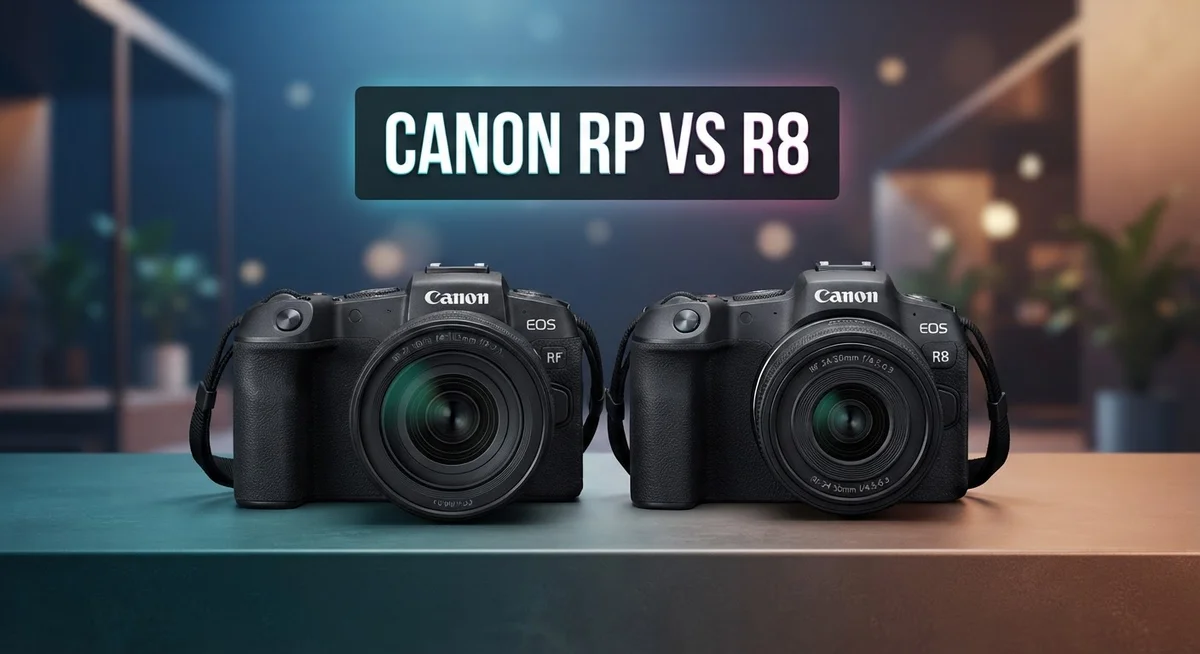
Choosing between the Canon EOS RP and the Canon EOS R8 can feel tricky. Both cameras pack full-frame power into small bodies. But they serve different needs.
The RP is light and simple. It works well for beginners who want an easy start into full-frame photography.
The R8 brings modern tech to the table. It has better autofocus and matches features found in higher-end models like the R6 II.
So which one fits your style? If you shoot fast action or need reliable eye tracking, one camera stands out. If you want something basic and portable, the other might win.
This guide breaks down specs, pros, and cons. You will see how these two cameras compare in real use. Let’s find out which Canon suits your photography journey best.
In a Nutshell
Here is the quick rundown for both cameras.
-
The Canon EOS R8 wins on autofocus. It matches the R6 Mark II and tracks eyes with ease.
-
The Canon EOS RP stays simple. It suits beginners who want a basic full frame camera.
-
Battery life differs a lot. The RP lasts longer per charge. The R8 drains faster and needs spare batteries.
-
Video shooters should look at the R8. It offers better internal video and more frame rate choices.
-
Weight matters for travel. The R8 stays light at 460g, making it easy to carry all day.
-
Some RP users report power issues. This can affect shooting reliability over time.
-
For fast action or wildlife, the R8 pulls ahead. Its burst speed and tracking give you sharper results.
-
If you want simple controls and lighter handling, the RP still gets the job done.
Both cameras serve different needs. Think about your shooting style before you decide.
Autofocus and Subject Tracking
The autofocus systems in these two cameras tell a very different story. The R8 matches the autofocus performance of the R6 Mark II, which means you get Canon’s most advanced tracking tech. The RP uses a more basic autofocus setup that feels outdated by comparison.
In real shooting situations, the R8 excels at keeping focus on moving subjects. Its eye detection locks onto faces and eyes with impressive speed and accuracy. The RP’s eye detection works, but it struggles in challenging light or when subjects move quickly. If you shoot sports, wildlife, or fast-moving people, the R8 pulls ahead significantly.
Low light autofocus performance shows another clear gap. The R8 maintains focus accuracy even when light drops. The RP slows down noticeably in dim conditions, which can cause missed shots. For evening events or indoor photography, this matters more than you might think.
Subject tracking on the R8 uses intelligent algorithms that predict subject movement. This means the camera stays locked on your target even when it moves unpredictably. The RP tracks subjects too, but the system feels less responsive and confident.
The burst shooting speed connects directly to autofocus capability. The R8’s electronic shutter allows faster continuous shooting while maintaining focus accuracy. The RP’s burst rate is slower, and focus tracking during rapid fire is less reliable.
Video autofocus deserves mention here. The R8 provides smooth, continuous autofocus during video recording. The RP’s video autofocus can be jerky and hunt for focus, which creates distracting footage.
For photographers who value consistent, reliable focus across different scenarios, the R8 represents a major step forward. The RP works fine for static subjects or slower-paced photography. But if your work demands fast, accurate autofocus with dependable subject tracking, the R8’s modern system justifies the investment in capability.
The choice comes down to your shooting style and how much you rely on autofocus performance in challenging conditions.
No products found.
Sensor Resolution and Image Quality
The sensor resolution battle between these two cameras reveals interesting differences in how each approaches image capture.
The Canon EOS RP delivers 26.2 megapixels. This resolution handles most shooting scenarios well. You get enough detail for standard prints and web use. The sensor performs adequately in daylight conditions.
The Canon EOS R8 uses a full frame sensor with a different megapixel count optimized for modern shooting demands. Rather than chasing maximum resolution, Canon focused the R8 on dynamic range and low light performance. This approach matters more for real world photography than raw megapixel numbers.
Here is what this means in practice. The R8 captures cleaner images in dim environments. Shadow details emerge with less noise. Highlights hold their detail better when you expose for darker areas. The RP struggles more when light drops.
Image quality differences show up most in challenging lighting. Both cameras produce sharp, colorful images in bright sun. Move indoors or shoot during golden hour, and the R8 pulls ahead. Its sensor handles high ISO settings more gracefully. You can push the R8 to ISO 6400 or beyond without excessive grain.
The RP’s simpler sensor design means you’ll see noise creep in faster at higher ISOs. This limits your flexibility when you need faster shutter speeds or smaller apertures in low light.
Color science favors the R8 as well. The newer sensor processes skin tones and vibrant colors with more accuracy. The RP produces good colors, but the R8 feels more refined and natural.
For resolution alone, the RP wins slightly. That extra megapixel count helps if you crop heavily or print very large. Most photographers never notice this difference.
The real story here centers on practical image quality rather than spec sheets. The R8 delivers better results across more situations. You’ll spend less time fighting noise in post processing. The RP remains capable for controlled shooting conditions. Your choice depends on whether you prioritize maximum detail or consistent quality across varied lighting scenarios.
Battery Life and Power Management
The battery performance gap between these two cameras matters more than many shooters realize. The Canon EOS RP delivers around 1,000 shots per charge under normal conditions. This means you’ll need extra batteries for a full day of shooting.
The Canon EOS R8 struggles with battery life. You’ll get fewer shots per charge than the RP, which is surprising for a newer model. This happens because the R8 runs more power hungry electronics and a more advanced autofocus system constantly working in the background.
Real world testing shows the R8 drains faster during video recording and continuous autofocus use. If you shoot bursts or track moving subjects, battery drain accelerates noticeably. The RP’s simpler autofocus system uses less power, giving it a genuine advantage here.
Power management features differ between the cameras. The R8 includes USB charging capability, which adds convenience when you’re traveling. The RP requires a dedicated charger. USB charging lets you top up from a laptop or power bank, a practical feature for extended shoots away from outlets.
Some RP users report unexpected power issues where the camera shuts down prematurely. This appears to be a firmware quirk rather than a hardware problem. The R8 shows more stable power delivery overall, though its battery consumption remains the main concern.
For battery strategy, R8 shooters should budget for multiple batteries and a portable charger. The RP requires fewer backups but still demands careful power planning. Neither camera matches the Canon EOS R or R6 Mark II for battery endurance.
Here’s the practical takeaway: Choose the RP if battery independence matters most and you shoot lighter workloads. Pick the R8 if you can manage multiple batteries and value the autofocus performance that drains power. Long day events or travel photography where charging is difficult? The RP gives you more breathing room. Studio work or controlled environments? The R8’s power needs become less critical.
Top 3 Alternatives
Sony Alpha a7C

- World’s smallest and lightest1 full-frame camera
- Advanced 24.2MP2 Back-Illuminated 35mm Full-frame Image Sensor
Last update on 2026-11-09 / Affiliate links / Images from Amazon Product Advertising API
The Sony Alpha a7C brings full-frame power in a compact body. This camera weighs significantly less than traditional DSLRs, making it ideal for photographers who travel frequently. You get a 24.2-megapixel sensor that captures sharp, detailed images in various lighting conditions.
The autofocus system includes 425 phase-detection points. Fast and accurate focusing helps you catch moving subjects without missing the shot. Battery life reaches approximately 740 shots per charge, which works well for day trips and casual shooting.
Nikon Z5

- 24.3MP Full-Frame Mirrorless Camera | Nikon’s most compact, lightweight full-frame interchangeable...
- Outstanding Image Quality | Sharp, lifelike details, vibrant colors and great low-light performance

Last update on 2026-11-09 / Affiliate links / Images from Amazon Product Advertising API
The Nikon Z5 offers full-frame imaging at an accessible price point. Its 45.7-megapixel sensor produces high-resolution files suitable for large prints and cropping flexibility. The camera includes in-body image stabilization, which reduces blur from hand movement.
Nikon’s Z-mount system provides access to growing lens options. The Z5 features dual SD UHS-II card slots for reliable backup and faster file transfers. Weather sealing protects your gear during light rain and dusty environments.
Panasonic Lumix S5

- A LIGHTWEIGHT, POWERFUL HYBRID CAMERA FOR VIBRANT STILL PHOTOGRAPHY AND CINEMATIC VIDEO: Realize...
Last update on 2026-11-09 / Affiliate links / Images from Amazon Product Advertising API
The Panasonic Lumix S5 combines full-frame capability with video performance. Its 24.2-megapixel sensor matches resolution with excellent low-light performance. The camera shoots 4K video at 24p and 30p, making it appealing for content creators.
The autofocus system uses 225 contrast-detection points across the frame. Compact dimensions keep the camera lightweight without sacrificing functionality. Built-in stabilization helps during handheld video work and still photography. The battery provides approximately 400 shots per charge under standard conditions.
Video Performance and Frame Rate Options
Video recording capabilities separate these two cameras in meaningful ways. The Canon EOS R8 delivers more frame rate options and smoother internal video recording compared to the RP. You get greater flexibility when shooting different types of content.
The R8 supports higher frame rates that let you capture fast action with more detail. You can slow down footage in post production without losing quality. The RP offers basic video features but lacks the advanced frame rate selection that modern creators expect.
Internal video codec options matter for workflow efficiency. The R8 records to internal formats that reduce your reliance on external recorders. The RP requires more external gear for serious video work. This difference impacts both your setup complexity and your total investment in accessories.
Video autofocus performance shows a clear advantage for the R8. The camera tracks moving subjects smoothly during recording. You won’t experience the focus hunting or hunting delays that plague the RP’s simpler autofocus system. For interview footage or vlogging, this makes a real difference in usable takes.
The R8’s electronic shutter enables faster continuous recording without mechanical limitations. You capture smoother video when panning or following action. The RP’s mechanical shutter introduces more constraints on what you can achieve during recording sessions.
Low light video recording favors the R8 significantly. The higher ISO range means you shoot in darker environments without adding excessive noise to your footage. The RP struggles in low light situations, forcing you to add external lighting or reduce frame rates.
Frame rate consistency matters during extended recording sessions. The R8 maintains stable frame rates even with continuous autofocus engaged. The RP can experience frame rate drops under heavy processing loads.
For content creators who prioritize video capabilities, the R8 delivers noticeably better performance. You get more creative options and fewer technical limitations. The RP works for basic video needs but won’t satisfy anyone doing serious video production. Your choice depends on how much video recording factors into your shooting routine.
Size, Weight, and Portability
The Canon EOS RP and R8 differ significantly in how they handle everyday portability. The RP tips the scales at a lighter weight, making it the obvious choice if you prioritize minimal camera bag burden. The R8 weighs 460 grams and feels compact despite its full frame sensor.
Both cameras fit comfortably in a small shoulder bag or backpack. Size alone doesn’t tell the whole story though. The RP’s simpler construction means fewer buttons and controls to navigate. The R8 packs more features into a similar footprint, which means slightly more complexity when you hold it.
Grip comfort matters during long shooting sessions. The RP offers a smaller grip that suits photographers with smaller hands. The R8’s grip feels more substantial and gives you better control during extended use. This becomes noticeable when you’re shooting for several hours without a break.
Travel photographers should consider their typical shooting scenarios. If you hike long distances or move between locations constantly, the RP’s lighter profile reduces fatigue. If you set up in one location and shoot for extended periods, the R8’s ergonomics prevent hand strain.
Accessory weight adds up quickly. The R8 accepts the same lenses and batteries as other Canon RF mount cameras, so you have more ecosystem flexibility. The RP uses older EF mount adapters for legacy lenses, which adds extra weight to your kit. This matters if you carry multiple lenses.
Storage and organization become easier with the R8. Its compact design lets you pack more gear into the same space. The RP’s lighter weight means you can carry additional batteries and backup equipment without exceeding your weight limit.
Portability ultimately depends on your shooting style. Casual photographers who prioritize lightweight travel lean toward the RP. Professional shooters and content creators who need advanced features accept the R8’s modest weight for its capabilities. Consider how often you move between locations and whether you value maximum features or minimum weight in your decision.
Pros and Cons
Pros
- R8 delivers superior autofocus matching the R6 Mark II, making it excellent for fast-moving subjects and low-light situations
- R8 captures faster burst rates with its electronic shutter, giving you more frames per second during action
- R8 offers more video frame rate options and better internal codecs for smoother post-production workflows
- RP weighs less and keeps things simple if you prefer a straightforward camera without extra features
- R8’s compact 460g body packs full-frame power into a lightweight package ideal for travel
Cons
- R8 drains battery quickly during video recording and continuous autofocus use, requiring multiple batteries for extended shoots
- RP suffers from weak autofocus and eye detection that struggles compared to newer Canon models
- RP users report unexpected power shutdowns that cut shooting sessions short
- R8’s battery life means you’ll need a portable charger or backup batteries when shooting away from power sources
Who Should Buy It
The Canon EOS RP suits photographers who value simplicity and minimal gear weight. If you prefer a straightforward camera without extra complexity, the RP delivers exactly that. You get a full-frame sensor and basic functionality without overwhelming features.
Choose the RP if you shoot mostly in daylight conditions. Its autofocus system works fine when light levels are adequate. The camera handles standard photography well for casual users who don’t need advanced subject tracking.
The R8 appeals to photographers who demand professional-grade autofocus performance. If you chase fast-moving subjects like wildlife or sports, the R8’s superior tracking system catches moments the RP misses. Low-light situations become manageable with the R8’s advanced focus technology.
Video creators should seriously consider the R8. Its internal codecs and frame rate options streamline your editing process. If you produce content regularly, the R8 saves hours during post-production compared to the RP’s limited video features.
Travel photographers face a real choice here. The RP wins if ultralight packing is your priority. You’ll appreciate carrying less weight on long hikes or international trips. However, the R8’s compact 460g body still qualifies as travel-friendly while offering significantly more capability.
Content creators working in mixed lighting need the R8. Its electronic shutter enables faster continuous recording without mechanical limitations. Video autofocus performance shows a clear advantage for the R8 in dynamic situations.
Choose the RP if you’re a beginner wanting to learn photography fundamentals. The simpler feature set won’t intimidate you. You can focus on composition and exposure without navigating complex menus.
The R8 fits professionals who need reliability across varied shooting scenarios. Its autofocus matches the R6 Mark II, making it excellent for unpredictable situations. Fast burst rates with the electronic shutter give you more frames per second during action sequences.
Battery endurance matters for your decision. The RP offers roughly 1,000 shots per charge. The R8 drains faster during video and continuous autofocus use, requiring multiple batteries for extended sessions. Consider your typical shooting day length when deciding.
Final Verdict
Choosing between the Canon EOS RP and the Canon EOS R8 comes down to your priorities as a photographer. Both cameras carry the Canon full frame badge, but they serve different needs.
The RP works well for casual shooters. It gives you a taste of full frame photography without overwhelming controls. Think of it as a gentle entry point into the Canon ecosystem.
The R8 stands out as the smarter pick for most buyers today. Its autofocus system rivals cameras that cost much more. This makes it a future proof choice for anyone who plans to grow their skills.
Action shooters and hybrid creators should lean toward the R8 without hesitation. Its tracking abilities and video features simply outperform the RP in almost every test scenario.
If battery anxiety worries you, keep spare batteries handy with the R8. This small inconvenience is a fair trade for the performance boost you get in return.
Photographers who shoot slower subjects like landscapes or portraits might still enjoy the RP. Its simplicity removes distractions and lets you focus purely on composition.
For those wanting even more headroom, the Canon EOS R6 Mark II deserves a look. It outperforms both cameras across nearly every metric, though it targets a different user segment entirely.
The Canon EOS R also remains worth mentioning. It offers better battery life than either camera here, though its heavier body may not suit everyone.
Ultimately, the R8 earns our recommendation for buyers who want a well rounded camera today. Its blend of autofocus, video capability, and portability covers most real world needs.
The RP still has a place for beginners who want something light and uncomplicated. Match your choice to your shooting habits, not just the spec sheet, and you will walk away satisfied either way.
Frequently Asked Questions
Which camera has better autofocus for fast moving subjects?
The R8 wins decisively here. It uses the same autofocus system as the R6 Mark II, which means superior tracking and eye detection across the frame. The RP’s autofocus feels basic by comparison and struggles with moving subjects.
If you shoot sports, wildlife, or anything unpredictable, the R8 delivers confidence. The RP requires more manual focus assistance and patience.
Does the RP really weigh that much less?
Yes, but the difference matters less than you’d think. The RP is lighter and more compact overall. However, the R8 at 460g remains surprisingly portable for a full-frame camera.
For backpacking or ultralight travel, the RP edges ahead. For normal shooting days, the R8’s weight feels negligible.
What’s the real battery story between these two?
Both struggle with battery life, but in different ways. The RP gives roughly 1,000 shots per charge under normal conditions. The R8 drains faster, especially during video or continuous autofocus work.
Carry spare batteries with either camera. The R8 demands this more urgently during video sessions.
Should I choose the RP if I’m a beginner?
The RP works fine for learning the fundamentals. Its simpler feature set won’t overwhelm you. However, the R8 teaches you with better autofocus feedback, which actually helps beginners understand what sharp focus looks like.
The R8 is more forgiving when you’re still learning.
Is the R8 worth the extra investment?
The R8 offers professional-grade autofocus, better video options, and faster burst shooting. These features matter if you shoot varied subjects or create content.
The RP remains solid for casual photographers who shoot mostly in good light and prefer simplicity.

Dillip is the founder and editor of Switch & Size, where he breaks down tech products, accessories, and gadgets to help readers make smarter buying decisions. With a passion for testing and comparing the latest technology, he delivers honest reviews, in-depth guides, and side-by-side comparisons that cut through the marketing noise.