Canon R1 vs R3: Complete Comparison Guide for Professional Photographers
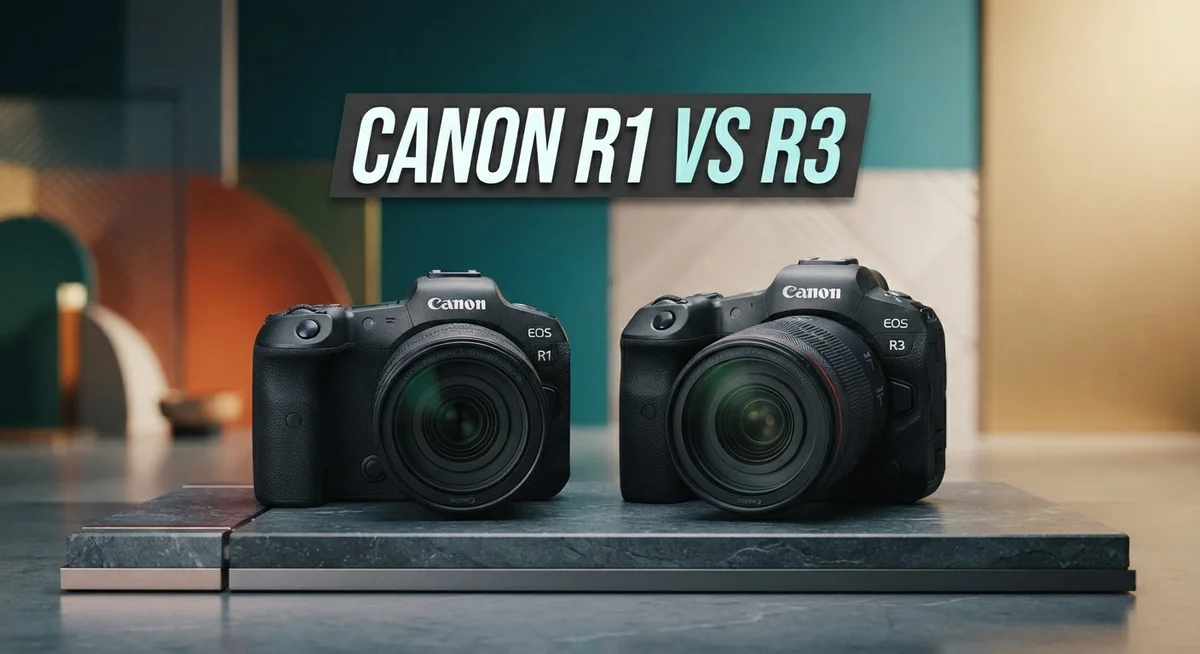
Choosing between the Canon R1 and Canon R3 feels tough. Both cameras pack a punch for action and sports photography.
The R1 brings next-gen AI autofocus to the table. It locks onto subjects with a “stickier” grip than ever before.
Burst shooting speed also sets these cameras apart. The R1 fires at 40fps while the R3 shoots at 30fps.
Build quality stays solid on both models. You get an integrated grip and a 24MP sensor either way.
The R3 offers proven performance that photographers already trust. It remains a strong choice for fast paced shooting.
So which camera fits your needs better? This guide breaks down every key difference.
We compare autofocus systems, burst rates, and build quality. By the end, you will know exactly which camera suits your style.
In a Nutshell
Here is the quick breakdown for you:
-
Both cameras share a 24MP sensor. They also pack an integrated grip for action shooting.
-
The R1 shoots at 40fps, while the R3 shoots at 30fps. This gap matters for sports and wildlife shots.
-
The R1 uses an improved cross-type autofocus system. It also holds a larger buffer for longer bursts.
-
You get a higher resolution viewfinder and LCD on the R1. This helps you check focus and framing faster.
-
Some photographers find the R1’s customization options slow down their workflow. The R3 stays simple and familiar.
-
Many reviewers call the R1 more of a bigger, upgraded R3 rather than a bold new camera.
-
If you want another option, check the Canon R5 Mark II. It brings solid specs too.
-
Sony and Nikon also offer strong flagship rivals in this space.
Your final pick depends on your shooting style and priorities. Think about burst speed and autofocus needs first.
Sensor and Image Quality
The sensor sits at the heart of image quality, and both cameras deliver solid foundations here. Each one packs a 24MP full-frame sensor that captures sharp, detailed shots across most lighting conditions. The real differences emerge in how these sensors perform under pressure.
The R1 brings next-generation AI autofocus that feels noticeably “stickier” than before. This means your subject stays locked in the frame even when movement gets erratic. The R1’s improved cross-type autofocus system spreads more focus points across the sensor, making it easier to nail focus on moving targets. The R3 uses a solid autofocus system, but it doesn’t match the R1’s speed or tracking intelligence.
Viewfinder and LCD quality matter more than many photographers realize. The R1 offers higher resolution displays on both the back screen and the viewfinder. You see more detail when composing shots and reviewing images. The R3 still provides good visibility, but the R1 edges ahead for those who spend hours looking through the viewfinder.
Buffer capacity tells an important story too. When you’re firing at maximum burst speed, the R1’s larger buffer lets you shoot more frames before the camera slows down. This advantage matters most during fast-paced action or wildlife sessions.
One thing to note: some photographers report that the R1’s extensive customization options can slow down workflows. You get more control, but that control requires time to set up properly. The R3 keeps things simpler, which appeals to shooters who want fewer menus to navigate.
Overall, the R1 delivers superior image capture technology with faster autofocus, quicker burst shooting, and better display quality. The R3 maintains reliable performance that many professionals already trust. Your choice depends on whether you need cutting-edge autofocus and faster frame rates, or whether proven, straightforward performance fits your style better.

- High Image Quality: Canon EOS R3 is small video camera that features a stacked, back-side...
- Powerful Image Processor: DIGIC X image processor with an ISO range of 100-102400; expandable to...

Last update on 2026-11-05 / Affiliate links / Images from Amazon Product Advertising API
Autofocus and Burst Performance
The autofocus systems on these two cameras show a clear generational shift. The R1 uses AI-powered autofocus that locks onto subjects with impressive consistency. The R3 relies on a proven cross-type system that still performs very well for most shooting situations.
Real world testing reveals the R1’s autofocus feels “stickier” when tracking moving subjects. This matters most when you shoot fast action like sports or wildlife. The R1 maintains focus lock even when subjects move unpredictably across the frame.
Burst performance separates these cameras significantly. The R1 fires at 40 frames per second, while the R3 maxes out at 30 frames per second. That 10fps difference adds up quickly when you need to capture the decisive moment.
Buffer capacity plays a supporting role here. The R1 holds more frames in its buffer before the camera slows down. This means you can shoot longer bursts without hitting a wall. The R3’s buffer still performs admirably, but the R1 gives you extra breathing room.
Speed matters differently depending on your work. Wedding photographers benefit from the R1’s faster burst rate. Sports shooters appreciate the stickier autofocus tracking. Wildlife photographers want both features working together.
The R3 still delivers reliable performance for most professionals. Its autofocus system tracks subjects smoothly, and 30fps handles most action scenarios well. You get established technology that photographers have trusted for years.
One practical note: the R1’s extensive customization options can actually slow you down. Some photographers spend more time adjusting settings than shooting. The R3 keeps things simpler, which some shooters prefer during fast paced events.
Your choice depends on how you work. If you shoot unpredictable action constantly, the R1’s autofocus and burst speed make sense. If you need reliable performance without overthinking settings, the R3 remains a solid choice. Both cameras excel at their jobs. The R1 simply pushes performance further forward.
Build Quality and Ergonomics
The R1 and R3 both feature integrated grips that feel natural in your hands during long shooting sessions. The grip design on each camera supports extended use without fatigue. Both cameras sit comfortably whether you shoot portrait or landscape orientation.
The R1 introduces a larger, higher-resolution viewfinder that shows more detail in real time. You see more of your scene before you press the shutter. The LCD screen on the R1 also offers superior resolution, making it easier to review and adjust settings in bright sunlight. These display improvements matter more than many photographers realize when you’re working in the field.
Build quality on both cameras feels solid and professional grade. The R1 uses reinforced materials that inspire confidence during demanding shoots. The R3 maintains the same rugged construction that established Canon’s reputation for durability. Either camera can handle weather, dust, and the occasional bump during travel.
The R1’s extensive customization options allow you to program buttons and menus exactly how you want them. This flexibility is powerful for experienced shooters who know their preferences. However, some photographers find that too many customization choices actually slow down their workflow rather than speed it up. You spend time tweaking instead of shooting.
Buffer capacity tells an important story for action work. The R1 holds more frames in its buffer before the camera slows down. This means you can keep shooting longer during critical moments. The R3’s buffer still performs well for most professional situations, but the R1 gives you extra breathing room during fast sequences.
The viewfinder experience differs noticeably between the two models. The R1’s larger viewfinder makes tracking moving subjects easier and more enjoyable. You get better visibility of focus points and exposure information. The R3’s viewfinder remains capable, but the R1 raises the bar for what you expect from a professional camera’s display.
Both cameras feel premium in hand. The R1 emphasizes next-generation features and refined ergonomics. The R3 delivers proven, reliable handling that professionals trust. Your choice depends on whether you prioritize the latest display technology and customization depth or prefer an established design that simply works.
Top 3 Alternatives
Canon EOS R5

- Canon USA Authorized. Items Include: Canon EOS R5 Mirrorless Camera – 45MP Full-Frame RF Camera...
- 45MP Full-Frame Sensor: Delivering incredible resolution, the R5 is perfect for landscape, portrait...
Last update on 2026-11-05 / Affiliate links / Images from Amazon Product Advertising API
The Canon EOS R5 brings powerful performance to professionals who need reliability. This camera captures stunning images with its high-resolution sensor and advanced autofocus system. You get excellent video capabilities, making it useful for both photography and filmmaking work.
The R5 handles fast shooting speeds well. Its build quality feels solid and dependable. Many photographers appreciate the extensive lens selection available for Canon’s RF mount system. The weather-sealed body protects your investment during challenging shoots.
Sony Alpha A7R V

- A whole new level of camera intelligence from new AI processing unit.Aspect Ratio : 3:2
- Next-generation AF with Real-time Recognition autofocus deep learning AI
Last update on 2026-11-05 / Affiliate links / Images from Amazon Product Advertising API
Sony’s Alpha A7R V stands out for its exceptional resolution and speed. This camera delivers incredible detail in every shot you take. The autofocus system uses advanced AI technology to track subjects accurately, even in difficult lighting.
The A7R V excels at both stills and video work. Its compact design makes it easier to carry compared to some competitors. Sony’s ecosystem offers diverse lens options and third-party support. The camera performs impressively in high-speed shooting situations.
Nikon Z9

- Bundle Includes: Nikon Z9 Mirrorless Digital Camera (Body Only) + 120GB G Series XQD Memory Card...
- Experience exceptional image quality with the Nikon Z9's 45.7MP FX-format stacked CMOS sensor paired...
Last update on 2026-11-05 / Affiliate links / Images from Amazon Product Advertising API
Nikon’s Z9 targets serious professionals seeking top-tier performance. This camera combines speed, resolution, and reliability in one package. The Z9 handles demanding shooting conditions with confidence and precision.
Weather sealing and robust construction make this camera ready for any environment. The autofocus system locks onto subjects quickly and maintains tracking throughout sequences. Nikon’s Z mount system provides access to quality lenses. Professional videographers appreciate the Z9’s comprehensive video features and codec options.
Each camera serves different needs. Consider your specific workflow, lens preferences, and shooting style when choosing between these three options.
Viewfinder and Display Technology
The viewfinder and display technology separate these two cameras in meaningful ways. The R1 features a larger, higher-resolution viewfinder that delivers noticeably more detail when you frame your shots. You see more of the scene in real time, which helps during fast-paced action work.
The LCD screens on both models perform well, but the R1’s display offers superior clarity and brightness. This matters when you review images in bright sunlight or check critical focus during video work. The R3’s LCD remains functional and reliable, yet it doesn’t match the R1’s visual quality.
Viewfinder brightness and refresh rate affect your shooting experience significantly. The R1 delivers a brighter, smoother view through the eyepiece. You notice this advantage immediately when shooting in dim venues or outdoors on overcast days. The R3 handles these situations competently, though with slightly less visual pop.
Both cameras show real time autofocus tracking in the viewfinder, which helps you follow moving subjects. The R1’s superior display technology makes this tracking easier to follow visually. You can see focus points and subject detection boxes with greater precision on the R1.
The information overlay on both cameras displays shooting data, histograms, and focus peaking. The R1 presents this data more clearly thanks to its higher resolution. You can read shutter speed, aperture, and ISO without squinting during critical moments.
For video creators, the R1’s viewfinder provides better magnification and clarity when manual focusing. You catch focus errors earlier and make precise adjustments with confidence. The R3 works fine for video, but the R1 gives you a clearer window into your footage.
The eyepiece design on both models feels comfortable during extended shooting sessions. The R1’s larger viewfinder means less eye strain when you’re tracking fast action for hours. Professional sports and wildlife photographers notice this comfort difference immediately.
Display technology influences your entire shooting workflow. The R1 simply offers a more premium visual experience through both the viewfinder and LCD. If you spend significant time composing shots and reviewing images, the R1’s superior displays become increasingly valuable.
Buffer and Workflow Efficiency
The R1 and R3 handle buffer capacity and workflow efficiency quite differently, and this matters most when you shoot fast action sequences.
The R1 offers a larger buffer, which means you can fire more shots before the camera slows down. At 40fps burst rate, this extra capacity becomes crucial. You’ll capture longer sequences without hitting that frustrating pause where the camera processes data. Wedding photographers shooting fast-paced ceremonies see this benefit immediately. The R3 maxes out at 30fps, so its buffer fills more slowly, but you’ll still experience limitations during extended bursts.
Workflow speed depends on more than just burst rate. The R1’s extensive customization options sound great in theory. You can program buttons, adjust menus, and fine-tune settings precisely. However, this flexibility actually slows some photographers down. You spend time configuring the camera instead of shooting. The R3 keeps things simpler, which means less setup time and faster transitions between shots.
Card writing speed matters too. Both cameras benefit from fast UHS-II cards, but the R1 pushes data faster due to its higher burst capability. You’ll need reliable cards that keep pace with the R1’s demands. Slower cards create bottlenecks that negate the buffer advantage.
For sports and wildlife work, the R1’s combination of faster burst and larger buffer creates a genuine workflow advantage. You’ll miss fewer peak moments. The R3 still performs admirably for most professional situations, though you’ll need to be more selective about when you hold down the shutter button.
Consider your actual shooting style. If you take quick bursts and review images between shots, the R3 keeps up fine. If you fire long sequences and need every frame captured without interruption, the R1 delivers better results. Neither camera leaves you stranded, but they handle sustained shooting differently.
The buffer isn’t just a number on a spec sheet. It directly impacts how you work in the field and whether you capture critical moments or watch them disappear while the camera writes to the card.
Pros and Cons
Pros
- R1 shoots at 40fps compared to R3’s 30fps, giving you more frames per second for fast action
- R1’s AI autofocus feels “stickier” and tracks moving subjects with noticeably better accuracy than R3
- R1 has a larger, brighter viewfinder that shows finer detail when you’re composing shots
- R3 offers established, proven performance that many photographers already trust and know well
- Both cameras feature integrated grips and premium build quality that feel solid during extended shoots
Cons
- R1’s extensive customization menu can slow your workflow down if you spend too much time tweaking settings
- R3’s autofocus system lags behind the R1, which matters most when tracking fast moving subjects
- R1’s higher price point makes it a bigger investment than the R3 for similar core features
- Some users feel the R1 is simply an R3 with incremental upgrades rather than a genuine leap forward in capability
Who Should Buy It
The R1 suits photographers who need maximum performance right now. You shoot fast action constantly. You chase wildlife, sports, or birds in flight. You need every frame possible before your buffer fills up. The R1’s 40fps burst rate and larger buffer mean you capture more decisive moments without waiting for the camera to catch up.
Choose the R1 if you work with demanding autofocus situations. Moving subjects that dart across your frame? The R1’s AI autofocus sticks to them better. You’re shooting in unpredictable lighting. You want the camera to find and track your subject with less intervention from you. This matters most during fast-paced events where you can’t afford missed focus.
The R1 appeals to professionals who shoot all day, every day. You need a viewfinder that shows fine detail clearly. You want the brightest, sharpest display to compose accurately in bright sunlight. You’re editing large batches of images and need smooth card writing performance. The R1 handles this workflow without strain.
The R3 fits photographers who value proven reliability over cutting edge features. You shoot sports or wildlife but at a steadier pace. You don’t need 40fps every time you press the shutter. The 30fps burst rate handles your work fine. You know this camera’s performance already and trust it completely.
Choose the R3 if you’re starting your professional journey. You want a camera that won’t overwhelm you with customization options. The R3 keeps things straightforward. You compose shots, adjust basic settings, and shoot. No endless menu diving required.
The R3 works well for photographers who shoot varied subjects rather than pure action. You photograph portraits, landscapes, and occasional fast moments. You need solid autofocus without the latest AI bells and whistles. Your shooting style doesn’t demand 40fps bursts regularly.
Both cameras suit anyone who needs a premium build and integrated grip. Both feel professional in your hands. The real difference comes down to speed and automation. Ask yourself honestly: do you need faster burst shooting and stickier autofocus, or does the proven R3 system serve your actual needs?
Final Verdict
Picking between these two cameras comes down to what you shoot and how you work. Both models share the same 24MP sensor and integrated grip design, so image quality itself won’t sway your decision.
The real difference shows up in speed and tracking. If you shoot fast moving subjects daily, the R1 gives you a clear edge in every scenario that demands split second focus.
Photographers who already own R series gear may find the R3 feels familiar and simple to integrate into an existing kit. This makes the transition smoother if you shoot a mix of genres beyond pure action.
Some reviewers argue the R1 feels more like a bigger, faster R3 rather than a true generational leap. That’s a fair point if you don’t push burst speed or autofocus tracking to their limits.
Think about your typical shoot day. Sports shooters, wildlife photographers, and photojournalists who need every frame will benefit from the R1’s advantages. Portrait, event, or hybrid shooters may not notice much difference in real world results.
If you want a camera outside this pair, the Canon R5 Mark II offers a different balance of resolution and speed worth checking. It suits photographers who want more megapixels alongside solid performance.
Your final decision should match your genre, not just the spec sheet. Both cameras handle professional work with confidence and durability.
Choose the R1 if you need the sharpest edge in speed and tracking accuracy. Choose the R3 if steady, proven performance already fits your workflow.
Either way, you’re getting a camera built for serious, demanding work. The right choice simply depends on how much speed and tracking precision your daily shooting actually requires.
Frequently Asked Questions
Which camera has better autofocus for wildlife and sports?
The R1 wins here. Its AI autofocus system feels stickier and tracks moving subjects with noticeably better accuracy. You get faster acquisition on fast-moving animals and athletes. The R3’s autofocus still performs well, but it lags behind the R1 when subjects move unpredictably across your frame.
Should I upgrade from R3 to R1?
That depends on what you shoot. If you work with fast action daily and need maximum tracking performance, the R1 justifies the leap. If you shoot varied subjects and your R3 already handles your typical day, upgrading may feel unnecessary. Some reviewers argue the R1 feels more like a bigger, faster R3 rather than a true generational leap.
Is the R1’s viewfinder really better?
Yes. The R1 has a larger, brighter viewfinder that shows finer detail when composing shots. You’ll notice the difference during long shooting sessions. The R3’s viewfinder is solid, but the R1 gives you more information at a glance.
Which camera should a beginner choose?
The R3 works well for photographers starting their professional journey. It offers proven reliability that many photographers already trust. You get excellent build quality and integrated grip without overwhelming customization menus. The R1’s extensive settings can slow your workflow if you spend too much time tweaking.
Can both cameras handle all day shooting?
Both handle professional work with confidence. The R1 suits photographers who shoot all day, every day because its larger buffer handles longer bursts. The R3 keeps up fine for most situations, but you may need to pause more often during rapid-fire sequences.

Dillip is the founder and editor of Switch & Size, where he breaks down tech products, accessories, and gadgets to help readers make smarter buying decisions. With a passion for testing and comparing the latest technology, he delivers honest reviews, in-depth guides, and side-by-side comparisons that cut through the marketing noise.