
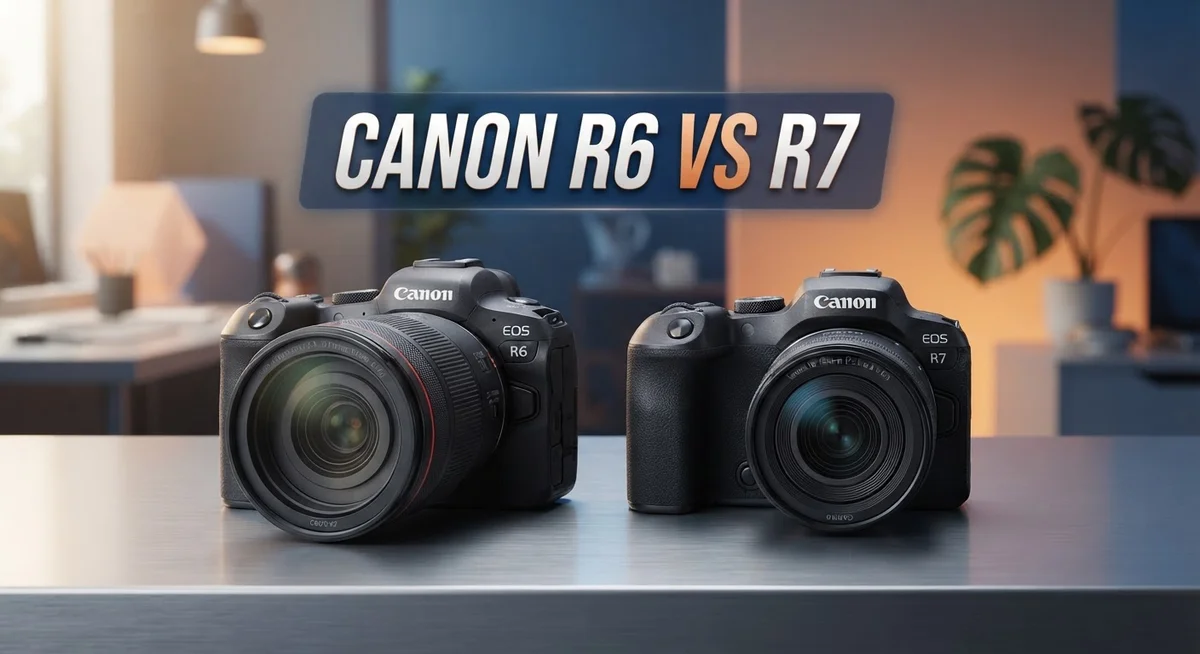
Canon R6 vs R7: Full-Frame vs APS-C Mirrorless Camera Comparison
Picking a new camera feels exciting but tricky. The Canon R6 and Canon R7 both stand out as popular choices. Yet they serve different needs.
The R6 brings a full frame sensor to the table. It shines in low light. It also offers strong image stabilization for steady shots.
The R7 takes a different path. It packs a 32MP APS-C sensor into a compact body. This camera handles long recording sessions without overheating.
So which one fits your style? Wildlife shooters may love the R7 reach and reliability. Portrait or event photographers may prefer the R6 low light skills.
This guide breaks down specs, pros, and cons side by side. You will see clear differences in performance and handling. By the end, you will know exactly which camera suits your photography goals.
In a Nutshell
Here’s the quick rundown before you decide:
-
The R6 packs a full frame sensor with only 20.1MP. This means bigger pixels and cleaner shots in dark rooms or evening shoots.
-
The R7 crams 32MP onto a smaller APS-C sensor. You get more detail for cropping distant subjects like birds or wildlife.
-
Overheating is a real worry with the R6 during long video sessions. The R7 handles heat much better and keeps recording without shutdown.
-
Image stabilization favors the R6. It offers a stronger IBIS system, giving you more stops of shake correction.
-
Third party lenses work great on the R6 but can cause focus glitches on the R7. Stick with Canon glass for smooth results on the crop body.
-
Low light shooting clearly favors the R6. The R7 struggles a bit past ISO 6400 while the R6 stays clean much higher.
-
Think about your main subject. Portraits and low light call for the R6. Fast action and reach call for the R7.
Sensor and Resolution
The sensor is where these two cameras truly diverge. The R6 uses a full frame sensor, while the R7 opts for an APS-C crop design. This fundamental difference shapes how each camera performs in nearly every shooting scenario.
Full frame means the R6 captures more light with each pixel. Your images receive superior detail in shadow areas and cleaner files at high ISO settings. The R7’s APS-C sensor is physically smaller, which affects light gathering ability. However, the R7 compensates by packing 32 megapixels into that smaller space compared to the R6’s 20.1MP.
Higher resolution sounds impressive on paper. The R7 delivers exceptional detail when you can print large or crop aggressively. Wildlife and sports photographers appreciate this extra reach. A 32MP crop sensor can feel like a telephoto lens compared to a 20MP full frame. You get more pixels to work with when your subject sits far away.
Yet resolution tells only part of the story. The R6’s full frame advantage shines in low light conditions. Each pixel on the R6 sensor is physically larger. This means better light sensitivity and cleaner images when shooting at dusk, indoors, or during night events. The R7 struggles more in dim environments because smaller pixels generate more noise at identical ISO values.
Dynamic range also favors the full frame R6. You recover more detail in blown highlights and crushed shadows. This flexibility saves shots during tricky lighting situations where exposure proves difficult to nail perfectly.
The R7 brings unlimited recording without thermal issues. The smaller sensor generates less heat during extended video work. The R6 can overheat during long recording sessions, which matters if you shoot documentaries or livestreams. The R7’s thermal reliability makes it dependable for marathon shooting days.
Lens compatibility adds another layer. The R6 works seamlessly with Canon’s third party RF mount glass. The R7 sometimes experiences focus hunting with certain third party lenses due to its different sensor architecture.
Your choice depends on priorities. Need stunning low light performance and full frame quality? The R6 wins. Prefer maximum resolution, compact size, and thermal stability? The R7 delivers those strengths instead.

- High Image Quality: Canon EOS R7 4K digital camera features a 32.5-megapixel APS-C CMOS sensor...
- Advanced Autofocus: Dual Pixel CMOS AF technology with up to 651 AF zones; uses every pixel on the...

Last update on 2026-11-04 / Affiliate links / Images from Amazon Product Advertising API
Low-Light Performance and Image Stabilization
The R6 and R7 handle low light situations in distinctly different ways. The R6’s full frame sensor captures significantly more light per pixel, giving it a real advantage when you’re shooting in dim environments. This means cleaner images at higher ISO settings without as much grain creeping in.
The R7 uses an APS-C sensor, which is smaller. This design choice limits its low light performance compared to the R6. However, the R7 still performs respectably in moderate darkness, especially if you’re willing to push the ISO to around 6400 where it remains usable.
Image stabilization tells a clearer story. The R6 features superior in body stabilization (IBIS) with over 2 stops of advantage over the R7. This means you can shoot at slower shutter speeds without blur. The R6 lets you handheld in conditions where the R7 might require a tripod or faster lens.
The R7’s stabilization works fine for general photography. It becomes less effective in very low light paired with longer focal lengths. If you’re shooting wildlife in dim conditions, the R6 gives you more flexibility to use slower shutter speeds safely.
Combining low light performance with stabilization, the R6 emerges as the clear winner for night photography and video work. You get cleaner ISO performance plus better stabilization, a powerful combination for challenging lighting.
The R7 doesn’t fail in low light. It simply requires different shooting techniques. You may need faster lenses, higher ISO tolerance, or a tripod. Many photographers work perfectly fine with these constraints, especially if they prioritize the R7’s other strengths like resolution and thermal reliability.
Your choice depends on how often you shoot in dim conditions. If low light is your primary concern, the R6 delivers noticeably better results. If you only occasionally encounter darkness and value other features more, the R7 remains a solid performer.
Video Capabilities and Thermal Reliability
The R6 and R7 take opposite approaches when it comes to video reliability during extended shoots. This difference matters most for professionals who record long sessions without breaks.
Thermal performance separates these cameras significantly. The R6 can throttle after 20 to 30 minutes of continuous 4K recording, depending on ambient temperature and codec settings. The R7 offers unlimited recording without thermal shutdowns, making it the go to choice for documentary work, events, and live streaming scenarios where you cannot afford interruptions.
The R6’s full frame sensor generates more heat during video processing. Canon engineered the R7 with better heat dissipation across its smaller APS-C body. This engineering choice alone makes the R7 more dependable for marathon recording sessions in warm environments.
Video quality tells a different story. The R6 captures superior dynamic range and cleaner footage in low light video work. Its full frame advantage means each pixel collects more light information. The R7’s 32MP resolution provides excellent detail, yet struggles slightly when recording in dim conditions compared to the R6.
Frame rates and codec options favor the R6 marginally. You get more creative control with professional recording formats. However, the R7 delivers 4K at 60fps without worrying about shutdown timers, which many creators find more practical than theoretical quality advantages.
Consider your shooting environment. Indoor studio work with controlled lighting? The R6 handles this well and stays cool enough. Outdoor events, wildlife documentation, or multi camera setups? The R7’s thermal reliability becomes invaluable.
The R7 also benefits from its compact size during video work. Handheld recording sessions feel less fatiguing with a lighter camera body. Gimbal compatibility improves with the reduced weight.
Your decision hinges on whether you prioritize unlimited recording capability or maximum image quality. The R6 suits short form content creators and studio professionals. The R7 belongs in the hands of journalists, event videographers, and anyone who needs a camera that keeps rolling without fail.
Top 3 Alternatives
Sony A7IV

- 33MP full-frame Exmor R back-illuminated CMOS sensor.Operating temperature : 0 to 40 °C (32 to...
- 8x more powerful, next generation BIONZ XR image processing engine
Last update on 2026-11-04 / Affiliate links / Images from Amazon Product Advertising API
The Sony A7IV offers full-frame performance that rivals professional setups. This camera delivers exceptional autofocus with 759 phase-detection points across the sensor. You get 4K video at 60fps, which handles fast-paced content smoothly.
The battery life reaches approximately 520 shots per charge. The compact body makes it easy to carry for long shooting sessions. Real-time eye-tracking keeps subjects sharp automatically, even during movement.
Nikon Z6III

- Bundle Includes: Nikon Z6 III Mirrorless Camera with 24-120mm lens + Camera Bag + 128GB Memory Card
- 24.5MP PARTIALLY STACKED FULL FRAME SENSOR: The Nikon Z6 III features a newly developed 24.5MP...
Last update on 2026-11-04 / Affiliate links / Images from Amazon Product Advertising API
Nikon’s Z6III brings impressive low-light capability to your work. The sensor performs well in dark environments without excessive noise. You’ll appreciate the 14fps continuous shooting speed for action moments.
The autofocus system tracks moving subjects with reliability. Video capabilities include 8K recording options for future-proof content. The weather-sealed body protects your investment during outdoor conditions.
Panasonic Lumix S5II

- Key Upgrades to a Compact Hybrid Powerhouse: Panasonic S5II with Phase Hybrid Autofocus, Improved...
- Fast, Accurate Phase Hybrid Autofocus: This full frame mirrorless camera uses advanced subject...
Last update on 2026-11-04 / Affiliate links / Images from Amazon Product Advertising API
Panasonic’s Lumix S5II combines affordability with solid features. This full-frame camera produces sharp images with excellent color accuracy. The 47.3-megapixel sensor captures fine details in landscapes and portraits.
Dual SD UHS-II card slots give you backup storage during important shoots. The stabilization system helps reduce camera shake in handheld situations. Video performance includes 4K options that work well for content creators.
All three cameras offer full-frame sensors and modern autofocus systems. Each excels in different areas—Sony emphasizes speed, Nikon focuses on low-light performance, and Panasonic provides value with high resolution. Your choice depends on your specific shooting style and priorities.
Build Quality and Ergonomics
The R6 and R7 differ significantly in how they feel in your hands and how they’re built for daily use. The R6 uses a full frame body, which gives it a slightly larger grip and more substantial feel. The R7 is more compact and lighter, making it easier to carry for extended shooting sessions.
Button placement matters when you’re shooting fast. The R6 positions controls in ways that feel natural for professionals who’ve used Canon DSLRs. Your thumb and fingers reach everything without awkward stretching. The R7 follows a similar layout but scales it down for its smaller frame. Both cameras have customizable buttons, so you can arrange functions to match your workflow.
The build materials tell an interesting story. The R6 features a magnesium alloy chassis that feels premium and solid. The R7 also uses magnesium alloy but with a slightly less robust construction. Neither camera feels cheap, but the R6 edges ahead in terms of durability perception.
Weather sealing protects your investment during unpredictable conditions. The R6 offers comprehensive sealing around buttons, dials, and the battery compartment. The R7 includes weather resistance too, though it’s slightly less extensive. If you shoot in rain or dusty environments regularly, the R6 provides more peace of mind.
The viewfinder experience differs between these cameras. The R6’s larger body accommodates a bigger eyepiece that feels more comfortable during long shooting sessions. The R7’s viewfinder is smaller but still clear and responsive. Both use electronic displays, so you see exposure adjustments in real time.
Battery life connects directly to ergonomics because frequent battery swaps interrupt your shooting rhythm. The R6 and R7 use different battery types. The R6’s larger battery typically lasts longer per charge, though the R7 compensates with lighter power demands from its smaller sensor.
Ultimately, choose the R6 if you value a premium feel and established professional ergonomics. Select the R7 if portability and lightweight handling matter more for your style of photography.
Lens Ecosystem and Compatibility
The lens ecosystem plays a crucial role when choosing between these two cameras. Canon’s RF mount system supports both bodies, but the sensor size creates important differences in how lenses perform.
The R6 uses a full frame sensor. This means RF lenses deliver their intended focal length and field of view. A 50mm lens acts as a true 50mm. You get the exact angle of coverage Canon designed into each lens.
The R7 has an APS-C crop sensor with a 1.6x multiplication factor. That same 50mm lens becomes equivalent to an 80mm lens in real world use. This crop effect extends your reach with telephoto lenses. Wildlife photographers often prefer this automatic magnification. However, wide angle lenses become less wide than intended.
Both cameras share the RF mount, so physical compatibility isn’t an issue. You can attach any RF lens to either body. The real consideration involves how each lens library serves your shooting style.
Canon’s RF lens selection leans toward full frame optimization. The company has released dozens of RF mount lenses designed specifically for the R6’s sensor. These lenses perform at their peak on full frame bodies. Mounting them on the R7 works fine, but you’re not using their full optical design potential.
The R7 works beautifully with RF lenses despite the crop factor. Many photographers actually prefer the extra reach for sports and wildlife work. The crop gives you more subject magnification without buying expensive telephoto glass.
Third party lens compatibility introduces another variable. Some third party RF mount lenses show compatibility quirks with the R7’s crop sensor. Full frame lenses sometimes behave unpredictably on crop bodies. The R6 avoids these complications since it’s the intended full frame platform.
Your existing lens collection matters here. If you already own RF lenses, both cameras work with your current glass. If you’re starting fresh, the R6 gives you access to the complete RF ecosystem without workarounds. The R7 requires more careful lens selection but offers that valuable crop magnification for specific genres.
Pros and Cons
Pros
- R6: Full frame sensor captures superior low light performance and cleaner footage in challenging conditions
- R6: Better in body image stabilization gives you 2+ stops advantage for handheld shooting
- R7: 32MP resolution provides more detail and cropping flexibility in post production
- R7: Compact and lightweight design makes it ideal for travel and all day shooting
- R7: No thermal throttling means unlimited recording without overheating interruptions
Cons
- R6: Smaller full frame sensor generates more heat during extended video sessions
- R7: APS-C crop sensor limits your reach compared to full frame unless you use longer lenses
- R7: Lower native ISO performance means more noise in dim lighting situations
- R6: Can throttle after 20 to 30 minutes of continuous 4K video recording
Who Should Buy It
The R6 shines for professional photographers who work in low light environments. Wedding photographers, event shooters, and studio professionals benefit from its full frame sensor and superior image stabilization. If you shoot indoors without constant flash, the R6 delivers cleaner images at higher ISOs.
The R7 appeals to content creators who need reliability above all else. YouTubers, travel vloggers, and documentary filmmakers love its unlimited recording capability. You won’t face thermal shutdowns during long takes, which matters when you’re capturing crucial moments.
Wildlife and sports photographers face an interesting choice. The R7’s 32MP resolution and crop factor give you extra reach without buying longer lenses. However, if you already own telephoto glass, the R6’s full frame sensor might serve you better. The R6 also tracks fast moving subjects more smoothly in dim lighting conditions.
Enthusiasts upgrading from DSLRs should consider their shooting style first. Night sky photographers and astrophotography fans absolutely need the R6. The full frame sensor and low noise performance make a real difference when you’re shooting at ISO 3200 or higher.
Travel photographers often prefer the R7 for its compact size and weight. Hiking to remote locations becomes easier when your camera weighs less. The R7 also handles extended video sessions without overheating concerns, which matters during long travel days.
Hybrid shooters who mix stills and video should lean toward the R7. Its thermal reliability means you can shoot photos, then switch to video without interruption. The R6 requires more careful planning during mixed shooting sessions.
Budget conscious professionals should evaluate their actual needs. The R7 delivers exceptional resolution and reliability at a different positioning than the R6. Neither camera is “cheap,” but each serves distinct workflows.
Rental houses and studios often stock both models. This tells you something important: they’re not competitors in every scenario. The R6 handles certain jobs better, while the R7 excels in others. Your specific photography needs should drive the decision, not general reputation or specs alone.
Final Verdict
Choosing between the Canon R6 and R7 comes down to your main goal. Both cameras perform well. But each one shines in different situations.
If you shoot in dark venues or need smooth video without grain, the R6 fits your needs. Its sensor handles light better than the R7.
If you shoot outdoors, travel often, or record long videos, the R7 stands out. It handles heat well and gives you more detail per shot.
Think about your typical shooting day. Do you work indoors with tricky lighting? Or do you spend hours outside chasing action shots? Your answer points you toward the right camera.
Wildlife shooters often pick the R7 for its reach and reliability. Studio photographers often pick the R6 for its light handling and smooth files.
Neither camera is a bad choice. They simply serve different photographers with different goals.
New photographers may find the R7 easier to grow into. It offers strong results without heat problems during long sessions.
Professional shooters who need top image quality in low light may prefer the R6. Its sensor gives cleaner results in tough lighting.
Video creators deserve special mention here. If you record long clips often, thermal reliability matters a lot. The R7 handles this better than the R6.
Photographers who print large images or crop heavily benefit from the R7 too. Its resolution gives more room to work with.
Still unsure? Think about what frustrates you most in your current setup. If it’s noise in dark shots, pick the R6. If it’s overheating during long shoots, pick the R7.
Both cameras share the same lens mount, so switching later stays simple. You won’t lose your lens investment either way.
In the end, your shooting style should guide this decision. Pick the camera that solves your biggest pain point today.
Frequently Asked Questions
Which camera handles video better for long recording sessions?
The R7 wins here. It has unlimited recording time without thermal throttling. You can film all day without the camera shutting down from heat. The R6 can overheat during extended video work, especially in warm conditions. If you shoot documentaries or events that run for hours, the R7 keeps rolling.
Does the R6 really perform better in low light?
Yes. The R6’s full frame sensor captures cleaner footage in dark spaces. You get less grain at high ISOs. The R6 also has a 2+ stop advantage with its image stabilization. This means handheld shots stay sharper in dim venues like concerts or studios. The R7 struggles more when light drops.
Can the R7’s higher megapixels make up for its crop sensor?
Partially. The R7 gives you 32MP of detail for cropping and printing large. However, the crop factor (1.6x) means you lose reach on distant subjects. You would need longer lenses to match the R6’s framing. The R7 works best for outdoor shooting where you have space to move.
Should I choose based on what I shoot most?
Absolutely. Ask yourself: Do you work indoors with tricky lighting? Pick the R6. Do you shoot outdoors, travel often, or record long videos? Pick the R7. Your typical shooting day matters more than specs on paper. Match the camera to your real workflow, not just features.
Is one camera better for beginners?
The R7 is easier to grow into. Its compact size feels less intimidating. You get high resolution to learn composition. The unlimited recording removes one learning barrier. The R6 demands better technique in low light to shine. Start with what fits your current needs, not what sounds professional.

Dillip is the founder and editor of Switch & Size, where he breaks down tech products, accessories, and gadgets to help readers make smarter buying decisions. With a passion for testing and comparing the latest technology, he delivers honest reviews, in-depth guides, and side-by-side comparisons that cut through the marketing noise.


