Canon R7 vs R6 Mark II: Complete Camera Comparison Guide
Picking a new camera can feel tricky. You want sharp photos, fast focus, and great video too. Canon gives you two strong choices here.
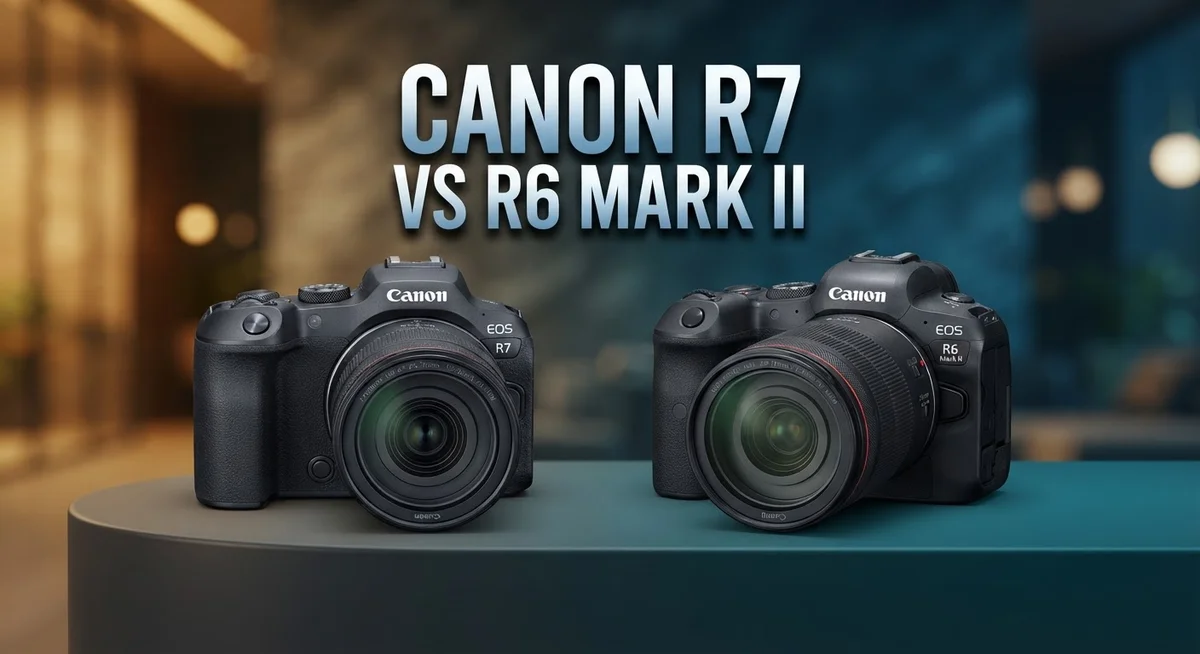
The Canon R7 and Canon R6 Mark II both wear the Canon badge proudly. But they serve different photographers in different ways.
The R6 Mark II brings a full-frame sensor and blazing speed. It shines in low light and tracks moving subjects with ease.
The R7 uses a smaller APS-C sensor. This gives it extra reach for wildlife and sports shooters who need to zoom in tight.
So which camera fits your style? Do you chase birds through dense trees, or shoot portraits in dim rooms?
This guide breaks down every key difference. We compare autofocus, burst speed, image quality, and real world use cases. By the end, you will know exactly which Canon camera belongs in your bag.
In a Nutshell
-
R6 Mark II shoots up to 12fps with the mechanical shutter and 40fps with the electronic shutter. This makes it a strong pick for fast action.
-
R7 gives you extra telephoto reach thanks to its APS-C crop sensor. Wildlife shooters often like this trait.
-
Autofocus on the R6 Mark II stays locked even in tricky light. Some R7 users report occasional focus hunting on fast subjects.
-
Low light performance favors the R6 Mark II. The R7 still does well for its sensor class but does not match full-frame results.
-
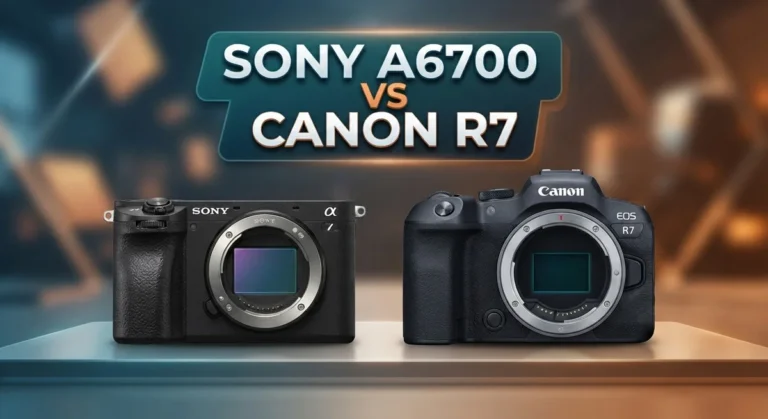
Competitors like the Sony A6700 and Nikon Z6 III offer similar features. It helps to compare specs before deciding.
-
Pick the R6 Mark II if you want a hybrid camera that handles both photo and video well.
-
Pick the R7 if you need extra reach without carrying heavy telephoto lenses.
Both cameras carry the Canon name with pride. Your final choice depends on what you shoot most often and how you shoot it.
Sensor and Image Quality
The sensor sits at the heart of image quality. The R6 Mark II features a full-frame 24.2MP sensor. The R7 uses an APS-C crop sensor with a different megapixel count. This difference shapes how each camera performs in real shooting situations.
Full-frame sensors capture more light per pixel. The R6 Mark II excels in low-light environments. You can push the ISO higher without visible noise. Portraits taken indoors or at sunset show cleaner detail. The R7 handles low-light decently for an APS-C camera, but it doesn’t match the full-frame advantage.
The crop sensor brings a hidden benefit for wildlife and sports. The R7‘s smaller sensor gives you extra effective reach. A 100mm lens feels like 160mm on the R7. You get more subject magnification without buying expensive telephoto glass. This matters when you photograph distant birds or athletes on a field.
Color science and dynamic range differ between these cameras. The R6 Mark II preserves shadow detail in high-contrast scenes. You recover blown highlights more easily in post-processing. The R7 captures vibrant colors but shows slightly less flexibility in extreme lighting.
Burst shooting speed affects image quality too. The R6 Mark II fires 12fps with mechanical shutter or 40fps electronically. More frames mean better odds of capturing the perfect moment. The R7 offers solid burst speed but trails behind the Mark II.
Autofocus performance influences sharpness. The R6 Mark II uses advanced AF that tracks subjects accurately. Sharp images come more consistently, even with fast lenses. The R7‘s autofocus works well but lacks the same precision in challenging conditions.
Video recording affects sensor heat and image stability. The R6 Mark II handles extended video without thermal issues. The R7 manages video capably for most creators.
Choose the R6 Mark II for superior low-light performance and dynamic range. You’ll get cleaner images in dim rooms and more editing flexibility. Choose the R7 if telephoto reach matters more than absolute image quality. The crop sensor advantage outweighs the sensor size difference for distant subjects.

- High image quality featuring a new 24.2 megapixel full-frame CMOS sensor
- DIGIC X Image Processor with an ISO range of 100-102400, expandable to 204800
Last update on 2026-11-09 / Affiliate links / Images from Amazon Product Advertising API
Autofocus and Burst Performance
The autofocus systems on these cameras work in very different ways. The R6 Mark II uses Canon’s Dual Pixel CMOS AF II technology. This system covers nearly the entire frame and tracks subjects with remarkable precision.
The R7 relies on an older autofocus design. It performs well in good light but struggles when shadows fall across your subject. The difference becomes obvious when you shoot indoors or during golden hour.
Burst performance separates these cameras dramatically. The R6 Mark II fires at 12 frames per second with its mechanical shutter. Switch to electronic shutter mode and it jumps to 40fps. This speed lets you capture the exact moment a bird takes flight or a soccer player scores.
The R7 maxes out at 15fps with its mechanical shutter. For fast action, the R6 Mark II simply outpaces it. You’ll miss fewer critical moments with the full frame body.
Low light autofocus matters more than you think. The R6 Mark II maintains focus accuracy down to EV minus 6.5. The R7 drops to EV minus 2. In a dimly lit concert hall or wildlife scene at dusk, the R6 Mark II locks on instantly while the R7 hunts for focus.
Tracking moving subjects reveals another gap. The R6 Mark II’s autofocus engine predicts subject movement and adjusts focus continuously. The R7’s system reacts more slowly to sudden direction changes.
Eye and face detection works on both cameras. The R6 Mark II detects eyes faster and more reliably. Animal eye detection performs better on the full frame body too.
For video, the R6 Mark II offers superior autofocus performance. It keeps focus smooth during pans and subject movements. The R7’s autofocus can feel jerky during video recording.
If you shoot fast action in changing light, the R6 Mark II wins clearly. If you mostly shoot in daylight with predictable subjects, the R7 handles autofocus adequately. The burst speed advantage also favors the R6 Mark II for any fast paced work.
Low-Light and ISO Performance
The R6 Mark II pulls ahead in low light situations thanks to its full frame sensor. This larger sensor captures more light per pixel, which means cleaner images when you shoot in dim conditions. The R7 performs well for an APS-C camera, but it cannot match the full frame advantage.
ISO performance tells a clear story between these two cameras. The R6 Mark II handles higher ISO values with less noise. You can push the sensor further without sacrificing image quality. The R7 shows more noise at equivalent ISO levels, especially when you go beyond ISO 3200.
Native ISO range matters for your workflow. The R6 Mark II offers a native range from ISO 100 to 102400. The R7 starts at ISO 100 and tops out at ISO 32000 for native shooting. This difference becomes obvious when you photograph concerts, indoor sports, or nighttime events.
Dynamic range separates these cameras significantly. The R6 Mark II preserves shadow detail better in tricky lighting. You recover more information from underexposed areas during editing. The R7 struggles more when you need to lift shadows in post-production.
Autofocus in low light reveals another strength for the R6 Mark II. It maintains focus accuracy down to EV minus 6.5, which is extremely dim. The R7 focuses down to EV minus 4.5. This means the R6 Mark II locks onto subjects in near darkness where the R7 may hunt or fail.
Real world shooting shows these differences clearly. Concert photography, dimly lit venues, and nighttime events favor the R6 Mark II. You get usable images at ISO values where the R7 produces visible grain.
The R7 still performs respectably in low light for an APS-C option. If you shoot mostly outdoors or in reasonable light, the gap matters less. But for serious low light work, the R6 Mark II’s full frame sensor and superior ISO handling give you noticeably better results with cleaner, sharper images.
Top 3 Alternatives
Sony A6700

- 26.0MP APS-C format Exmor R back-illuminated CMOS sensor
- BIONZ XR processing power for exceptional image quality

Last update on 2026-11-09 / Affiliate links / Images from Amazon Product Advertising API
The Sony A6700 brings powerful autofocus performance to serious photographers. This camera features 759 phase-detection autofocus points that track subjects with incredible accuracy. You get fast continuous shooting at up to 11 frames per second, which helps you capture decisive moments.
The sensor delivers excellent image quality in various lighting conditions. Real-time tracking keeps your subject sharp, even during movement. The compact design makes it easy to carry for travel or events.
Nikon Z6III

- VIDEO - 6K/60p Internal N-RAW video recording + oversampled 4K UHD, 4K/120p, Full HD/240p slow...
- BEST IN CLASS EVF - Max brightness of 4000 nits gives a clear, vibrant view even in very bright...
Last update on 2026-11-09 / Affiliate links / Images from Amazon Product Advertising API
The Nikon Z6III offers professional-grade reliability in a full-frame package. This camera shoots at 14 frames per second continuously, giving you plenty of shots to choose from. The autofocus system uses 135 focus points with intelligent subject detection.
Battery life extends significantly compared to earlier models, so you shoot longer between charges. The weather-sealed body handles tough conditions without worry. Video capabilities include 8K recording, making it versatile for multimedia work.
Fujifilm X-T5

- 40.2 Megapixel X-Trans CMOS 5 HR BSI Imaging Sensor
- 15 Frames per second in Mechanical Shutter
Last update on 2026-11-09 / Affiliate links / Images from Amazon Product Advertising API
The Fujifilm X-T5 combines classic design with modern performance. This camera features a 40.2-megapixel sensor that produces stunning detail and color rendition. The film simulation modes let you achieve specific looks straight from the camera.
You get 7 frames per second shooting speed for action work. The compact APS-C format keeps the system lightweight without sacrificing capability. Manual controls give you direct access to exposure settings, making it intuitive for creative photographers.
Each option serves different needs. The Sony excels at autofocus speed. The Nikon provides full-frame versatility. The Fujifilm emphasizes image character and handling feel.
Telephoto Reach and Crop Sensor Advantage
The crop sensor in the R7 gives you a significant advantage when shooting telephoto subjects. This sensor size multiplies your effective focal length by 1.6x compared to full-frame lenses. A 100mm lens on the R7 behaves like a 160mm lens on the R6 Mark II. For wildlife and sports photographers, this means extra reach without buying expensive long telephoto lenses.
The R6 Mark II uses a full-frame sensor, which captures a wider field of view with the same lens. This design choice prioritizes low-light performance and dynamic range over telephoto multiplication. If you need maximum reach, the R7’s crop sensor wins this specific battle.
However, the crop sensor advantage comes with tradeoffs. The R7’s smaller sensor collects less light per pixel. You’ll notice this difference when shooting in dim conditions or pushing ISO higher. The R6 Mark II maintains cleaner images at high ISO values because its larger pixels gather more light.
The R7 excels when you pair it with telephoto lenses for specific work. Birdwatchers and sports shooters often prefer crop sensors for this exact reason. Your telephoto investments stretch further. A 200mm lens becomes effectively 320mm. This multiplication saves you from carrying massive 400mm or 600mm lenses everywhere.
The R6 Mark II offers versatility instead. You can shoot wide-angle, standard, and telephoto work with fewer lens changes. The full-frame sensor adapts better to varied shooting situations. You sacrifice some telephoto reach but gain flexibility.
Your choice depends on your primary subjects. If you shoot mostly wildlife or distant sports, the R7’s crop sensor advantage matters greatly. You’ll appreciate the effective magnification. If you need a do-everything camera that handles low-light events, studio work, and occasional telephoto shooting, the R6 Mark II serves you better.
Consider your lens collection too. Existing Canon RF lenses perform differently on each camera body. The R7 makes telephoto lenses more powerful. The R6 Mark II makes wide-angle lenses more useful for environmental shots.
Build Quality and Ergonomics
The R6 Mark II and R7 feel quite different in your hands, and that matters when you’re shooting all day.
The R6 Mark II is noticeably heavier and larger because of its full-frame body design. This extra weight actually helps with stability when you hold the camera for extended periods. The grip feels solid and substantial. Your fingers wrap around it naturally, and you get good leverage when operating the controls.
The R7 is lighter and more compact overall. It fits easier into camera bags and feels less tiring during long shooting sessions. The smaller body means shorter battery life per charge, though, since the battery is physically smaller. Photographers who hike or travel appreciate this portability advantage.
Button placement and menu systems differ between these cameras. The R6 Mark II puts controls where your thumb naturally rests. The R7 uses a similar layout, but everything feels slightly cramped because of the smaller body. Both cameras have intuitive menus, but the R6 Mark II gives you more screen real estate to work with.
Weatherproofing sets them apart meaningfully. The R6 Mark II includes more extensive sealing against dust and moisture. You can shoot in light rain without worrying. The R7 has basic weather resistance, but it’s not designed for harsh conditions. If you work outdoors frequently, the R6 Mark II offers better peace of mind.
The viewfinder experience differs too. The R6 Mark II’s larger optical path creates a brighter, more immersive view. You see more of the scene and get better depth perception. The R7’s viewfinder is still excellent for an APS-C camera, but it feels noticeably smaller when you compare them side by side.
Build materials on both cameras use magnesium alloy frames, which keeps them durable without excessive weight. The R6 Mark II feels more premium because of its larger proportions and additional weather sealing. The R7 doesn’t feel cheap, but it emphasizes efficiency over robustness.
Your choice here depends on how you shoot. Choose the R6 Mark II if you need durability and comfort during all-day sessions. Pick the R7 if portability and lighter gear matter more to your workflow.
Pros and Cons
Pros
- R6 Mark II captures more detail in shadows and highlights thanks to its larger sensor and superior dynamic range
- R7 delivers extended telephoto reach without buying additional lenses, making wildlife and sports work more efficient
- R6 Mark II maintains accurate focus in near darkness (EV minus 6.5), ideal for events and low-light venues
- R7 fits easily in camera bags and feels comfortable during long shooting sessions due to its lighter, compact design
- R6 Mark II’s 40fps electronic burst mode lets you capture fast action and pick the perfect moment later
Cons
- R6 Mark II requires investing in telephoto lenses if you shoot distant subjects, since full-frame sensors don’t crop naturally
- R7’s autofocus system struggles in dim conditions and doesn’t track eyes as reliably as the R6 Mark II
- R7 shows more noise at higher ISOs, limiting your options when light fades or you need faster shutter speeds
- R6 Mark II weighs significantly more, which affects portability and causes fatigue during extended handheld shooting
Who Should Buy It
The R6 Mark II suits photographers who need maximum flexibility across different shooting conditions. You’ll appreciate this camera if you shoot events, portraits, landscapes, and travel work all in one day. The full-frame sensor handles mixed lighting without breaking a sweat, and the autofocus system locks onto subjects reliably even when light fades.
Choose the R6 Mark II if you own a collection of full-frame lenses already. Switching to this camera means your existing glass works perfectly without any crop factor complications. Your investment in lenses pays off immediately.
The R7 appeals to specialists who know exactly what they shoot. Wildlife photographers love this camera because the crop sensor gives you extra reach on telephoto lenses. Sports shooters benefit the same way. You get closer to distant action without buying expensive longer glass.
Pick the R7 if you travel frequently or shoot handheld for long sessions. The lighter, compact body reduces fatigue during all-day assignments. Your camera bag stays manageable, and you move faster between locations.
The R7 works best for photographers who accept some tradeoffs for practical advantages. You’re okay with slightly lower ISO performance because you mostly shoot outdoors in decent light. You’re comfortable with autofocus that’s good but not exceptional because you often focus manually or use single-point AF on stationary subjects.
The R6 Mark II calls to hybrid shooters. You film video one moment, then switch to stills the next. The electronic burst rate of 40fps captures moments you’d otherwise miss. You need a camera that does everything well.
Consider your primary subject matter most carefully. If you chase birds, distant sports, or anything requiring telephoto reach, the R7 makes sense. If you work events, portraits, or need to adapt quickly to changing situations, the R6 Mark II serves you better.
Your shooting style matters too. Fast-paced work favors the R6 Mark II’s superior autofocus. Deliberate, planned shoots work fine with the R7’s capable system. Think about how you actually use your camera, not just what sounds impressive on paper.
Final Verdict
The Canon R6 Mark II and R7 both deliver strong results, but they serve different photographers. Your final decision should hinge on what you shoot most often, not just specs on paper.
If you shoot portraits, landscapes, or mixed genres, the R6 Mark II gives you more creative freedom. Its sensor handles varied lighting better and adapts to almost any scenario you throw at it.
If wildlife, birds, or sports dominate your work, the R7 earns its place. That crop sensor advantage means you spend less on glass while still filling the frame with distant subjects.
Think about where your photography might go next. The R6 Mark II opens doors to professional video work and demanding client shoots. The R7 stays focused on action and reach without extra bulk.
Autofocus tracking performs differently in real-world use too. The R6 Mark II locks onto faces and eyes with more confidence in tricky conditions. The R7 still tracks well but shows its limits in fast, chaotic scenes.
Consider also how these cameras compare against rivals. The Sony A6700 offers strong APS-C competition against the R7, while the Nikon Z6 III challenges the R6 Mark II in the full-frame space. Neither Canon model exists in isolation, so weigh your brand loyalty and lens ecosystem too.
Neither camera is a wrong choice. Each one simply rewards a different kind of shooter.
Pick the R6 Mark II if you want a camera that grows with you across genres and lighting conditions. Pick the R7 if you already know your niche and want maximum reach without added weight.
Trust your shooting habits over marketing claims. The camera that fits your daily routine will always outperform the one that only looks better on a spec sheet.
Frequently Asked Questions
Which camera handles fast action better?
The R6 Mark II wins here. Its 40fps electronic burst mode captures rapid sequences, so you pick the sharpest frame later. The R7 shoots at 15fps mechanically, which works for some sports but feels slower during unpredictable moments. The R6 Mark II’s speed gives you more keepers per shoot.
Does the R7 really give better reach for wildlife?
Yes, absolutely. The R7’s crop sensor multiplies your effective focal length by 1.6x without buying new lenses. A 100mm lens becomes 160mm in reach. The R6 Mark II’s full frame requires you to invest in longer telephoto glass to match that distance. If wildlife is your main focus, the R7 saves money on gear.
Which performs better in very dim light?
The R6 Mark II excels in darkness. Its full frame captures more light, and it maintains focus at EV minus 6.5 (nearly pitch black). The R7 handles low light well for an APS-C camera, but the R6 Mark II pulls ahead in venues like concerts or dimly lit events. Low light specialists should lean toward the R6 Mark II.
Can I use my existing lenses on both cameras?
Canon RF mount lenses work on both, but the R7 applies a crop factor. Your 50mm lens acts like an 80mm on the R7. The R6 Mark II uses the full lens design as intended. If you own RF glass already, the R6 Mark II maximizes your investment.
Which camera feels better during long shoots?
The R7 wins on comfort. It weighs less and feels more compact in your hands during eight hour days. The R6 Mark II is heavier but balanced well. Choose based on how your hands feel after hours of shooting.

Dillip is the founder and editor of Switch & Size, where he breaks down tech products, accessories, and gadgets to help readers make smarter buying decisions. With a passion for testing and comparing the latest technology, he delivers honest reviews, in-depth guides, and side-by-side comparisons that cut through the marketing noise.