Nikon Z5 vs Canon EOS R8: Full-Frame Camera Comparison Guide
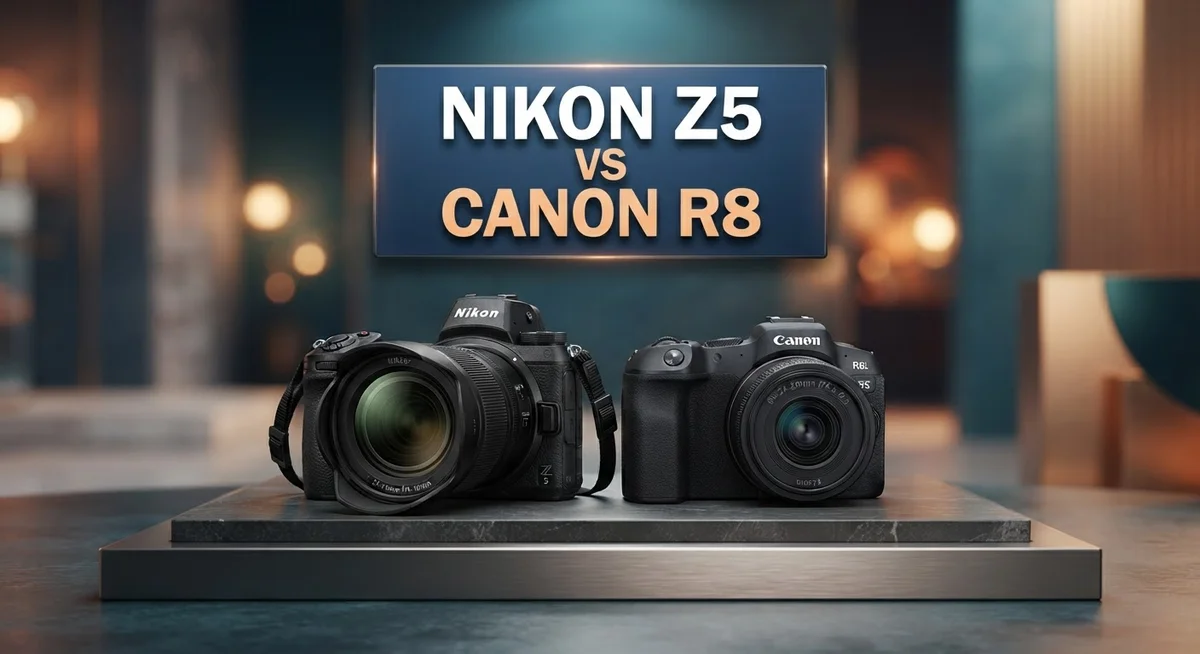
Choosing between the Nikon Z5 and Canon R8 can feel tricky. Both cameras pack full frame power. But they serve very different photographers.
The Nikon Z5 stands out with its tough build and dual card slots. It offers in body stabilization and longer battery life. This makes it a solid pick for serious work.
The Canon R8 fights back with blazing autofocus. It has thousands of AF points and faster shooting speeds. Hobbyists chasing quick action will love this.
So which one fits your style? If you want reliability and pro level features, the Z5 shines. If speed and smart autofocus excite you more, the R8 steals the show.
Let’s break down every detail. We will help you pick the perfect camera for your next shoot.
In a Nutshell
Here’s a quick snapshot to help you decide fast.
-
Stabilization matters: The Z5 packs in-body stabilization. This helps you shoot sharper photos without a tripod. The R8 skips this feature entirely.
-
Speed counts: The R8 shoots at 6 fps. The Z5 trails at 4.5 fps. Fast action favors the R8.
-
Autofocus points: The R8 offers a huge 4,897 AF points. The Z5 has just 273. More points mean better subject tracking.
-
Viewfinder quality: Both cameras use a 2.36M dot EVF. Your viewing experience stays sharp either way.
-
Weather sealing: The Z5 protects against dust and moisture. The R8 lacks this defense, so keep it dry.
-
Lens ecosystem: The R8 works with older EF lenses through an adapter. This gives Canon shooters more flexibility with existing gear.
Pick based on what you shoot most. Action and speed point to the R8. Durability and control point to the Z5.
Sensor and Image Quality
The sensor in both cameras delivers full frame performance with 14 bit color depth. This means you get excellent tonal range and flexibility in post processing. Both sensors capture detail beautifully, but they work differently in real world shooting.
The Canon R8 sensor feels more modern. It powers faster autofocus with 4,897 AF points spread across the frame. You’ll notice this speed when tracking moving subjects or shooting in unpredictable moments. The R8 also shoots at 6 frames per second, letting you capture more shots in quick succession.
The Nikon Z5 takes a different approach. It has 273 AF points, which sounds like fewer, but the system works reliably for most situations. What sets the Z5 apart is in body image stabilization. This feature steadies your shots without needing special lenses. Handheld video becomes smoother. Low light photography improves. You get cleaner images at slower shutter speeds.
Shutter speed matters here. The Z5 maxes out at 1/8000 of a second, while the R8 handles fast film speeds differently. The Z5 also includes dual card slots. This means you can back up images instantly or split footage between two cards. The R8 uses a single slot, which limits your backup options.
Battery life favors the Z5. You’ll shoot longer before needing a charge. The Z5 also features weather sealing that protects against dust and moisture. The R8 lacks this protection, making it less suitable for harsh outdoor conditions.
Image quality from both cameras impresses in good light. The R8 excels when you need fast autofocus and rapid shooting. The Z5 wins for stability, redundancy, and durability. If you shoot video or handheld stills in changing light, the Z5’s stabilization becomes invaluable. If you chase fast action and need quick focus locks, the R8’s autofocus system delivers. Your shooting style determines which sensor system serves you better.

- Full-frame Power: 24.5MP BSI-CMOS FX-format sensor and EXPEED 7 processing engine unlock...
- Impressive Low-light Performance: Autofocus in near-total darkness with AF detection down to -10EV...

Last update on 2026-10-12 / Affiliate links / Images from Amazon Product Advertising API
Autofocus System and Shooting Speed
The autofocus system separates these two cameras in meaningful ways. The Canon R8 dominates with 4,897 AF points, while the Nikon Z5 offers 273 AF points. This difference matters when you shoot fast moving subjects or need precision tracking.
The R8’s autofocus feels snappier and more responsive. You’ll notice faster subject detection, especially with moving animals, sports, or video work. The system locks onto faces and eyes quickly. The Z5’s AF system works well for stationary subjects and general photography, but it lags behind in continuous tracking situations.
Shooting speed tells another story. The R8 fires at 6 frames per second, making it better for burst photography. The Z5 maxes out at 4.5 fps, which feels slower when you need rapid shots. If you shoot sports or wildlife regularly, the R8’s speed advantage becomes noticeable.
The Z5 includes an AF joystick for quick focus point selection. This feature speeds up your workflow in the field. You can reposition your focus area without taking your eye from the viewfinder. The R8 lacks this convenience, requiring menu navigation instead.
Battery performance affects your shooting sessions too. The Z5 delivers stronger battery life, letting you shoot longer between charges. The R8 drains power faster, especially during video or continuous AF use. Bring a spare battery for the R8 if you plan full day shoots.
Both cameras use full frame sensors with 14 bit color depth. The R8’s sensor feels fresher and handles high ISO situations slightly better. The Z5 performs admirably in good light and maintains excellent detail.
For professionals shooting unpredictable scenes, the R8’s autofocus speed wins. For controlled studio work or landscape photography, the Z5’s slower AF becomes less critical. Your shooting style should guide this decision. If you prioritize reliability and consistent performance over pure speed, the Z5 remains solid. If autofocus speed and burst shooting matter most, the R8 delivers what you need.
Build Quality and Weather Resistance
The Nikon Z5 excels in build durability and protective features. Its magnesium alloy chassis feels solid and premium. The camera includes comprehensive weather sealing that blocks dust and moisture effectively. You get dual card slots, which means you can back up files instantly during shoots. This matters when you work in unpredictable environments.
The Canon R8 takes a lighter approach to construction. It weighs less than the Z5, making it easier to carry for long sessions. However, the R8 lacks weather sealing entirely. This means moisture and dust can damage internal components more easily. If you shoot in rain or sandy conditions, the R8 requires extra protection.
Durability differences show up in real world use. The Z5’s robust design handles accidental drops better. Its shutter mechanism feels more refined after extended shooting. The R8’s construction feels adequate for casual work but less resilient under stress.
Sealing performance separates these cameras significantly. The Z5 protects critical areas like the memory card slot and battery compartment. The R8 leaves these areas exposed. Professional photographers often choose the Z5 for this reason alone.
Card slot design matters for workflow. The Z5 gives you redundancy with two slots. You can record to both simultaneously or use one as backup. The R8 forces you to work with a single slot. This creates risk if your card fails mid shoot.
Battery compartment sealing also differs. The Z5 resists moisture penetration around the battery door. The R8 leaves this area vulnerable. Extended outdoor use favors the Z5 significantly.
For studio work, both cameras perform equally well. Environmental protection becomes less critical indoors. The R8’s lighter weight actually feels better in controlled settings. But for field work, travel, or outdoor assignments, the Z5 delivers superior protection. Its weather resistant design and dual card slots provide peace of mind. You can focus on capturing images instead of worrying about equipment failure.
Top 3 Alternatives
Sony Alpha a7 IV

- 33MP full-frame Exmor R back-illuminated CMOS sensor.Operating temperature : 0 to 40 °C (32 to...
- 8x more powerful, next generation BIONZ XR image processing engine
Last update on 2026-11-09 / Affiliate links / Images from Amazon Product Advertising API
The Sony Alpha a7 IV is a full-frame mirrorless camera that competes well in this space. It offers a 61-megapixel sensor with excellent detail capture. The autofocus system uses real-time tracking, which works great for moving subjects.
This camera includes 4K video recording at 60fps. The battery life is solid, giving you around 580 shots per charge. Sony’s lens ecosystem is massive, so you’ll find plenty of options for any photography style.
Panasonic Lumix S5

- A LIGHTWEIGHT, POWERFUL HYBRID CAMERA FOR VIBRANT STILL PHOTOGRAPHY AND CINEMATIC VIDEO: Realize...
Last update on 2026-11-09 / Affiliate links / Images from Amazon Product Advertising API
The Panasonic Lumix S5 brings professional features at an accessible level. This full-frame camera has a 47-megapixel sensor that delivers sharp images in various lighting conditions. It’s lightweight and compact, making it ideal for travel photographers.
Video capabilities include 4K recording with professional codecs. The in-body stabilization helps reduce camera shake during handheld shooting. Panasonic’s L-mount alliance means you can use lenses from Leica and Sigma as well, expanding your creative options.
Canon EOS R6

- FULL-FRAME CMOS SENSOR: 24.2 effective megapixels (approx.) lets you capture sharp, detailed images...
- DIGIC X IMAGE PROCESSOR: Enhances digital camera performance and processes, including image...
Last update on 2026-11-09 / Affiliate links / Images from Amazon Product Advertising API
The Canon EOS R6 is a powerful full-frame mirrorless option with a 20-megapixel sensor focused on speed and performance. The autofocus system is incredibly fast and accurate, tracking subjects smoothly across the frame.
This camera excels at video, offering 4K at 120fps for slow-motion work. The in-body stabilization is effective for both stills and video. Canon’s RF lens lineup continues to grow, providing modern optics designed for mirrorless performance. The weather-sealed body handles tough conditions well.
Stabilization and Lens Ecosystem
The Nikon Z5 brings in-body image stabilization to the table, which means your handheld shots stay sharp even in low light. This feature works with any Z mount lens you attach. The stabilization system compensates for camera shake automatically, giving you roughly 4 to 5 stops of extra help.
The Canon R8 takes a different path. It relies on lens-based stabilization instead. Many Canon EF lenses already have stabilization built in, so switching to the R system doesn’t lose this advantage. However, you won’t get stabilization from lenses that lack it.
For video work, the Z5’s in-body stabilization proves more consistent. Your footage stays smoother across the board. The R8 demands stabilized lenses for the same result, which adds cost and weight to your setup.
The Z mount ecosystem continues to expand rapidly. Nikon offers native Z lenses across all focal lengths. You get primes, zooms, and specialty options. The mount design allows for compact, high-performance glass. Autofocus performance on Z lenses feels snappy and accurate.
The R mount ecosystem provides two distinct advantages. First, you can use older Canon EF lenses with an adapter ring. This opens access to decades of affordable used glass. Second, Canon keeps releasing new RF lenses designed specifically for mirrorless shooting. These newer lenses feature advanced autofocus and optical designs.
For photographers with existing Canon equipment, the R8 makes financial sense. Your EF lenses work immediately without buying new glass. Professionals starting fresh will find the Z5 more straightforward since all lenses share the same stabilization approach.
The Z5 appeals to those who value consistency and simplicity. Everything works the same way. The R8 suits shooters who want flexibility and compatibility with older gear. Your choice depends on whether you already own lenses and what matters most in your daily shooting.
Battery Life and Storage Options
Battery capacity differs between these two cameras in ways that affect your shooting day. The Nikon Z5 delivers approximately 390 shots per charge using the EN-EL15c battery. The Canon R8 manages around 320 shots with its LP-E17 battery pack. This means the Z5 keeps working longer before you need a swap.
Real world shooting depletes batteries faster than lab tests suggest. Cold weather, continuous autofocus use, and video recording all drain power quicker. The Z5’s advantage becomes more noticeable during extended outdoor sessions. If you shoot events or travel frequently, this matters significantly.
Both cameras accept third party batteries, giving you backup options. Extra battery packs cost less than you might expect. Carrying spares ensures you never miss important moments. The Z5’s longer endurance means fewer swaps during your shoot.
Storage capacity separates these cameras in a meaningful way. The Z5 includes dual SD UHS II card slots. This setup lets you record to two cards simultaneously or swap between them seamlessly. The Canon R8 uses a single SD UHS II slot only. Single slot design limits your backup protection and workflow flexibility.
Dual slots on the Z5 provide genuine peace of mind. Your images stay safe if one card fails. Professional photographers and event shooters especially value this redundancy. You can also organize footage by switching cards mid shoot.
Write speed affects how quickly files transfer to your cards. Both cameras handle modern fast cards without bottlenecks. However, the Z5’s dual slot system means you can use two slower cards instead of one expensive fast card. This flexibility saves money while maintaining performance.
Storage management becomes easier with the Z5’s dual setup. You can dedicate one card to stills and another to video. This separation keeps your files organized without extra effort. The R8 requires manual file organization on a single card.
Battery life and storage options work together to define your shooting experience. The Z5 wins on both fronts for photographers who shoot extensively or need reliable backup systems.
Pros and Cons
Pros
- Z5 gives you dual card slots for safer file backups during critical shoots
- Z5’s in-body stabilization keeps handheld video smooth without extra gear
- Z5 delivers stronger weather sealing and a tougher build for outdoor work
- R8 shoots at 6 fps versus Z5’s 4.5 fps, great for fast action sequences
- R8 offers 4,897 autofocus points compared to Z5’s 273, making subject tracking faster and more accurate
Cons
- Z5 has a slower frame rate that limits burst shooting capability
- R8 lacks weather sealing and in-body stabilization, requiring external solutions
- R8 uses a single card slot, leaving no backup option if the card fails
- Z5’s user interface feels less intuitive than R8’s menu system
Who Should Buy It
The Nikon Z5 fits photographers who shoot professionally or handle important assignments. You need reliability and backup systems. Dual card slots mean your images stay safe if one card fails during a wedding or event. IBIS gives you sharper handheld shots in dim lighting without pushing ISO higher. Weather sealing protects your camera during rain, dust, or rough conditions on location work.
The Canon R8 appeals to hobbyists and enthusiasts who want faster autofocus. You prioritize speed when tracking moving subjects like birds or sports. The 4,897 autofocus points lock onto your subject quicker than the Z5’s 273 points. Six frames per second captures more moments in quick succession compared to the Z5’s 4.5 fps.
Choose the Z5 if you shoot video regularly. In body stabilization keeps footage smooth without needing external rigs. The stronger build quality handles years of professional use. You also benefit from an AF joystick that makes focus point selection faster during shoots.
Pick the R8 if you already own Canon EF lenses. The R8 accepts them through an adapter, saving money on new glass. The lighter weight matters if you carry your camera all day. Newer sensor technology means better image quality in some situations.
The Z5 works best for photographers who value consistency. You want a camera that performs the same way every single time. Long battery life means fewer charging breaks during full shooting days. The UI might feel complex at first, but it offers more control once you learn it.
The R8 suits those who want simplicity and speed. You don’t need weather sealing if you mostly shoot indoors or in studios. Single card slot is acceptable when you download files frequently. The lighter body feels more comfortable during casual photography sessions.
Both cameras serve different shooting styles. Professional and event photographers lean toward the Z5. Hobbyists and enthusiasts prefer the R8. Your choice depends on how you shoot and what features matter most to your workflow.
Final Verdict
Choosing between these two cameras comes down to your shooting priorities. Each camera brings unique strengths to the table.
The Nikon Z5 stands out as a dependable partner for serious projects. It handles tough conditions and long shoots without breaking a sweat.
The Canon R8 shines when speed and accuracy matter most. Its autofocus system tracks moving subjects with impressive precision.
Think about your typical shooting day. Wedding photographers and event shooters often need reliability over raw speed. Wildlife and sports photographers benefit more from quick autofocus and burst capabilities.
Your existing gear also plays a role. Photographers switching camera systems should weigh lens availability and future upgrade paths carefully.
Neither camera is objectively better. They simply serve different purposes and different types of photographers.
If you shoot professionally or need a workhorse camera, the Z5 delivers consistent results. Its design suits photographers who need dependable performance shoot after shoot.
If you want a camera that keeps pace with fast action, the R8 offers clear advantages. Its autofocus technology represents a newer generation of camera tech.
Consider your growth as a photographer too. Some shooters start with simpler tools and upgrade later. Others prefer investing in advanced features right away.
Your shooting style matters more than spec sheets. Test both cameras if possible before deciding. Handle each one and see which feels natural in your hands.
Both brands offer strong lens ecosystems and support networks. You will find plenty of resources for either choice.
Ultimately, this decision reflects your personal workflow. Think about the photos you take most often. Match that need to the camera that supports it best.
Whichever camera you pick, both models represent solid choices in the full frame mirrorless market. Your creative vision matters more than which camera you hold.
Frequently Asked Questions
Does the Z5 have better autofocus than the R8?
No, the R8 has superior autofocus. It offers 4,897 AF points compared to the Z5’s 273 points. The R8 tracks moving subjects faster and locks onto targets more accurately during action sequences. However, the Z5’s AF system works well for static shots and slower-paced photography. Your shooting style determines which matters more to you.
Which camera handles low light better?
Both cameras perform similarly in low light since they share the same 14-bit sensor depth. The R8 may have a slight edge due to its newer sensor technology and faster autofocus in dim conditions. The Z5 compensates with its in-body stabilization, which steadies handheld shots without a tripod. For video in low light, the Z5’s IBIS gives you smoother results.
Can I use my existing Canon EF lenses on the R8?
Yes, the R8 accepts Canon EF lenses through the EF mount. This is a major advantage if you already own Canon glass. The Z5 uses the Nikon Z mount, which requires an adapter for older Nikon F lenses. Your current lens collection influences which camera makes sense for your setup.
Which camera is more reliable for important shoots?
The Z5 edges ahead here. It features dual card slots for automatic backup, stronger weather sealing, and a tougher build quality. These features protect your files and equipment during demanding assignments. The R8 lacks weather sealing and has only one card slot, making it riskier for critical work. Professional photographers favor the Z5’s redundancy and durability.
Is the Z5 better for video work?
Yes, the Z5 excels at video. Its in-body stabilization keeps footage smooth without external rigs. Battery life also lasts longer during video sessions. The R8 requires external stabilization gear and drains power faster during recording. If video is central to your work, the Z5 is the stronger choice.

Dillip is the founder and editor of Switch & Size, where he breaks down tech products, accessories, and gadgets to help readers make smarter buying decisions. With a passion for testing and comparing the latest technology, he delivers honest reviews, in-depth guides, and side-by-side comparisons that cut through the marketing noise.