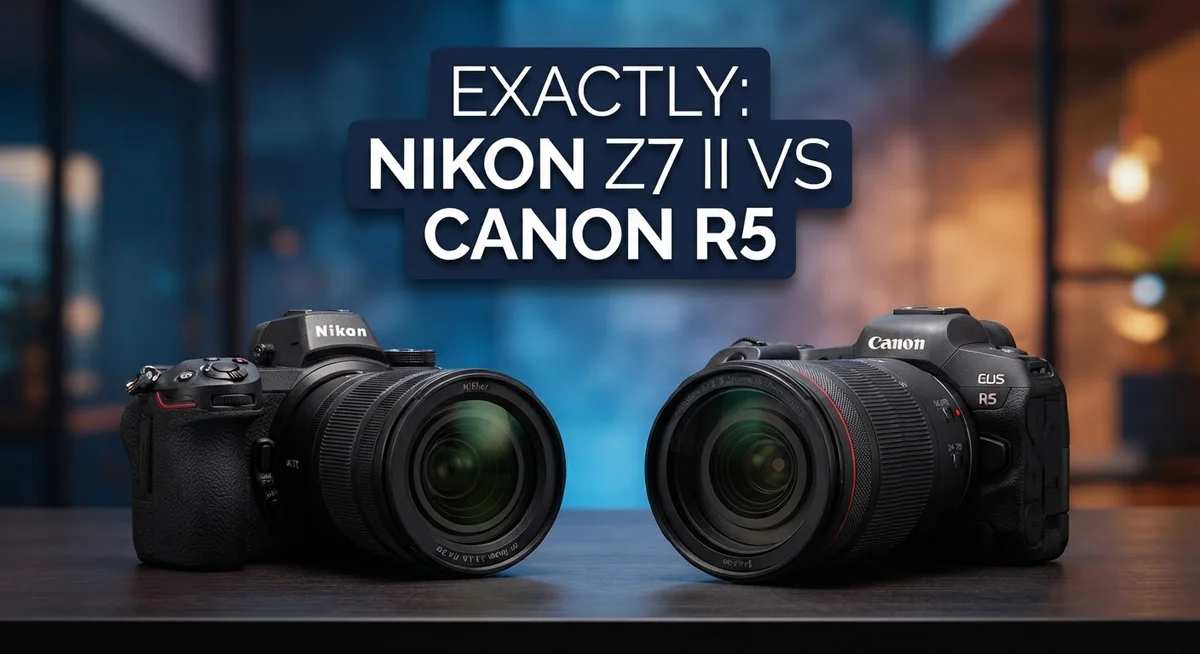
Nikon Z7 II vs Canon R5: Professional Mirrorless Camera Comparison
Choosing a full frame camera can feel tricky. The Nikon Z7 II and Canon R5 both stand out as top picks for serious photographers.
Both cameras pack high resolution sensors. They deliver stunning detail for landscapes, portraits, and studio work.
But these two cameras differ in key ways. The Canon R5 brings a faster autofocus system and quicker burst shooting speeds.
The Nikon Z7 II counters with warmer color rendering and comparable image sharpness. It holds its own in noise performance too.
So which camera fits your style? This guide breaks down every feature side by side. You will see how autofocus, speed, and image quality compare.
By the end, you will know exactly which camera matches your shooting needs. Let’s explore what makes each one special.
In a Nutshell
Here is the quick breakdown before you decide:
-
The Canon R5 wins on speed. It shoots 12 FPS compared to the Z7 II’s 10 FPS.
-
Autofocus is where the R5 truly shines. It tracks subjects across a massive -6 to +20 EV range.
-
The Z7 II keeps up in sharpness. Its 45.7MP sensor rivals the R5 in detail and low noise.
-
Sensor readout speed favors the R5. You get less rolling shutter during fast action or video pans.
-
The R5 also offers a better electronic viewfinder. This makes framing shots feel more natural.
-
If autofocus is not your top priority, the Z7 II still delivers strong image quality with pleasing color tones.
-
Looking for another option? The Canon R6 Mark II is worth checking as a solid alternative to both cameras.
Each camera brings something different to the table. Your shooting style will decide the winner here.
Sensor Resolution and Image Quality
Both cameras deliver exceptional image quality with their high resolution sensors. The Z7 II captures 45.7 megapixels while the R5 offers 45 megapixels. This means both produce incredibly sharp, detailed images that work beautifully for large prints and cropping flexibility.
When you look at sensor readout speed, the R5 pulls ahead. Its faster readout means less rolling shutter distortion when you shoot fast action or pan across scenes. The Z7 II uses a slower readout, which can introduce minor distortion in rapid motion situations. For most photography work, this difference remains subtle. However, video shooters and sports photographers notice it more clearly.
The Z7 II shines with its color rendering. Nikon’s sensor produces warmer, more saturated tones straight from the camera. Many photographers love this characteristic because it reduces the need for heavy color grading in post processing. The R5 delivers more neutral, cooler tones that give you greater flexibility during editing.
Noise performance between these cameras sits very close. Both handle high ISO situations remarkably well, maintaining detail even at ISO 3200 and beyond. You will see minimal grain or color noise when you compare images side by side. This means either camera works great for low light photography.
The R5 gains an advantage with its superior autofocus system. It locks onto subjects faster and more reliably, especially in challenging lighting. The Z7 II’s autofocus performs well for most situations but struggles occasionally in dim conditions or with fast moving subjects.
Continuous shooting speed differs noticeably. The R5 captures 12 frames per second while the Z7 II manages 10 frames per second. For wildlife and sports, this 2 fps difference helps you catch more decisive moments.
If you prioritize image sharpness and pleasing colors, the Z7 II delivers outstanding results. If you need faster autofocus, better sensor readout, and higher burst speed, the R5 becomes the stronger choice. Both cameras produce images that rival professional standards in most shooting conditions.

- Completely NEW Canon designed full-frame back-illuminated stacked CMOS 45MP sensor.
- Fast sensor read-out speeds allow for up to 30 fps electronic shutter performance.
Last update on 2026-11-09 / Affiliate links / Images from Amazon Product Advertising API
Autofocus System and Performance
The autofocus system stands as a critical differentiator between these two cameras. The Canon R5 delivers superior autofocus performance with its advanced tracking capabilities and wider detection range. It operates from -6 to +20 EV, meaning it locks onto subjects even in very dim lighting conditions.
The Nikon Z7 II features a competent autofocus system, but it does not match the R5’s speed or accuracy. If you shoot fast moving subjects like sports or wildlife, the R5’s autofocus advantage becomes immediately noticeable. The camera maintains focus lock more reliably during continuous shooting sequences.
Continuous shooting speed reveals another performance gap. The R5 captures 12 frames per second, while the Z7 II reaches 10 FPS. This difference matters when you need to shoot rapid bursts. You get more chances to capture the perfect moment with the R5.
The sensor readout speed favors the R5 significantly. A faster readout means less rolling shutter distortion, especially when photographing fast action or panning across scenes. The Z7 II experiences slightly more rolling shutter effect, though it remains acceptable for most shooting situations.
The R5’s electronic viewfinder also enhances autofocus performance. It displays focus information more clearly and provides better real time feedback during tracking. This visual advantage helps you stay confident that focus is locked on your subject.
However, the Z7 II’s autofocus system works well for many shooting styles. If you primarily photograph landscapes, portraits, or static subjects, the difference becomes less critical. The camera still achieves sharp results and maintains focus reliably in these scenarios.
Your shooting style determines whether the autofocus gap matters. Professional sports and wildlife photographers benefit greatly from the R5’s superior system. General enthusiasts and content creators find the Z7 II’s autofocus perfectly adequate. Both cameras deliver accurate focus in good lighting, but the R5 pulls ahead in challenging conditions and fast action sequences.
Continuous Shooting and Speed
When you shoot action or fast-moving subjects, continuous shooting speed becomes essential. The Canon R5 captures 12 frames per second, while the Nikon Z7 II reaches 10 frames per second. This 2 FPS difference matters most when you need split second timing.
The R5’s faster sensor readout plays a major role here. A quicker readout means less rolling shutter distortion. You get cleaner images when panning or shooting moving objects. The Z7 II’s readout speed lags slightly behind, which shows in certain fast action scenarios.
Buffer depth also affects your shooting experience. The R5 maintains its 12 FPS speed for longer before the buffer fills. The Z7 II slows down sooner once you fill its internal memory. For burst shooting of wildlife or sports, this difference compounds quickly.
Autofocus tracking during continuous shooting favors the R5 significantly. Its superior autofocus system locks onto moving subjects faster and holds focus better across frames. The Z7 II’s autofocus keeps up reasonably well, but it cannot match the R5’s precision during rapid fire sequences.
Real world shooting reveals these differences clearly. A sports photographer capturing a sprinting athlete will notice the R5 delivers more keepers. The Z7 II still produces solid results for most shooting styles, but the speed gap becomes apparent under pressure.
The R5 also benefits from its faster EVF refresh rate. You see less lag between what happens and what appears on screen. This real time feedback helps you anticipate the perfect moment. The Z7 II’s viewfinder performs well overall, yet the R5 edges ahead in responsiveness.
For wedding photographers and event shooters, the R5’s continuous shooting advantage proves valuable. You capture more moments and reduce the risk of missing the decisive instant. The Z7 II remains capable for these applications, but the R5 offers more insurance.
If you shoot mostly static subjects or landscapes, this speed difference becomes less important. The Z7 II’s 10 FPS handles most situations fine. Your shooting discipline and timing matter more than raw frames per second in these cases.
Top 3 Alternatives
Sony Alpha a7R V

- INCLUDES EVERYTHING YOU NEED – Alpha a7R V Camera Body | Body Cap | Eyepiece Cup | Multi Interface...
- 61MP IMAGE QUALITY + FLIP TOUCHSCREEN – Capture extraordinary detail with a 61MP full-frame Exmor...
Last update on 2026-11-09 / Affiliate links / Images from Amazon Product Advertising API
The Sony Alpha a7R V offers exceptional image quality with its 61-megapixel sensor. This camera excels at capturing fine details and produces stunning high-resolution files. The autofocus system is incredibly fast and accurate, making it reliable for various shooting situations.
The camera features advanced computational photography tools that enhance your images automatically. Real-time tracking keeps moving subjects sharp without extra effort. Battery life performs well during extended shooting sessions, and the menu system feels intuitive once you learn it.
Panasonic Lumix S1R

- Pro-Level Photo and Video Performance: Made to support professionals, this professional camera...
- 24.1MP BSI CMOS Sensor for True-to-Life Detail: Full-frame mirrorless camera has a developed...

Last update on 2026-11-09 / Affiliate links / Images from Amazon Product Advertising API
The Panasonic Lumix S1R combines a 47-megapixel full-frame sensor with solid build quality. This camera delivers rich color rendition that many photographers appreciate. The body feels comfortable to hold, and the weather-sealing provides confidence in challenging conditions.
Video capabilities are surprisingly strong for a stills-focused camera. The autofocus works smoothly during both photo and video recording. The lens ecosystem is growing, giving you more options for your creative needs.
Nikon Z9

- 45.7MP Stacked CMOS sensor and EXPEED 7 image processing. Fast powerful AF that can keep up with the...
- Subject detection uses deep learning to automatically detect and track people, cats, dogs, birds...
Last update on 2026-11-09 / Affiliate links / Images from Amazon Product Advertising API
The Nikon Z9 represents professional-grade performance with its 45.7-megapixel sensor. This camera shoots at blazingly fast frame rates, perfect for action and sports photography. The autofocus system tracks subjects with remarkable precision across the frame.
The build quality feels premium and durable for demanding work. Buffer capacity allows extended bursts without slowdown. The camera handles both stills and video exceptionally well, making it versatile for mixed-media projects. Nikon’s lens lineup continues expanding, offering photographers plenty of choices for different shooting styles.
Viewfinder and Display Technology
Both cameras feature electronic viewfinders that shape your shooting experience in meaningful ways. The Canon R5’s EVF delivers superior refresh rates and smoother panning, which makes tracking moving subjects feel more natural.
The R5’s viewfinder updates faster than the Z7 II’s display. This speed difference becomes noticeable when you shoot fast action or pan across scenes. You see less lag between what happens in front of you and what appears on screen.
The Nikon Z7 II provides a solid viewing experience with good color accuracy and brightness. Its viewfinder shows accurate exposure and white balance before you take the shot. Many photographers find it perfectly adequate for their needs, though it doesn’t match the R5’s responsiveness.
Magnification differs slightly between these models. The Z7 II offers 0.8x magnification while the R5 reaches 0.76x. Both give you a clear, immersive view of your scene. The difference rarely impacts real world shooting for most users.
The R5’s faster EVF refresh rate also benefits your autofocus experience. When the viewfinder updates more quickly, the camera’s autofocus system responds faster to subject movement. You get more accurate tracking during continuous shooting.
Display brightness matters for outdoor shooting. Both cameras handle sunlight well, though the R5 edges ahead with slightly better visibility in harsh conditions. You can still shoot comfortably with either camera in bright environments.
The rear LCD screens on both bodies work similarly. You get articulating or fixed displays depending on your camera model. The Z7 II features a fixed rear screen while some R5 configurations offer more flexibility.
Color reproduction in the viewfinder differs between these cameras. The Z7 II tends toward warmer, more saturated tones, while the R5 presents a more neutral view. Your preference for one style over another depends on personal taste.
Autofocus performance ties directly to viewfinder technology. The R5’s superior EVF refresh rate enhances its autofocus speed and accuracy. The Z7 II’s autofocus works reliably, though it processes information more slowly than the R5.
Color Science and Rendering
Color science determines how your camera captures and represents colors in your images. Each camera approaches this differently, and understanding these differences helps you choose the right tool for your photography style.
The Nikon Z7 II delivers warmer and more saturated color rendering. This means skin tones appear richer and landscapes show deeper, more vibrant hues straight from the camera. Many photographers appreciate this character because it requires less post processing to achieve their desired look.
The Canon R5 takes a different approach. Its color rendering leans slightly cooler and more neutral. This gives you greater flexibility in post production since the image starts with less color bias. You can push colors in any direction without fighting the camera’s inherent character.
Both cameras excel at color accuracy in different ways. The Z7 II’s warmer palette suits portrait and travel photography beautifully. The R5’s neutral foundation works better for commercial work and situations where color accuracy matters most.
White balance handling differs between these models too. The R5 processes white balance with exceptional consistency across various lighting conditions. The Z7 II handles white balance well, but shows slightly more variation in mixed lighting scenarios.
Skin tone reproduction reveals another key distinction. The Nikon’s warmer rendering flatters complexions naturally, making it a favorite for wedding and portrait work. The Canon requires more careful white balance selection but delivers superior color grading flexibility once you master its palette.
Color gradation and tonal transitions also vary. The Z7 II produces smooth gradations with its characteristic warmth. The R5 maintains excellent smoothness while keeping tones more neutral.
Your intended use should guide this decision. Choose the Z7 II if you shoot portraits, travel, or lifestyle work where warm colors enhance the mood. Select the R5 if you need maximum flexibility for color grading or work in demanding commercial environments.
Both sensors capture color information with remarkable detail. The difference lies in how each camera interprets and renders that information. Neither approach is objectively superior. Your personal preference and shooting style determine which color science serves you better.
Pros and Cons
Pros
- The Z7 II delivers comparable sharpness and noise performance across a range of shooting conditions
- Nikon’s color science produces warmer and more saturated tones that many photographers prefer
- You get a solid electronic viewfinder with good color accuracy and brightness
- The Z7 II handles static subjects and landscape photography exceptionally well
Cons
- Autofocus performance lags behind the R5, especially when tracking moving subjects
- The viewfinder refresh rate is slower than competing models, affecting your real time feedback
- Rolling shutter is more pronounced during fast panning or video work
Pros
- Superior autofocus system locks onto subjects faster and tracks them more reliably
- Continuous shooting at 12 FPS captures more frames per second than competitors
- Faster sensor readout minimizes rolling shutter artifacts during movement
- The electronic viewfinder updates at a quicker refresh rate for smoother live view
Cons
- Premium positioning means you pay more for these performance advantages
- The color rendering takes a cooler approach that requires adjustment in post processing for some photographers
Who Should Buy It
Professional photographers who shoot fast action need the Canon R5. This camera excels at tracking moving subjects with its superior autofocus system. The R5’s faster continuous shooting speed of 12 FPS captures critical moments you might otherwise miss. Its minimal rolling shutter also makes it ideal for video work and dynamic panning.
The Nikon Z7 II works best for photographers who prioritize image quality over speed. Your sharpness and noise performance remain comparable to the R5 across various lighting conditions. This camera suits landscape photographers, studio shooters, and anyone working with static subjects. You’ll appreciate the consistent results without needing advanced autofocus tracking.
If you shoot portraits regularly, consider your color science preferences carefully. The Z7 II produces warmer and more saturated tones that flatter skin tones naturally. The R5 takes a different approach with cooler, more neutral color rendering. Test both cameras if possible to see which matches your creative vision.
Content creators and videographers should lean toward the R5. Its faster sensor readout reduces rolling shutter distortion during movement. The superior EVF refresh rate gives you better real time feedback while recording. These advantages matter significantly when capturing video content professionally.
Wedding photographers face a tougher choice. The R5’s autofocus performance handles unpredictable subject movement better during ceremonies and receptions. However, the Z7 II remains capable for posed shots and detail work. Your shooting style determines which camera serves you better.
Travel photographers often prefer the Z7 II for its lighter weight and solid overall performance. You don’t need blazing continuous shooting speeds for most travel scenarios. The camera delivers excellent image quality in diverse lighting situations.
Studio photographers benefit equally from either option. Both cameras produce outstanding resolution and detail for controlled environments. Your existing lens collection might influence this decision more than the camera body itself.
Ultimately, choose the R5 if you need speed and advanced autofocus. Select the Z7 II if you value consistent image quality and simpler operation. Both cameras deliver professional results for different shooting priorities.
Final Verdict
Both cameras prove themselves as excellent tools for different photography styles. Your final decision comes down to matching camera strengths to your specific shooting needs.
Lens ecosystem plays a big role here too. Canon’s RF mount lenses continue growing steadily, offering sharp optics for portraits and sports. Nikon’s Z mount system also expands each year, giving you solid glass options across various focal lengths.
Think about build quality and durability too. Both cameras feature weather sealed bodies that handle outdoor shooting conditions well. This makes either camera reliable for photographers who work in unpredictable environments.
Buffer capacity matters if you shoot long bursts. The Canon R5 handles extended shooting sequences better thanks to its faster processing speed. This helps during events where you cannot miss a single moment.
Storage flexibility also differs slightly. Check card slot configurations before deciding, since this affects your workflow speed during transfers and backups.
Consider your long term system investment as well. Switching camera brands later means replacing lenses and accessories too. Pick the ecosystem that matches your future creative goals.
Sports photographers and wildlife shooters benefit most from the R5’s tracking abilities. Fast moving subjects demand quick autofocus and high frame rates.
Landscape photographers and fine art shooters often prefer the Z7 II. Its color rendering and detail capture suit slower, deliberate shooting styles.
Hybrid shooters who mix photo and video work should lean toward the R5. Its video specifications and readout speed support smoother footage.
Your personal shooting style ultimately decides this choice. Test both cameras if possible before committing to either system.
Neither camera disappoints when matched to the right use case. Both deliver professional results when you understand their individual strengths.
Choose based on what you shoot most often, not just specifications on paper. This approach guarantees satisfaction with your final camera choice.
Frequently Asked Questions
Which camera has better autofocus for moving subjects?
The Canon R5 wins here. Its autofocus system tracks moving subjects with superior accuracy and speed. The R5 locks onto subjects faster and maintains focus during continuous shooting. The Nikon Z7 II struggles with dynamic tracking. It performs better with stationary subjects. If you shoot sports or wildlife, the R5 gives you a real advantage.
Does the Z7 II match the R5 for image quality?
Yes, both cameras produce sharp, clean images. The Z7 II delivers comparable sharpness and noise performance across different lighting conditions. Where they differ is color science. Nikon renders warmer, more saturated tones. Canon delivers cooler, more neutral colors. Your preference here depends on your personal editing style and subject matter.
Which camera is better for video work?
The Canon R5 performs better overall. It has a faster sensor readout, which means less rolling shutter distortion during panning or fast movement. The R5 also shoots at higher frame rates. The Z7 II works fine for video, but it shows more rolling shutter artifacts during dynamic shots. If video is a major part of your workflow, the R5 is the stronger choice.
What about the electronic viewfinder experience?
The R5 offers a better EVF experience. Its viewfinder has higher refresh rates and superior color accuracy. You get smoother real time feedback when composing shots. The Z7 II’s viewfinder is good but slower. For fast action shooting, the R5’s EVF makes a noticeable difference in your ability to track subjects and nail focus.

Dillip is the founder and editor of Switch & Size, where he breaks down tech products, accessories, and gadgets to help readers make smarter buying decisions. With a passion for testing and comparing the latest technology, he delivers honest reviews, in-depth guides, and side-by-side comparisons that cut through the marketing noise.