Canon R6 Mark II vs Mark III: Complete Comparison Guide
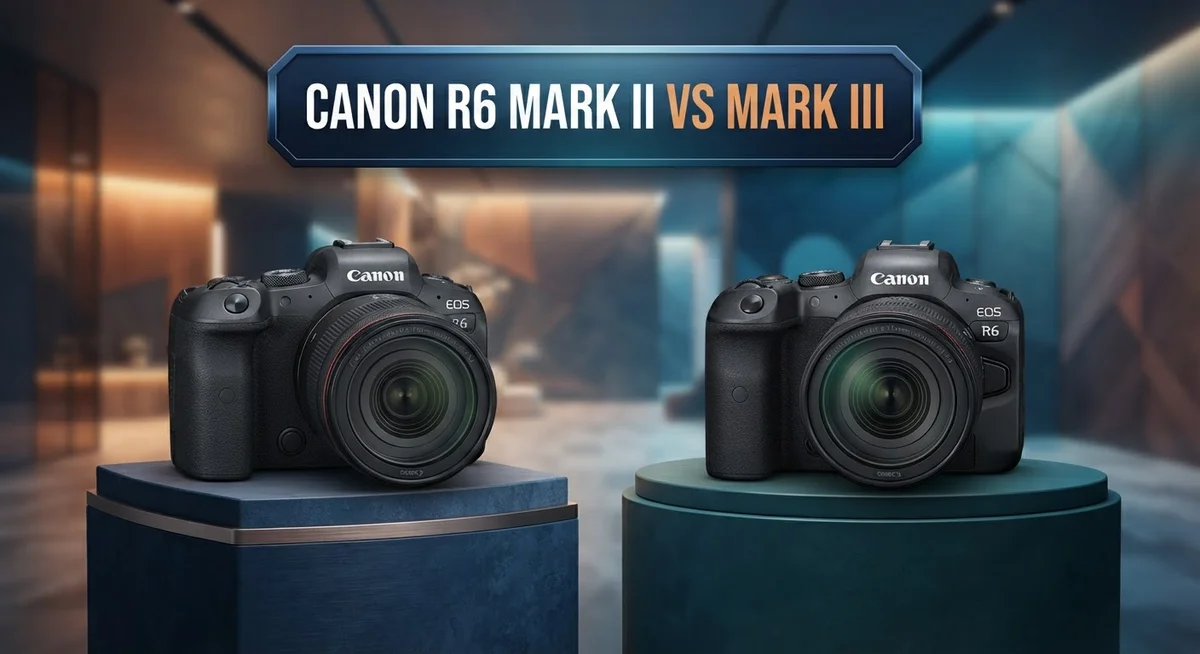
Choosing a new camera can feel tricky. The Canon R6 Mark II and Mark III both stand out as strong options for photographers and videographers.
But which one fits your needs best? That’s exactly what we will explore today.
The Mark III brings a huge leap in resolution. It jumps to a 32.5MP sensor, compared to the Mark II’s 20.1MP.
Video lovers will notice big upgrades too. The Mark III supports 7K video and 4K 120p, while the Mark II caps at 4K 60p.
Autofocus also gets smarter with People Priority AF on the newer model.
Stick with us as we break down every key difference. You will learn which camera truly matches your creative style.
In a Nutshell
-
The Mark III hits 40fps bursts, great for sports and wildlife shots.
-
Its 8.5 stop stabilization helps handheld shots stay sharp in low light.
-
A tougher, weather ready build means you can shoot in rain or dust without worry.
-
Low light images look cleaner on the Mark III thanks to its refined sensor design.
-
Want a lighter body? The Canon R8 shares the Mark II‘s core engine, making it a solid alternative.
-
Rivals like the Nikon Z6 III and Sony a7 IV offer similar power, so compare specs before you decide.
-
Some early Mark III units show software glitches, so keep firmware updated for smooth performance.
In short, the Mark III pushes speed, video, and toughness further. The Mark II still holds its own for everyday shooting. Pick based on how much power your projects truly need.
Sensor and Resolution Comparison
The sensor sits at the heart of any camera system. Both models use full frame sensors, but they differ significantly in resolution and capability.
The Mark II packs a 20.1MP sensor. This resolution works well for most photographers. You get sharp images for prints, web use, and standard editing work. The sensor handles everyday shooting with solid performance.
The Mark III jumps to 32.5MP. That’s 62% more megapixels than the Mark II. More pixels mean you can crop images heavily without losing detail. Large prints also benefit from the extra resolution. Professional work often demands this higher pixel count.
Resolution alone doesn’t tell the whole story. The Mark III’s sensor brings refined design improvements. Low light performance gets noticeably better. Shadow areas contain less noise. Colors stay accurate even in dim conditions. This matters for indoor events, night photography, and studio work.
Both cameras offer excellent dynamic range. The Mark III edges ahead with improved shadow recovery. Highlights stay protected in bright scenes. This gives you more flexibility during post processing.
Video capabilities show another major gap. The Mark II captures 4K at 60fps. The Mark III shoots 7K at 30fps and 4K at 120fps. Video enthusiasts will appreciate the slow motion options. The 7K Open Gate format works great for cinema projects and heavy cropping.
The autofocus system matters for both stills and video. The Mark III includes People Priority AF. This feature locks onto faces and eyes automatically. It tracks subjects smoothly during video recording. The Mark II uses older autofocus tech that works fine but lacks this intelligence.
Stabilization improved too. The Mark II delivers 8 stops. The Mark III offers 8.5 stops. That half stop difference helps handheld shooting in low light. Video stays smoother during movement.
Choose the Mark II if your current needs are basic. Portraits, travel, and general photography work fine. Pick the Mark III if you need higher resolution, advanced video, or professional autofocus features. Your specific shooting style should guide this decision.

- 32.5MP full-frame CMOS Image Sensor and DIGIC X Image Processor.
- Up to 40-fps Photo Shooting with 20-frames of pre-continuous shooting.

Last update on 2026-11-09 / Affiliate links / Images from Amazon Product Advertising API
Video Performance and Capabilities
The Mark III delivers a significant jump in video performance compared to its predecessor. While the Mark II handles 4K at 60 frames per second, the Mark III pushes boundaries with 7K Open Gate recording at 30fps and 4K at 120fps. This means you get smoother slow motion footage and more flexibility in post production.
The 7K Open Gate format is particularly useful for filmmakers. You can crop and reframe shots without losing quality. This feature opens creative possibilities that the Mark II simply cannot match.
Frame rates matter for different shooting styles. The Mark III‘s 4K 120fps capability lets you create stunning slow motion sequences. Sports photographers and wildlife videographers will appreciate this speed. The Mark II maxes out at 60fps in 4K, which still looks good but limits your slow motion options.
Stabilization gets better on the newer model. The Mark III offers 8.5 stops of stabilization versus 8 stops on the Mark II. This half stop improvement might sound small, but it makes handheld video noticeably smoother, especially in lower light conditions.
Autofocus performance shapes your video experience too. The Mark III introduces People Priority AF, which automatically tracks faces and bodies. This feature works brilliantly for interviews, vlogs, and documentary work. The Mark II has solid autofocus, but lacks this intelligent tracking capability.
Low light video performance favors the Mark III. Its refined sensor design captures cleaner footage when lighting is challenging. Content creators shooting indoors or during golden hour will notice the improvement immediately.
For basic video work, the Mark II remains capable. It handles standard 4K projects without issues and delivers clean footage in good lighting. However, if you shoot demanding video content, need slow motion options, or want advanced autofocus features, the Mark III justifies its position as the superior choice.
Autofocus, Stabilization, and Low-Light Performance
Both cameras excel at autofocus, but the Mark III takes the lead with its People Priority AF system. This feature locks onto faces and eyes faster, making it ideal for portrait and event work.
The Mark II uses a solid autofocus setup that works well in most conditions. The Mark III improves on this with smarter algorithms and better subject tracking. If you shoot fast-moving subjects, the newer model responds quicker and holds focus longer.
Stabilization shows a clear upgrade too. The Mark II delivers 8 stops of in-body stabilization, which keeps handheld shots steady. The Mark III bumps this to 8.5 stops, a modest but noticeable improvement. This extra half stop matters most when you shoot in dim light or use longer lenses.
Low light performance separates these two cameras significantly. The Mark III sensor handles shadows with less noise, producing cleaner images when light runs short. Its refined sensor design pulls more detail from dark areas. The Mark II still performs admirably in low light, but the Mark III edges ahead.
For video, stabilization becomes even more critical. The Mark III’s improved system keeps footage smooth during handheld filming. Combined with its 4K 120p capability, you get fluid slow motion footage that stays sharp and steady.
The Mark III’s autofocus shines during video recording too. It tracks moving subjects smoothly and avoids hunting for focus. The People Priority AF works during video capture, locking onto talent automatically. This saves you from manual focus adjustments mid shot.
The Mark II remains capable for video autofocus, though it lacks the advanced tracking features. You’ll need more manual intervention if your subject moves unpredictably.
Night photography favors the Mark III significantly. Better autofocus accuracy in darkness means faster acquisition. Lower noise from the sensor lets you use higher ISOs without degradation. The improved stabilization helps you nail sharp shots at slow shutter speeds.
Choose the Mark II if you mainly shoot daytime work with good lighting. Pick the Mark III if low light, fast action, or advanced video matters to your workflow.
Top 3 Alternatives
Sony Alpha A7R V

- A whole new level of camera intelligence from new AI processing unit.Aspect Ratio : 3:2
- Next-generation AF with Real-time Recognition autofocus deep learning AI
Last update on 2026-11-09 / Affiliate links / Images from Amazon Product Advertising API
The Sony Alpha A7R V stands out as a full-frame powerhouse for professionals who need exceptional resolution. This camera delivers 61 megapixels of detail, making it perfect for large prints and detailed cropping. The autofocus system tracks subjects with incredible speed, even in low light conditions.
You’ll appreciate the compact body design. Sony packed advanced features into a smaller frame than some competitors. The battery life handles a full day of shooting without extra batteries. Real-time tracking keeps your subject sharp, whether you’re photographing people or wildlife.
Nikon Z9

- 45.7MP Stacked CMOS sensor and EXPEED 7 image processing. Fast powerful AF that can keep up with the...
- Subject detection uses deep learning to automatically detect and track people, cats, dogs, birds...
Last update on 2026-11-09 / Affiliate links / Images from Amazon Product Advertising API
The Nikon Z9 is a flagship camera built for demanding professionals. It captures 45.7 megapixels and offers one of the fastest autofocus systems available. The camera shoots 8K video, which opens creative possibilities beyond still photography.
The body feels solid and weather-sealed for outdoor adventures. Nikon’s lens ecosystem continues to expand, giving you more options over time. The ergonomic design fits naturally in your hands during long shooting sessions. Performance remains consistent whether you’re working in bright sunlight or dim interiors.
Panasonic Lumix S1R

- Pro-Level Photo and Video Performance: Made to support professionals, this professional camera...
- 24.1MP BSI CMOS Sensor for True-to-Life Detail: Full-frame mirrorless camera has a developed...
Last update on 2026-11-09 / Affiliate links / Images from Amazon Product Advertising API
The Panasonic Lumix S1R combines 60-megapixel resolution with practical features for content creators. This camera excels at both stills and video work. The full-frame sensor captures excellent color accuracy and detail.
The body is durable and handles various shooting conditions well. Panasonic’s video capabilities make this camera attractive for filmmakers who also shoot still images. The autofocus performs reliably across different scenarios. You get a complete system that handles multiple creative needs without compromise.
Build Quality and Weather Resistance
The Mark III features a weather-resistant build that surpasses the Mark II. Canon reinforced the sealing around buttons, dials, and internal components on the newer model.
Both cameras handle rain and dust well, but the Mark III offers enhanced protection. The magnesium alloy chassis on each model provides durability, yet the Mark III’s improved gaskets make a real difference in harsh conditions.
The Mark II remains solid for most outdoor work. You can shoot in light rain or dusty environments without worry. However, the Mark III’s upgraded seals give you extra confidence when conditions get tough.
Shutter durability matters too. The Mark III’s shutter is rated for higher actuations, meaning it lasts longer through heavy use. Professional photographers who shoot daily will appreciate this upgrade.
The LCD screen on the Mark III uses improved coating that resists fingerprints and dust better. The Mark II’s screen works fine, but you’ll notice the difference when cleaning lenses in the field.
Battery compartments show another refinement. The Mark III’s battery door seals more securely, preventing moisture from entering. This small detail matters when you’re working near water or in humid climates.
Both cameras feel premium in your hands. The weight distribution and grip design remain similar between generations. The Mark III weighs slightly more due to enhanced internal reinforcement, but the difference is minimal.
Thermal management improved on the Mark III. Better heat dissipation helps the camera perform longer during video recording in warm conditions. The Mark II can overheat during extended 4K shooting in summer heat.
If you shoot in challenging environments regularly, the Mark III’s weather resistance justifies the upgrade. Professional wedding photographers, wildlife shooters, and travel videographers benefit most from the improved sealing.
The Mark II still works for occasional outdoor use. Casual photographers who shoot mostly indoors or in mild conditions won’t notice the difference. Just keep a lens cloth handy and avoid prolonged exposure to heavy rain.
Both cameras include weather-resistant lenses in many kits. Always pair your camera body with similarly sealed glass for true weather protection. A single unprotected lens ruins your system’s weather resistance.
Real-World Shooting Speed and Burst Capability
Burst shooting speed separates these two cameras in meaningful ways. The Mark III delivers 40fps continuous shooting, while the Mark II maxes out at 20fps. This difference matters most when you photograph fast action like sports, wildlife, or unpredictable moments.
The Mark III’s faster burst rate means you capture more frames per second. You get better odds of nailing the perfect shot. Athletes mid-jump, birds in flight, or children playing all benefit from this speed advantage. The Mark II still handles burst shooting well for most situations, but it captures half as many frames in the same time window.
Buffer depth also plays a role here. The Mark III holds more images in its buffer before slowing down. You can shoot longer bursts without waiting for the camera to catch up. The Mark II’s buffer is smaller, so you hit its limit faster during extended shooting sessions.
Autofocus tracking during burst mode differs too. The Mark III uses People Priority AF, which means it locks onto faces and bodies even during rapid-fire shooting. The Mark II’s autofocus works during bursts, but it lacks this advanced tracking intelligence. For event photography or portraits in action, the Mark III keeps focus locked on your subject better.
Real-world shooting shows these differences clearly. Wedding photographers who need fast sequences benefit from the Mark III’s speed. Wildlife shooters capturing predator moments gain an edge too. The Mark II remains solid for slower-paced work like landscapes, portraits, or studio sessions where burst speed matters less.
Frame rate choice depends on your shooting style. Fast-action photographers need the Mark III’s 40fps capability. If you mostly shoot single frames or short bursts, the Mark II handles your needs fine. Consider what you actually photograph before deciding. Test burst shooting with your typical subjects if possible. Both cameras feel responsive, but the Mark III’s speed advantage becomes obvious once you compare the shot sequences side by side.
Pros and Cons
Pros
- The Mark III delivers 32.5MP resolution, giving you 62% more megapixels than the Mark II for larger prints and cropping flexibility
- You get 7K Open Gate video plus 4K 120p recording, opening creative options the Mark II simply cannot match
- Improved autofocus with People Priority AF tracks subjects more reliably during video work
- The 8.5 stop stabilization (versus 8 stops) keeps footage smoother in challenging light
- 40fps burst shooting captures fast action sequences the Mark II struggles to match
Cons
- The Mark III carries a significant premium compared to the Mark II, which affects your overall investment
- Some users report occasional software glitches that Canon continues to address through updates
- The higher resolution and advanced features create larger file sizes, demanding more storage and processing power on your computer
Who Should Buy It
Professional photographers who demand cutting edge capabilities should strongly consider the Mark III. If you shoot fast moving subjects like sports or wildlife, the 40fps burst rate gives you a significant advantage over the Mark II’s slower capture speed. The improved autofocus with People Priority AF makes this camera exceptional for event photography too.
Content creators working in video will find the Mark III’s advanced specs hard to resist. The 7K Open Gate format and 4K 120p recording open creative possibilities that the Mark II cannot deliver. If you regularly edit footage in post production, these formats give you more flexibility during color grading and stabilization work.
Studio photographers who prioritize resolution should lean toward the Mark III. The 32.5MP sensor provides substantially more detail for large format prints and extensive cropping. Fashion and product photographers benefit from this extra resolution when clients request billboard sized images or detailed retouching work.
The Mark II remains an excellent choice for photographers who already own Canon lenses and want a reliable upgrade without major changes. Travel photographers appreciate its lighter weight and simpler menu system. If you shoot primarily in good lighting conditions, the Mark II delivers professional results without unnecessary complexity.
Photographers working in harsh weather conditions should prioritize the Mark III. The enhanced weather resistance and improved thermal management handle challenging environments better. If you shoot in rain, snow, or dusty locations regularly, the Mark III’s superior protection justifies consideration.
Budget conscious professionals should evaluate the Canon R8 as an alternative. It shares the Mark II’s sensor and processor, offering similar image quality at a lower commitment level. This works well if you want to test Canon’s full frame system before investing in premium models.
Hybrid shooters who balance stills and video work will appreciate the Mark III’s balanced feature set. The improved stabilization, faster autofocus, and advanced video modes serve both disciplines equally well. The Mark II leans slightly toward stills focused work, making it less ideal for creators who split time between formats.
Final Verdict
Choosing between these two cameras comes down to your specific needs. Both models share the same lens mount and core Canon system. This makes switching between them simple for existing users.
The Mark III stands out as the clear winner for anyone pushing creative boundaries. Its sensor and video capabilities set a new standard in this camera lineup. Photographers who need top tier output will find it hard to look elsewhere.
That said, the Mark II still holds real value for many shooters. It handles everyday photography tasks with confidence and reliability. Many users find its performance more than sufficient for their daily work.
Think about your long term goals before deciding. Future proofing your gear matters if you plan to shoot for many years ahead. The Mark III offers more room to grow as your skills develop.
Your shooting style should guide this decision too. Wildlife photographers, sports shooters, and video creators benefit most from Mark III upgrades. Portrait and casual photographers may not need every advanced feature offered.
Consider your existing workflow and editing setup as well. Higher resolution files require more storage space and processing power. Make sure your computer and backup systems can handle larger files comfortably.
Ask yourself what problems you actually need solved. If autofocus speed or video quality holds you back now, the Mark III solves this directly. If your current setup already meets your needs, staying with familiar gear makes sense.
Both cameras deliver excellent image quality for most photography situations. The real difference emerges in specialized use cases like fast action or professional video work. Match the camera to your actual shooting demands rather than chasing every new specification.
Take time to test both cameras hands on when possible. Feel the ergonomics and menu systems yourself. This practical experience often reveals more than any specification sheet can show you.
Frequently Asked Questions
Is the Mark III worth upgrading from the Mark II?
The Mark III makes sense if you shoot video regularly or need extra resolution for large prints. The 32.5MP sensor gives you 62% more megapixels than the Mark II. The 7K Open Gate and 4K 120p video modes open creative doors the Mark II cannot reach.
However, if you mainly shoot stills and rarely print larger than 16×20, the Mark II still performs excellently. Your current workflow matters too. Evaluate whether the new features solve real problems in your daily shooting.
What’s the autofocus difference between these cameras?
The Mark III introduces People Priority AF, which tracks subjects more reliably during video work. This feature makes hybrid shooting smoother and faster.
The Mark II’s autofocus system is solid for stills and basic video. It works well for most situations but lacks the advanced tracking the Mark III offers. If you frequently film moving subjects or run multi-camera setups, the Mark III’s AF system saves editing time.
Which camera handles low light better?
The Mark III performs noticeably better in dim conditions. Its improved sensor design and autofocus system work together to capture cleaner images when light drops.
The Mark II still performs admirably in low light. Most photographers won’t notice a dramatic difference for typical indoor or evening shoots. The real gap appears when you’re pushing ISO to extreme levels or filming in challenging lighting.
Can the Mark II handle the same video as the Mark III?
No. The Mark II maxes out at 4K 60p, while the Mark III offers 7K 30p and 4K 120p. These specs matter for slow motion work and cinema style projects.
The Mark II remains capable for standard video content. YouTube, social media, and broadcast work all run fine on 4K 60p footage.

Dillip is the founder and editor of Switch & Size, where he breaks down tech products, accessories, and gadgets to help readers make smarter buying decisions. With a passion for testing and comparing the latest technology, he delivers honest reviews, in-depth guides, and side-by-side comparisons that cut through the marketing noise.