Canon EOS R100 vs Rebel T7: Complete Camera Comparison Guide
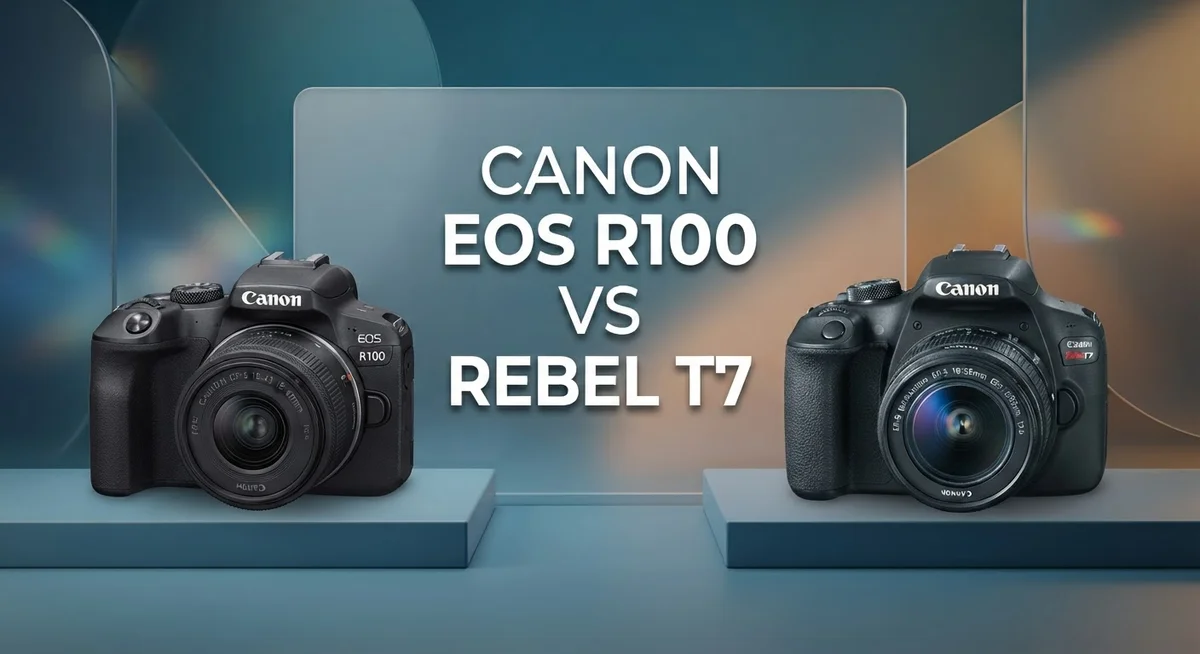
Picking your first camera can feel confusing. Two popular Canon models often come up in the search: the Canon EOS R100 and the Canon Rebel T7.
Both cameras share a 24.1MP APS-C sensor. But they differ in design and performance. The R100 uses mirrorless technology. The T7 sticks to the classic DSLR style.
Autofocus is where things get interesting. The R100 packs upgraded Dual Pixel AF for quicker, sharper focus. The T7 relies on older tech that struggles to keep pace.
So which camera fits your needs better? This guide breaks down the specs, pros, and cons of each model. You will see how they perform in real world use.
By the end, you will know exactly which Canon camera deserves a spot in your bag.
In a Nutshell
Here is the quick rundown for busy readers:
-
The Canon EOS R100 uses a mirrorless design. This makes it lighter and more compact than the T7.
-
The Rebel T7 relies on an established DSLR platform. It uses a mirror system that many photographers already know.
-
R100 packs the newer DIGIC 8 processor. This helps it shoot faster and process images quicker.
-
The T7 comes with an older processor. It still gets the job done for casual shooting.
-
Grip comfort differs a lot. The R100 has a tighter grip and fewer buttons, while the T7 offers a more traditional handhold.
-
If you want modern tech and quicker performance, the R100 wins. If you prefer a classic DSLR feel, the T7 still holds up.
Both cameras share the same sensor. But their body style and processing power set them apart in real world use.
Sensor and Image Quality
The sensor comparison between these two cameras reveals more nuance than specs alone suggest. Both pack a 24.1MP APS-C sensor, so raw resolution sits identical. The real difference emerges in how each camera processes what the sensor captures.
The R100 features the DIGIC 8 processor, which handles image data more efficiently than the T7’s older chip. This means faster file processing, quicker buffer clearing between shots, and smoother performance during continuous shooting. If you shoot bursts of action or wildlife, you’ll notice the R100 keeps pace better.
Color science differs subtly between the two models. The R100’s newer processor applies Canon’s latest color algorithms. The T7 still delivers accurate colors, but the R100 produces more vibrant tones straight from the camera. This matters less if you edit heavily in post production, but matters more if you want good results right away.
Noise handling shows another distinction. Both cameras perform similarly at low ISOs. Push them toward higher sensitivities (ISO 3200 and beyond), and the R100’s processing engine manages grain more effectively. The T7’s images become grainier faster as you climb the ISO ladder.
Dynamic range performance favors the R100 slightly. The newer processor extracts more detail from shadows and highlights. In high contrast scenes, the R100 retains more information in both dark and bright areas. The T7 still captures decent dynamic range, but loses detail sooner.
Video capabilities show a clear gap. The R100 shoots 4K video with better autofocus tracking. The T7 maxes out at 1080p and uses slower autofocus during recording. If video matters to your workflow, this becomes significant.
Low light shooting reveals processor advantages too. The R100’s DIGIC 8 chip produces cleaner images in dim conditions. The T7 struggles more with noise when ambient light drops. For indoor events or evening shoots, the R100 gives you more flexibility.
Autofocus performance during image capture connects directly to sensor technology and processing power. The R100’s Dual Pixel AF system responds faster and locks focus more reliably. The T7’s autofocus works fine for static subjects but hesitates with moving targets.

- Improved Dual Pixel CMOS AF and eye detection AF 24.1 Megapixel CMOS (APS-C) sensor with is...
- Built-in Wi-Fi and NFC technology working temperature range: 32-104°F/0-40°C

Last update on 2026-11-08 / Affiliate links / Images from Amazon Product Advertising API
Autofocus and Shooting Performance
The autofocus systems in these two cameras represent a significant generational leap. The R100 features Dual Pixel AF technology, which uses millions of tiny phase detection points spread across the sensor. This setup tracks moving subjects with impressive speed and accuracy.
The T7 relies on older contrast detection autofocus. It works by analyzing image contrast to find focus, but this method moves slower. You will notice the difference when shooting sports, wildlife, or any fast moving subjects.
Shooting speed matters for performance too. The R100 captures up to 11 frames per second in continuous shooting mode. The T7 maxes out at around 3 frames per second. If you photograph action or want to capture multiple shots quickly, this gap becomes very real.
The mirrorless design of the R100 gives it another advantage. The camera sees exactly what the sensor sees through the electronic viewfinder. This means autofocus information displays in real time. The T7’s optical viewfinder shows a mirror reflection, so autofocus feedback feels less immediate.
Processing power affects autofocus response. The DIGIC 8 processor in the R100 analyzes focus data faster than the T7’s older chip. Focus acquisition happens quicker. Subject tracking feels more responsive. The processor also helps with eye detection autofocus, which keeps sharp focus on faces automatically.
Low light autofocus performance shows another distinction. The R100’s Dual Pixel system works down to lower light levels than the T7’s contrast detection. Evening shoots or indoor photography becomes easier with the newer camera.
Video autofocus reveals the biggest gap. The R100 offers smooth, continuous autofocus during video recording. The T7 struggles with video focus, often hunting or losing lock on moving subjects. If you plan to shoot video, this difference matters significantly.
For burst shooting and continuous autofocus, the R100 simply outperforms. The T7 remains functional for static subjects and deliberate shooting. Your shooting style should guide this decision. Fast paced photography demands the R100’s capabilities.
Design and Ergonomics
The physical feel of a camera matters more than most people realize. How the camera sits in your hands determines whether you enjoy shooting or struggle through sessions.
The R100 features a mirrorless body that feels more compact and modern. Its design reflects current camera trends. The grip area is somewhat tight, which means smaller hands may find it comfortable while larger hands might feel cramped. The button layout is minimal, so you access fewer controls directly from the body. This simplicity appeals to beginners who prefer fewer distractions.
The Rebel T7 maintains the traditional DSLR shape that photographers have used for decades. Its grip is deeper and more generous overall. The T7 spreads controls across the body more liberally, giving you quick access to common functions. This layout feels familiar if you have held any DSLR before.
Weight and balance differ between these two cameras. The R100 weighs less due to its mirrorless construction. You will notice the difference when shooting for extended periods. The T7 feels slightly heavier, though both remain light enough for casual use.
The viewfinder experience sets them apart significantly. The R100 uses an electronic viewfinder that shows you exactly what your final image will look like. The T7 uses an optical viewfinder, which displays the scene through a mirror and prism system. Electronic viewfinders take adjustment time for some shooters, while others prefer their real time accuracy.
Button placement and menu systems reflect their different designs. The R100 groups controls around the back and sides in the mirrorless style. The T7 places buttons on the back and top in classic DSLR fashion. Neither layout is objectively better—it depends on your hand size and shooting preferences.
Portability favors the R100 if you travel frequently. Its smaller frame and lighter weight make it easier to carry all day. The T7 remains portable too, but the extra bulk becomes noticeable during long outings.
Build quality feels solid on both cameras. The R100 uses modern materials while the T7 employs proven DSLR construction. Both will survive typical shooting scenarios with reasonable care.
Top 3 Alternatives
Nikon Z30

- Nikon USA Authorized. Items Include: Nikon Z30 Mirrorless Camera with NIKKOR Z DX 16-50mm f...
- Complete Vlogging Camera Kit – The Nikon Z30 paired with the NIKKOR Z DX 16-50mm VR lens delivers...
Last update on 2026-11-08 / Affiliate links / Images from Amazon Product Advertising API
The Nikon Z30 offers a fresh approach to entry-level mirrorless photography. This camera features a 20.1-megapixel sensor that captures sharp, detailed images in various lighting conditions. The autofocus system is fast and reliable, making it easy to lock onto your subject quickly.
One standout feature is the vari-angle screen. You can flip and rotate it for creative angles and selfies. Video performance is solid too, with 4K recording capabilities that appeal to content creators. The Z30 feels lightweight and comfortable to hold during extended shooting sessions.
The lens selection for Nikon Z mount is growing steadily. You’ll find quality options at different price points. Battery life performs well, giving you plenty of shots per charge.
Sony a6000

- Advanced 24.2MP back Illuminated 35 millimeter full frame image sensor
- ISO 100 25600 (expandable to 51200). Lens compatibility: Sony E mount lenses
Last update on 2026-11-09 / Affiliate links / Images from Amazon Product Advertising API
The Sony a6000 remains a popular choice among photographers seeking compact mirrorless performance. Its 24.3-megapixel APS-C sensor delivers excellent image quality with vibrant colors and strong detail retention.
The autofocus system is exceptionally fast, using 179 phase-detection points that track subjects accurately. This makes the a6000 ideal for action shots and moving subjects. The camera shoots at 11 frames per second, perfect for capturing decisive moments.
Build quality feels solid and durable. The ergonomic grip suits most hand sizes comfortably. Video recording includes Full HD at 60fps, which works well for casual content creation.
Fujifilm X-S10

- It’s All About How It Feels: X-S10 has been designed to provide on-the-go photographers with...
- Making State-of-the-Art Simple: Designed to be simple and minimalist on the outside, X-S10 still...
Last update on 2026-11-08 / Affiliate links / Images from Amazon Product Advertising API
The Fujifilm X-S10 brings classic film simulation technology to an affordable package. Its 26.1-megapixel X-Trans sensor produces images with distinctive color character that many photographers love.
The camera includes in-body image stabilization, reducing blur in handheld shooting. The autofocus covers the entire frame with 425 focus points, ensuring sharp results. Video capabilities extend to 4K recording with good stabilization support.
The design feels retro and appealing. Physical dials give you direct control over exposure settings. The X-S10 handles well in various environments, from bright daylight to dimly lit interiors.
Video and Connectivity Features
The R100 and T7 handle video recording quite differently. The R100 captures 4K video at 24p, while the T7 maxes out at 1080p. This means the R100 gives you four times the resolution for modern content creation.
During video recording, autofocus behavior separates these cameras dramatically. The R100 uses Dual Pixel CMOS AF, which keeps focus smooth and continuous as your subject moves. The T7 relies on older phase detection autofocus that hunts for focus during video, creating noticeable stutters and focus shifts.
Connectivity options show another clear difference. The R100 includes built in WiFi and Bluetooth for quick file transfer and remote control via your phone. The T7 offers WiFi but lacks Bluetooth, making wireless workflows slower and less convenient.
The R100 connects to Canon’s Camera Connect app more seamlessly. You can transfer images, adjust settings, and trigger the shutter from your smartphone without extra steps. The T7 requires more manual setup for the same functions.
USB connectivity matters too. The R100 features USB C, which charges the battery faster and transfers files at higher speeds. The T7 uses the older micro USB standard, making charging and data transfer noticeably slower.
Video stabilization differs between these models. The R100 offers in body image stabilization that works during video recording. The T7 lacks this feature, so you’ll need a tripod or gimbal for smooth footage.
For content creators, the R100 clearly wins. 4K video combined with smooth autofocus and modern connectivity makes it the obvious choice. The T7 works for basic 1080p clips, but its older autofocus system and limited connectivity slow down your workflow.
If you plan to shoot video regularly, the R100 feels like the natural upgrade. You get faster file transfers, better stabilization, and video quality that matches what viewers expect today. The T7 remains capable for occasional video use, but it shows its age when autofocus needs to track moving subjects.
Lens Ecosystem and Compatibility
The lens ecosystem represents one of the most important differences between these two cameras. The Canon EOS R100 uses the RF mount system, which is Canon’s modern mirrorless standard. The Rebel T7 uses the EF mount, which has been Canon’s DSLR standard for decades.
The RF mount offers newer lens designs with advanced optical technology. Canon has been actively developing RF lenses since 2018. These lenses feature improved autofocus motors and optical coatings. The R100 gains access to this growing collection of contemporary glass.
The EF mount gives the T7 access to an enormous library of existing lenses. Canon produced EF lenses for over 25 years. You can find used EF lenses at lower costs. Many photographers already own EF lenses from previous Canon cameras.
Adapter compatibility matters for your long term investment. The R100 can use EF lenses through Canon’s control ring mount adapter. This adapter allows you to use older EF glass on the newer camera. However, autofocus performance may differ when using adapted lenses. The T7 works natively with all EF mount lenses without any adapter.
The RF lens lineup includes compact primes and versatile zooms designed specifically for mirrorless shooting. These lenses are generally smaller and lighter than their EF counterparts. Canon continues releasing new RF lenses regularly, signaling their commitment to this system.
If you plan to expand your collection, the R100 offers more future potential. The RF system represents Canon’s direction for the next decade. New technology will prioritize RF mount development. The T7’s EF mount, while still supported, represents the previous generation.
For beginners, the R100’s ecosystem feels more future proof. You invest in lenses that will work with Canon’s upcoming cameras. The T7 works well if you already own EF lenses or prefer established glass options.
Both systems offer quality lenses at various price points. Your choice depends on whether you want modern mirrorless technology or compatibility with older DSLR lenses.
Pros and Cons
Canon EOS R100 Pros
- Upgraded Dual Pixel autofocus system tracks subjects smoothly during video
- Mirrorless body design feels compact and modern compared to traditional DSLRs
- DIGIC 8 processor delivers faster shooting speeds for action moments
- RF mount opens access to Canon’s newer lens lineup with advanced optical designs
- Seamless integration with Canon’s Camera Connect app for wireless control
Canon EOS R100 Cons
- Grip feels tight for photographers with larger hands
- Minimal button layout requires more menu navigation
- RF lens selection is smaller than the established EF ecosystem
Canon Rebel T7 Pros
- Traditional DSLR design feels familiar to generations of photographers
- Massive EF lens library gives you hundreds of affordable second hand options
- Established platform means plenty of tutorials and community support online
Canon Rebel T7 Cons
- Older autofocus technology struggles with continuous tracking during video
- Slower shooting speed limits performance for fast moving subjects
- DSLR design is heavier and bulkier than modern mirrorless alternatives
Who Should Buy It
The Canon EOS R100 works best for photographers who want modern technology right from the start. If you’re buying your first camera and plan to keep it for years, the R100 makes sense. Its newer DIGIC 8 processor and upgraded Dual Pixel autofocus system give you better performance as you learn photography skills.
Choose the R100 if you shoot video frequently. The autofocus tracks moving subjects smoothly during recording, which the T7 struggles with. Content creators, vloggers, and anyone making short films will appreciate this difference immediately.
The R100 appeals to photographers who value compact, lightweight gear. The mirrorless design feels modern and travels easily. If you like minimalist equipment that doesn’t weigh you down, this camera fits your style.
You should pick the R100 if you want to build a lens collection over time. Canon actively develops new RF lenses with advanced optical technology. The RF mount represents the future of Canon’s camera system, so your investment stays relevant longer.
The Rebel T7 suits photographers who prefer familiar, traditional DSLR handling. If you’ve used film cameras or older DSLRs before, the T7 feels instantly comfortable. The button layout and grip design follow decades of DSLR conventions.
Choose the T7 if you already own Canon EF mount lenses. The enormous library of existing lenses means you can start shooting immediately without buying new glass. Adapters also let you use RF lenses on the T7, though with some limitations.
The T7 works for photographers who don’t need cutting edge autofocus performance. If you shoot mostly still subjects like landscapes, portraits, or studio work, the older autofocus system performs adequately. You won’t notice significant limitations in these shooting scenarios.
Pick the T7 if you want an established platform with proven reliability. The DSLR design has been perfected over many years. Countless tutorials and user communities exist for troubleshooting and learning.
Bottom line: The R100 suits modern photographers seeking better autofocus, video capability, and future lens options. The T7 works for traditionalists who value familiar DSLR handling and access to existing lens collections.
Final Verdict
Choosing between these two cameras comes down to your priorities as a photographer. Both models deliver the same 24.1MP sensor, so image quality stays consistent across either choice.
The real difference lies in how each camera handles the shooting experience. The R100 brings modern convenience to everyday photography. Its autofocus system and processing power make it a smart pick for anyone starting fresh.
The T7 still holds value for a specific type of user. If you like handling a camera the traditional way, this DSLR delivers that feel. It works well for photographers who prioritize simplicity over speed.
Think about your shooting style before deciding. Fast paced subjects like sports or kids benefit from the R100’s quicker autofocus response. Slower paced photography, like posed portraits or landscapes, works fine on either camera.
Beginners often find the R100 easier to grow into. Its interface connects smoothly with smartphones, making sharing photos simple. This matters if you post content online frequently.
Long term flexibility also favors the R100. As Canon continues developing mirrorless technology, this system will likely receive more support in coming years. The T7 platform, while reliable, represents older technology that Canon isn’t actively expanding.
That said, some photographers value proven systems over new features. If a DSLR body feels more comfortable in your hands, that comfort matters too.
Neither camera is a wrong choice. Both serve entry level photographers well and produce quality photos for everyday use.
Your final decision should reflect your personal shooting habits and future goals. Think about whether you want cutting edge autofocus or a familiar DSLR experience.
The R100 stands out for photographers ready to embrace mirrorless technology. Its speed and smart features suit modern shooting needs. The T7 remains a solid option for those who value tradition over innovation.
Weigh these factors against your own photography goals. Pick the camera that matches how you actually shoot, not just what specs look impressive on paper.
Frequently Asked Questions
Does the R100 have better autofocus than the T7?
Yes. The R100 uses upgraded Dual Pixel AF technology, which is significantly more advanced than the T7’s older autofocus system. This means faster and more accurate focus tracking, especially when you’re shooting moving subjects or recording video.
The R100 locks onto your subject quicker. You’ll notice the difference immediately when shooting in challenging lighting or tracking fast action.
Can I use my old Canon lenses on the R100?
Not directly. The R100 uses the RF mount, which is different from the T7’s EF mount. If you already own EF lenses, you would need an adapter to use them on the R100.
However, the R100 gives you access to Canon’s newer RF lens lineup. These lenses feature advanced optical designs built specifically for mirrorless cameras.
Which camera is better for video?
The R100 is the better choice for video work. It shoots faster and its superior autofocus system keeps your footage smooth and sharp during movement.
The T7 can record video, but it lacks the continuous autofocus performance that makes video shooting smooth and professional looking.
Is the R100 harder to use than the T7?
Not really. The R100 has a minimal button layout, which means you’ll navigate menus more often than on the T7. However, most beginners adapt quickly to this design.
The R100’s interface connects smoothly with smartphones through Canon’s Camera Connect app. This makes sharing and controlling your camera wireless and simple.
Which camera should I choose?
Pick the R100 if you want modern technology, better autofocus, and video capability. Choose the T7 only if you already own Canon EF lenses and prefer the traditional DSLR design.

Dillip is the founder and editor of Switch & Size, where he breaks down tech products, accessories, and gadgets to help readers make smarter buying decisions. With a passion for testing and comparing the latest technology, he delivers honest reviews, in-depth guides, and side-by-side comparisons that cut through the marketing noise.