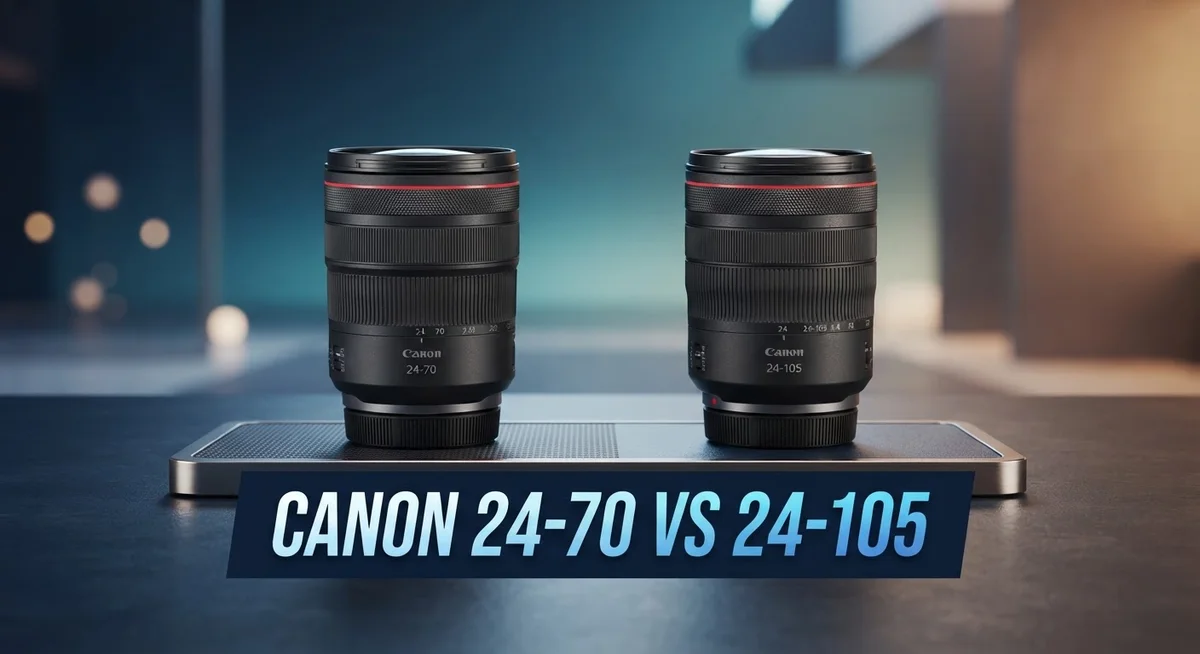
Canon 24-70 vs 24-105: Professional Lens Comparison Guide
Picking a lens can feel like a big decision. The Canon 24-70mm and Canon 24-105mm both stand out as top choices for Canon shooters.
Both lenses belong to Canon’s L-series lineup. That means you get professional grade build quality and image performance with either pick.
But these two lenses serve different needs. The 24-70mm offers a faster f/2.8 aperture for stunning low light shots and creamy bokeh.
The 24-105mm brings extra reach and built in Image Stabilizer. It works great for travel, events, and versatile everyday shooting.
So which one fits your style? This guide breaks down the real differences between these two lenses. You will learn exactly which one matches your photography goals.
In a Nutshell
Here’s the quick summary for you.
-
The 24-70mm f/2.8 gives you a faster aperture. This means better shots in low light. You also get creamy bokeh and sharp corners.
-
The 24-105mm f/4 offers more reach. It stretches to 105mm, perfect for headshots. This lens also has built in Image Stabilizer for steady shots.
-
Need speed and low light power? The 24-70mm wins here. It handles dim rooms and evening shoots with ease.
-
Want flexibility and reach? The 24-105mm covers more ground. It moves smoothly from landscapes to tighter shots.
-
The 24-70mm lacks stabilization. You need a steady hand or a tripod for slower shutter speeds.
-
The 24-105mm has a slower f/4 aperture. This can mean more noise in darker settings.
Both lenses carry Canon’s L-series build. This means solid quality and reliable performance. Your choice depends on what you shoot most. Think about light conditions and reach before deciding.
Optical Performance and Aperture
The aperture difference between these lenses shapes how you shoot in different lighting situations. The 24-70mm f/2.8 captures one full stop more light than the 24-105mm. This means you get faster shutter speeds and cleaner images when shooting indoors or at night.
Low light photography becomes noticeably easier with the f/2.8 aperture. You can hand hold the camera at slower ISO values. Your images stay sharp without relying on a tripod as much. The 24-70mm excels when you photograph events, concerts, or dimly lit interiors.
The 24-105mm f/4 requires more light to achieve the same shutter speed. You’ll need to bump up your ISO or use a tripod more often in shadows. However, the built in Image Stabilizer compensates by reducing camera shake. This stabilization lets you shoot at slower speeds without blur. The trade off works well for travel and general purpose shooting.
Bokeh quality differs between these lenses too. The f/2.8 aperture on the 24-70mm produces that creamy, separated background effect. Portraits look more professional with smoother bokeh. The f/4 aperture on the 24-105mm creates less background separation. Your subject still stands out, but the effect feels less dramatic.
Corner sharpness reveals another optical distinction. The 24-70mm delivers sharper edges across the frame at f/2.8. The 24-105mm shows slight softness in the corners at f/4, especially at the 105mm end. Both lenses improve when you stop down to f/5.6 or smaller.
Focal range affects optical performance as well. The 24-70mm covers a shorter span, which helps Canon optimize every millimeter. The 24-105mm stretches across a wider range. This extended zoom means some compromise in optical perfection at the extremes.
Choose the 24-70mm if you prioritize speed and optical perfection. Pick the 24-105mm if you value stabilization and extended reach. Your shooting environment determines which optical strengths matter most to you.

- Compact, high-quality Lens with broad zoom range for the EOS R system
- Bright, constant f/4.0 zoom Lens

Last update on 2026-11-08 / Affiliate links / Images from Amazon Product Advertising API
Focal Range and Versatility
The focal range you choose determines what you can capture without moving. The 24-70mm covers wide angles through moderate telephoto. The 24-105mm extends further and gives you an extra 35mm of reach at the long end.
This difference matters for specific shooting scenarios. Portraits benefit from the 105mm focal length on the longer lens. You get better subject separation and flattering compression. The 70mm on the shorter lens requires you to step back further or accept less flattering angles.
Landscape photography works well with both options. Wide angle coverage starts at 24mm on each lens. The extra reach on the 24-105mm helps you frame distant mountains and details. You can isolate landscape elements more effectively with the longer focal length.
Versatility leans toward the 24-105mm because of its extended range. One lens covers situations where you might otherwise need two lenses. Event photographers appreciate this all-in-one capability. You stay mobile and ready for unexpected moments without swapping glass.
The 24-70mm trades range for optical excellence at each focal length. Corners stay sharper across the frame. Distortion and chromatic aberration stay minimal. Professional studios often prefer this lens for controlled environments where the shorter reach isn’t a limitation.
Zoom flexibility differs between these lenses too. The 24-105mm lets you frame shots more precisely without repositioning your body. This matters during fast-paced events or when you’re standing on a ladder. The extra focal length options reduce your need to move around.
Real world usage shows the 24-70mm excels in studios and controlled settings. The 24-105mm shines during travel, events, and situations where you need maximum coverage. Your shooting style determines which range serves you better.
Consider what subjects you photograph most often. Wildlife and distant subjects favor the 105mm reach. Studio work and controlled shoots favor the 70mm endpoint. The focal range you choose shapes your entire shooting experience and influences which situations feel comfortable versus limiting.
Image Stabilization and Low-Light Capability
The 24-70mm f/2.8 pulls in one full stop more light than the 24-105mm. This matters when your surroundings get dark. You can use faster shutter speeds without cranking up your ISO, which keeps your images clean and noise-free.
The 24-105mm’s f/4 aperture requires you to make trade-offs in dim conditions. Higher ISO becomes necessary to maintain usable shutter speeds. Your photos may show more grain or noise, especially in shadows.
Image stabilization changes the game for handheld shooting. The 24-105mm includes Canon’s Image Stabilizer, which compensates for camera shake. You can shoot at slower shutter speeds and still get sharp results. The 24-70mm has no stabilization, so you rely entirely on your technique and fast shutter speeds.
When you combine these factors, the 24-70mm shines in controlled studios and indoor events. The faster aperture gives you immediate advantages. You gain creative control over depth of field too. Shallow bokeh becomes easier to achieve and looks more pronounced.
The 24-105mm takes a different approach. Its stabilizer helps you work with available light more effectively. You don’t need to push your ISO as aggressively. For travel photography and outdoor work, this stabilization becomes your safety net.
Low-light portraits favor the 24-70mm because of that f/2.8 aperture. Your subject separates beautifully from the background. The faster glass delivers that creamy bokeh quality.
Video shooters often prefer the 24-105mm. Image Stabilizer smooths out handheld footage without electronic cropping. Your clips look more professional and polished.
The real choice depends on your shooting style. Do you work mostly indoors or in studios? The 24-70mm rewards you with speed and optical excellence. Do you need flexibility across different lighting conditions? The 24-105mm’s stabilizer and extended range handle variable situations better.
Both lenses handle low light, but they use different strategies. One relies on aperture speed. The other combines a slower aperture with mechanical stabilization. Your specific needs determine which strategy works best for you.
Top 3 Alternatives
Nikon AF-S 24-70mm

- Bundle Items Include: 1 x Nikon - AF-S NIKKOR 24-70mm f/2.8E ED VR Wide-Angle Zoom Lens, 1 x Sandisk...
- Introducing the AF-S NIKKOR 24-70mm f/2.8E ED VR Lens, now available for Amazon sellers with...
Last update on 2026-11-08 / Affiliate links / Images from Amazon Product Advertising API
The Nikon AF-S 24-70mm serves as a solid alternative if you shoot with Nikon cameras. This lens covers the same focal range and works well for everyday photography and professional work. You get fast autofocus and a sturdy build that handles daily use.
The main difference is that this lens doesn’t include image stabilization. You’ll need steady hands or a tripod in low light. However, many photographers appreciate its sharpness and reliability across the entire zoom range.
Tamron SP 24-70mm

- Sophisticated design delivers superb performance and ultra-high image quality
- eBAND Coating provides superior anti-reflection properties, and reduces flare and ghosting
Last update on 2026-11-08 / Affiliate links / Images from Amazon Product Advertising API
Tamron’s SP 24-70mm offers excellent value without sacrificing quality. This third-party option works with multiple camera brands, making it flexible if you own different systems. The lens delivers sharp images and includes vibration compensation to help with handheld shooting.
Users often praise its lightweight design and fast f/2.8 aperture. The autofocus is quick and accurate. If you want a dependable zoom lens that performs well in various conditions, this option deserves consideration.
Sony FE 24-70mm

Last update on 2026-11-08 / Affiliate links / Images from Amazon Product Advertising API
Sony’s FE 24-70mm is the go-to choice for Sony mirrorless users. This lens combines fast autofocus with excellent optical performance. It includes image stabilization, which helps when shooting video or working in dim environments.
The compact size makes it ideal for travel photography. The constant f/2.8 aperture lets you maintain consistent exposure as you zoom. Sony shooters appreciate how this lens integrates with their camera’s autofocus system for seamless operation.
Each option brings different strengths to your camera bag. Your choice depends on your camera brand and specific shooting needs.
Build Quality and Professional Features
The build quality of both lenses reflects Canon’s professional standards. Both feature the L-series construction, which means weather sealing and premium materials throughout. You get a lens that survives demanding shoots.
The 24-70mm uses a more compact design. It feels solid in your hand and balances well on most full-frame bodies. The focus ring rotates smoothly, and the zoom ring responds instantly to your input. Photographers who work in studios appreciate this predictable, responsive feel.
The 24-105mm adds weight and length to your kit. This extra bulk comes from the Image Stabilizer mechanism inside. The stabilizer adds optical elements and moving parts. Some shooters notice a slight delay in autofocus, though it remains fast. The trade-off is worthwhile if you shoot handheld frequently.
Professional features differ between these lenses. The 24-70mm includes ultrasonic autofocus and full-time manual focus override. You can grab the focus ring anytime without switching modes. This matters during fast-paced events when you need instant control.
The 24-105mm adds Image Stabilizer as its signature feature. This system compensates for camera shake, giving you 4 stops of stabilization. You can shoot at slower shutter speeds without blur. Handheld video becomes much easier. Macro work at 105mm benefits greatly from this technology.
Both lenses feature fluorite elements and aspherical glass. These optical components reduce aberrations and improve sharpness. Canon’s coating technology minimizes flare and ghosting in both designs.
The 24-70mm construction prioritizes optical performance. Every element serves speed and clarity. The f/2.8 aperture demands precise engineering to maintain corner sharpness across the zoom range.
The 24-105mm prioritizes versatility and stability. The stabilizer adds complexity but solves real problems for many shooters. The f/4 aperture allows simpler construction while the stabilizer compensates for slower speeds.
Your shooting environment determines which features matter most. Studio photographers value the 24-70mm’s responsive handling and optical purity. Travel photographers and videographers prefer the 24-105mm’s stabilizer and extended reach. Both represent professional-grade construction that lasts for years.
Real-World Use Cases: When to Use Each Lens
Wildlife and sports photography demands reach and speed. The 24-105mm gives you that extra 35mm of focal length for distant subjects. You can frame a bird or athlete tighter without cropping in post-production. The Image Stabilizer helps you hold sharp shots at slower shutter speeds when light fades during evening games.
However, the 24-70mm f/2.8 wins when you need fast autofocus and freezing motion. Indoor sports venues have dim lighting. That extra stop of light lets you shoot at faster shutter speeds. You capture action without motion blur. The responsive autofocus tracks moving subjects better in challenging conditions.
Event photography splits differently. Wedding ceremonies indoors? The 24-70mm handles dim chapel lighting without pushing ISO too high. You get creamy background separation for those emotional moments. Reception dancing under colored lights? The Image Stabilizer on the 24-105mm keeps handheld shots steady. You move freely through crowds without a tripod.
Travel and adventure shooting favors the 24-105mm. You want one lens that handles everything from sweeping mountain vistas to candid portraits of locals. The extended reach eliminates the need for lens swaps. The stabilizer compensates when you’re hiking and your hands tire. One lens means less weight in your pack.
Commercial and studio work belongs to the 24-70mm. You control the lighting environment. You position subjects precisely. That f/2.8 aperture creates separation between subject and background. The sharpness across the frame matters when clients examine fine details. No stabilizer needed because you use tripods and controlled settings.
Real estate photography works well with the 24-105mm. You photograph entire rooms and wide hallways. The extended focal length lets you step back further in tight spaces. The stabilizer helps when shooting in poorly lit basements or dimly lit interiors without setting up lighting gear.
The key is matching the lens to your environment. Choose the 24-70mm for controlled settings where speed matters. Choose the 24-105mm for variable conditions where versatility and stabilization save you.
Pros and Cons
Pros
- The 24-70mm f/2.8 captures one full stop more light, making it superior for dark venues and indoor events where flash is not allowed
- The 24-105mm extends to 105mm, giving you extra reach for headshots and tighter framing without moving closer
- Image Stabilizer on the 24-105mm lets you shoot handheld at slower shutter speeds, reducing camera shake during video work
- The 24-70mm delivers creamy bokeh and sharper corners thanks to its wider aperture and optical design
- The 24-105mm covers landscapes to telephoto in one lens, eliminating the need to swap glass on location
Cons
- The 24-70mm stops at 70mm, leaving you short when you need longer focal lengths for portraits or distant subjects
- The 24-70mm lacks Image Stabilizer, so you need faster shutter speeds or a tripod to avoid blur in dim light
- The 24-105mm’s f/4 aperture produces more digital noise in low light and less separation between subject and background
- The 24-105mm is heavier and longer than the 24-70mm, adding weight to your camera bag during all-day shoots
Who Should Buy It
The 24-70mm f/2.8 is perfect for you if you shoot in challenging lighting conditions. Weddings in dimly lit venues, concerts, and indoor events all benefit from that extra stop of light. You’ll capture sharp images without pushing your ISO too high.
Choose the 24-70mm if you prioritize image quality and bokeh. Professional portrait photographers love this lens because the f/2.8 aperture creates that creamy background blur. Your subjects pop off the frame with stunning separation.
The 24-105mm suits photographers who value flexibility above all else. You get a wider zoom range without swapping lenses. Travel photographers especially appreciate this because you can frame landscapes, environmental portraits, and tighter shots all day long.
Pick the 24-105mm if you shoot video regularly. The Image Stabilizer smooths out handheld footage and lets you work at slower shutter speeds. Your videos look more professional without needing a tripod for every shot.
The 24-105mm makes sense if you’re building your first professional kit. One lens covers most situations you’ll encounter. You save money on additional glass while learning what focal lengths you actually need.
Consider the 24-70mm if you work in controlled environments. Studio photographers, commercial shooters, and event professionals who light their scenes benefit most. Fast autofocus and responsive performance matter in these settings.
The 24-105mm wins for real estate and architectural work. You capture entire rooms without stepping back too far. The extra reach helps you frame properties in flattering ways.
Choose based on your primary shooting style. Ask yourself these questions: Do you work mostly indoors or outdoors? Do you need fast aperture performance? Do you shoot video? How often do you change lenses?
The 24-70mm demands you commit to faster film speeds or additional lighting gear. The 24-105mm requires you to accept some light loss and less bokeh capability. Both are professional tools. Your shooting environment and workflow determine which one serves you better.
Final Verdict
Both lenses earn their spot in the Canon L series lineup. Your final choice depends on what you shoot most often and how you plan to grow as a photographer.
If you want one lens that does almost everything, the 24 105mm makes sense. It handles travel, video, and everyday shooting without forcing you to swap glass constantly.
The 24 70mm rewards photographers who already know their style. It fits studio work, weddings, and any job where image quality comes first. You trade some reach for sharper results and better light handling.
Think about your camera bag too. The 24 70mm feels heavier in daily carry situations since you often pair it with a second telephoto lens. The 24 105mm reduces that bulk by covering more ground alone.
Your future gear plans matter as well. If you plan to build a two lens kit with a dedicated telephoto zoom, the 24 70mm complements that setup perfectly. If you want a single walkaround lens for years, the 24 105mm serves that goal better.
Skill level plays a role too. New shooters often benefit from the flexibility of the 24 105mm while they learn composition and framing. Experienced shooters usually already know when they need the 24 70mm’s speed and rendering.
Neither lens is universally better. Each one solves different problems for different photographers. Match the lens to your actual shooting habits rather than chasing specs alone.
Ask yourself one final question: Do you value flexibility or precision more? Your honest answer points you to the right lens.
Whichever you pick, both options represent proven professional glass. You will not regret owning either one once you match it to your real world needs.
Frequently Asked Questions
Which lens should I buy if I shoot mostly indoors?
The 24-70mm f/2.8 is your better choice for indoor work. Its wider aperture lets more light reach your sensor, so you need less ISO and get cleaner images. You’ll also create that beautiful blurred background (bokeh) that makes subjects pop against indoor walls and furniture.
The 24-105mm works indoors too, but its f/4 aperture means you’ll push your ISO higher or need extra lighting gear to match the same image quality.
Can I use the 24-105mm for professional portraits?
Yes, but with limits. The 24-105mm reaches 105mm, which is decent for headshots and tighter framing. However, many portrait photographers prefer 70mm or longer as their standard focal length.
The 24-70mm stops at 70mm, so it’s less ideal for portraits unless you step back further. If portraits are your main focus, you might eventually add a dedicated telephoto lens to either kit.
Does Image Stabilizer really make a difference?
The 24-105mm’s Image Stabilizer helps you shoot handheld at slower shutter speeds without blur. This matters most for video work and low-light situations where you can’t use flash.
The 24-70mm has no stabilizer, so you rely on faster shutter speeds or a tripod. In bright daylight, this difference disappears. In dim venues, the stabilizer becomes genuinely useful.
What if I can’t decide between them?
Ask yourself two questions: Do you work mostly indoors or outdoors? Do you value one versatile lens or sharper image quality?
If flexibility wins, pick the 24-105mm. If image quality and low-light performance matter most, choose the 24-70mm. Both are professional-grade Canon L series lenses that deliver excellent results.

Dillip is the founder and editor of Switch & Size, where he breaks down tech products, accessories, and gadgets to help readers make smarter buying decisions. With a passion for testing and comparing the latest technology, he delivers honest reviews, in-depth guides, and side-by-side comparisons that cut through the marketing noise.