Canon R8 vs Sony A7III: Full-Frame Camera Comparison
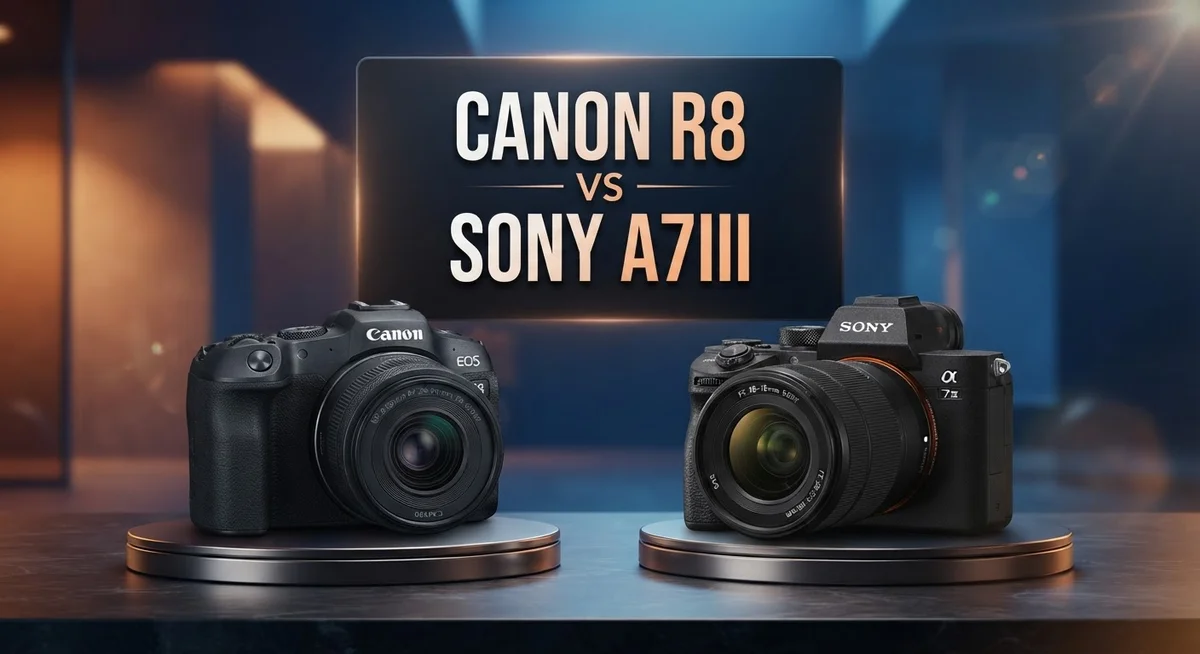
Choosing a new full frame camera can feel tricky. Two names often come up: the Canon R8 and the Sony A7III. Both cameras pack a 24MP full frame sensor. Both promise stunning image quality. But they are built for different types of shooters.
The Canon R8 brings newer technology to the table. It borrows its sensor and autofocus system from the R6 Mark II. This gives it excellent low light performance and sharp subject detection.
The Sony A7III is an older model, but it still holds its ground. It offers better build quality and dual SD card slots. Battery life is also a strong point here.
So which camera fits your needs? Let us break down the key differences to help you decide.
In a Nutshell
Here is the quick summary for you.
-
The Canon R8 uses the sensor and AF system from the R6 Mark II. It handles low light scenes with ease. Subject detection feels sharp and reliable.
-
The Sony A7III offers dual SD card slots. This gives you extra backup for your important shoots. It is a handy feature for professional work.
-
Build quality on the Sony A7III feels sturdy and dependable. It can handle tough shooting conditions well. This makes it a good travel companion.
-
Battery life is another strong point for the Sony A7III. You can shoot for longer without worrying about charging. This is great for long events or trips.
-
The Canon R8 generally offers better overall performance. Many users find it outperforms the A7III in real world tests. Its color science also needs less editing work.
-
The Sony A7III shows its age with older generation tech. It might miss some newer conveniences. However, it remains a solid choice for its dual slots and body strength.
-
If you want top competitors to compare, look at the Sony A7C or the Sony A7IV.
Sensor and Image Quality
The sensor and image quality differences between these two cameras reveal important distinctions for photographers who care about output quality.
Both cameras pack 24 megapixels on full frame sensors, but the technology inside them differs significantly. The Canon R8 features the sensor from the R6 Mark II, which means you get access to more advanced processing capabilities. This newer sensor excels at capturing detail in shadows and highlights alike. The Sony A7III uses an older generation sensor, which still performs well but lacks some of the refinements found in current technology.
Low light performance is where the Canon R8 truly shines. The camera handles high ISO situations with impressive grace, producing clean images even when light is scarce. Subject detection algorithms work seamlessly to keep your focus locked on what matters. The Sony A7III can shoot in low light too, but it requires more careful technique and often needs higher ISO values to achieve similar results.
Color science shows a real difference here. The Canon R8 delivers more accurate color rendering straight from the camera. You get pleasing skin tones and natural color balance without extensive editing. The Sony A7III requires more post processing work to achieve similar color accuracy. Many photographers find themselves spending extra time in editing software to get the look they want.
Dynamic range is comparable between both cameras, though the Canon’s newer sensor handles extreme situations slightly better. You can recover shadow details and blown highlights on both, but the R8 gives you more flexibility in post production.
Autofocus performance impacts image quality too. The R8’s advanced AF system means fewer missed shots and sharper focus overall. The Sony A7III’s autofocus works fine for most situations but doesn’t match the precision of newer systems.
For video creators, both cameras produce solid footage. The R8 offers more modern codec options and better stabilization. If you shoot stills primarily and want minimal editing time, the Canon R8 edges ahead with its superior color accuracy and sensor technology. The Sony A7III remains capable but demands more work to reach the same final image quality.
No products found.
Autofocus and Performance
The autofocus systems in these two cameras represent a significant generational leap. The Canon R8 features the autofocus technology from the R6 Mark II, which brings advanced subject detection capabilities to the table. This system excels at tracking moving subjects and identifying faces with impressive accuracy.
The Sony A7III uses an older autofocus design. While it still performs well for many shooting situations, it lacks the sophisticated subject detection features found in newer models. You will notice the difference most when shooting fast-moving subjects or in complex scenes.
Subject detection is a key advantage for the Canon R8. The camera can identify and track people, animals, and vehicles automatically. This feature saves you time during shoots and helps you maintain focus on what matters most. The Sony A7III requires more manual focus point selection in these scenarios.
Low light autofocus performance favors the Canon R8 as well. The newer sensor and AF system work together to maintain focus even when light levels drop significantly. The Sony A7III can struggle in dim conditions, particularly with moving subjects.
Continuous autofocus during video recording shows another gap between these cameras. The Canon R8 delivers smoother focus transitions and faster subject acquisition. The Sony A7III performs adequately but feels less responsive in comparison.
Eye autofocus is another area where the Canon R8 pulls ahead. The system locks onto eyes reliably and maintains focus throughout your shoot. Sony’s eye autofocus exists but operates less intuitively than Canon’s implementation.
For professional work, the Canon R8’s autofocus system reduces the need for manual adjustments. You spend less time hunting for focus and more time capturing images. The Sony A7III demands more active engagement from the photographer.
Speed matters in autofocus performance. The Canon R8 focuses faster across the frame. This quickness proves valuable when shooting sports, wildlife, or any fast paced situation.
Both cameras offer autofocus customization options. However, the Canon R8’s menu system feels more straightforward for adjusting these settings. The Sony A7III requires deeper menu navigation to access similar controls.
Design, Build Quality, and Ergonomics
The Canon R8 features a more compact body compared to the Sony A7III. This makes it easier to carry during long shooting sessions. The grip feels natural in your hand, and the buttons respond with satisfying clicks.
The Sony A7III presents a slightly larger frame. Many photographers appreciate the extra space for their fingers. The build feels solid and weatherproof, which matters when you shoot in challenging conditions.
Weather sealing differs between these two cameras. The Canon R8 offers robust protection against dust and moisture. The Sony A7III also includes weather sealing, though some users report the Canon’s implementation feels more refined.
The viewfinder experience sets them apart significantly. The Canon R8 uses an electronic viewfinder with faster refresh rates. You see a more fluid, natural preview of your scene. The Sony A7III’s viewfinder works well, but it displays information with a slight lag that some photographers notice.
Button placement and menu systems affect your workflow daily. The Canon R8 organizes controls intuitively. You access common settings without diving through menus. The Sony A7III requires more menu navigation for certain adjustments, which slows you down during fast paced shoots.
The tripod socket location matters for video work. Both cameras position it centrally beneath the body. This prevents tilting when you mount heavier lenses.
Materials and durability reveal practical differences. The Canon R8 uses magnesium alloy extensively. This keeps weight down while maintaining strength. The Sony A7III also employs quality materials, delivering excellent durability that survives years of professional use.
Battery compartment access shows another design choice. The Canon R8 makes battery changes quick and simple. The Sony A7III requires slightly more effort to access the battery, though it’s still straightforward.
The Canon R8’s overall design reflects newer thinking about ergonomics. Everything feels modern and purposeful. The Sony A7III remains comfortable and capable, but its design language belongs to an earlier generation. Both cameras feel premium in your hands, yet the Canon’s refinements make extended shooting sessions feel less tiring.
Top 3 Alternatives
Nikon Z6 II

- Mirrorless versatility on a whole new level. 24.5MP BSI resolution that excels in low light. 14 FPS...
- Full frame. Full pixel readout. Full featured 4K UHD Video. Top of the line video performance with...

Last update on 2026-11-09 / Affiliate links / Images from Amazon Product Advertising API
The Nikon Z6 II stands out as a full-frame powerhouse for photographers who want reliability and speed. This camera delivers fast autofocus with 273 focus points. You get excellent low-light performance thanks to its 24.2-megapixel sensor.
The Z6 II shoots 4K video smoothly and handles 11 frames per second in continuous shooting. Its battery life outlasts many competitors, giving you extended shooting sessions without swapping batteries. The camera feels solid and professional in your hands.
Panasonic Lumix S5

- A LIGHTWEIGHT, POWERFUL HYBRID CAMERA FOR VIBRANT STILL PHOTOGRAPHY AND CINEMATIC VIDEO: Realize...
Last update on 2026-11-09 / Affiliate links / Images from Amazon Product Advertising API
Panasonic’s Lumix S5 brings a unique value proposition to full-frame photography. This camera offers 24.2 megapixels with impressive autofocus that uses contrast detection and depth-from-defocus technology.
The S5 excels at video work with unlimited recording time and excellent stabilization. Its compact design makes it ideal for travel photographers. You’ll appreciate the intuitive menu system and straightforward controls. The camera handles both stills and video equally well, making it perfect for hybrid creators.
Canon EOS R6

- FULL-FRAME HYBRID PERFORMANCE - Canon EOS R6 Mark II features a 24.2MP full-frame CMOS sensor, DIGIC...
- RF 50MM F1.8 STM PRIME LENS - Added Canon RF 50mm f/1.8 STM lens delivers a bright f/1.8 aperture...
Last update on 2026-11-09 / Affiliate links / Images from Amazon Product Advertising API
The Canon EOS R6 represents cutting-edge performance in the full-frame mirrorless category. This camera boasts 20 megapixels, 4K 60fps video, and rapid autofocus with 1053 focus points.
The R6 delivers outstanding image stabilization that reduces camera shake significantly. Its weather sealing provides durability in challenging conditions. The fast processing speed means quick image review and file transfers. Canon’s extensive RF lens ecosystem gives you endless creative options. This camera suits professionals who demand speed, accuracy, and versatility in demanding situations.
Battery Life and Storage
The Canon R8 and Sony A7III take different approaches to power management and data storage. Understanding these differences helps you choose the right camera for your shooting style.
Battery performance separates these two cameras significantly. The Sony A7III delivers superior battery life, giving you more shots per charge. This advantage matters for all day shoots or travel photography. The Canon R8 uses newer battery technology but requires more frequent charging sessions. You’ll need spare batteries if you shoot extensively with the Canon.
The Sony A7III includes dual SD card slots, which is a major advantage for storage workflow. This setup lets you back up files automatically as you shoot. You can also split recording between two cards for added security. The dual slot system prevents data loss from card failure during important sessions.
The Canon R8 uses a single card slot configuration. This means you carry more SD cards or manage storage differently. You won’t have automatic backup protection during shooting. However, modern SD cards are fast enough that this rarely causes problems for most photographers.
Storage capacity depends on your card choices, not the cameras themselves. Both cameras accept standard SD cards. The Sony’s dual slot system simply gives you more flexibility. You can use slower cards in one slot and faster cards in another.
For travel and events, the Sony A7III’s battery life becomes valuable. You shoot longer without changing batteries. The dual card slots also provide peace of mind for important work. Battery swaps interrupt your workflow and can make you miss moments.
The Canon R8 works well if you plan ahead. Bring extra batteries and manage your card space carefully. The newer sensor technology compensates for the single card slot limitation in many situations.
Your choice depends on your shooting patterns. Long sessions without access to charging favor the Sony. Photographers who swap batteries regularly won’t notice much difference. Storage needs matter more if you shoot 4K video or work with RAW files extensively. Consider your typical shooting day when deciding between these cameras.
Low-Light Performance and Color Science
Low light photography demands a camera that captures detail without excessive noise. The Canon R8 excels in this area with its advanced sensor technology inherited from the R6 Mark II. This newer generation sensor delivers cleaner images at higher ISO values compared to the Sony A7III.
The Sony A7III uses an older sensor design that requires more aggressive noise reduction. This means you’ll spend extra time in post-processing to clean up grain and maintain sharpness. The Canon R8 reduces this workload significantly by producing cleaner files straight from the camera.
Color science represents another critical difference in low light situations. The Sony A7III produces colors that need substantial editing adjustments. Many photographers find themselves boosting saturation and correcting white balance in post-production. The Canon R8 delivers more accurate color rendering directly, saving you hours of editing time.
Subject detection in low light gives the Canon R8 a major advantage. The camera’s intelligent autofocus system recognizes faces, eyes, and bodies even when light is minimal. This means you maintain sharp focus on your subject without manual intervention. The Sony A7III’s older autofocus system struggles in these conditions, often hunting for focus or missing the shot entirely.
Dynamic range performance matters when shooting in dim environments. The Canon R8 preserves detail in both shadows and highlights more effectively. You recover more information from underexposed areas during editing. The Sony A7III clips highlights more readily and leaves shadows muddier.
Practical shooting experience differs noticeably between these two cameras. With the Canon R8, you’ll nail focus and exposure faster in challenging light. The Sony A7III requires more careful metering and manual focus assistance. For events, portraits, or night photography, the Canon R8 proves more reliable and forgiving.
Both cameras produce acceptable results in low light conditions. However, the Canon R8’s newer technology, superior color accuracy, and intelligent subject detection make it the stronger choice for photographers who frequently work in dim environments.
Pros and Cons
Canon R8 Pros
- Newer sensor technology with the R6 Mark II system delivers sharper images and faster processing
- Subject detection in low light gives you reliable focus even when shooting in dim conditions
- Compact body design makes it easier to carry for long shooting sessions
- Excellent autofocus customization lets you fine tune performance for your specific needs
Canon R8 Cons
- Single SD card slot means you cannot backup footage simultaneously during shoots
- Missing some specialized features that competitors offer in this category
Sony A7III Pros
- Dual SD card slots provide automatic backup and give you peace of mind during important events
- Superior battery life keeps you shooting longer without needing to swap batteries
- Robust build quality with materials designed to handle demanding conditions
Sony A7III Cons
- Older sensor generation requires more editing work on color grading in post production
- Weaker subject detection in low light situations compared to newer systems
- Larger body size adds weight if you shoot handheld for extended periods
Who Should Buy It
The Canon R8 suits photographers who want modern technology without compromise. You’ll appreciate the R6 Mark II sensor and autofocus system. These features deliver sharp images in challenging light. Subject detection works reliably, so you spend less time adjusting settings and more time shooting.
Choose the R8 if you shoot events, portraits, or travel photography. The compact body feels natural in your hands during long sessions. You’ll notice the responsive autofocus keeps up with moving subjects. Low light performance impresses most users, especially those who shoot indoors or at dusk.
The R8 works well for photographers who plan their workflows. You manage single card slot storage by using fast, reliable memory cards. Bring extra cards to important shoots. This approach keeps your setup simple and your camera responsive.
The Sony A7III appeals to shooters with different priorities. You’ll value the dual SD card slots for automatic backup during weddings or critical assignments. Battery life stretches longer between charges, so you carry fewer batteries on location. The build quality feels substantial in your hands.
Choose the A7III if battery endurance matters most to your shooting style. Long days in the field benefit from extended power reserves. You’ll appreciate having backup storage running simultaneously during shoots. This setup gives peace of mind during high pressure events.
The A7III suits photographers who already own Sony lenses. Your existing glass works seamlessly with this camera body. You maintain compatibility with your current system. This matters if you’ve invested in Sony’s lens lineup.
Consider your actual shooting needs carefully. Ask yourself these questions: Do you shoot mostly indoors or outdoors? Do you need backup storage during shoots? How often do you change batteries? Do you own Sony lenses already?
The R8 wins for photographers seeking newer features and modern performance. The A7III wins for those prioritizing battery life and dual card slots. Both cameras produce excellent images. Your choice depends on which features solve your real shooting problems.
Final Verdict
The Canon R8 and Sony A7III both deliver strong results for full-frame shooters. Your final decision should match your long-term goals, not just today’s specs sheet.
Overall performance favors the Canon R8. It runs newer processing hardware and gives you sharper results across most shooting scenarios. Many users report smoother everyday use with this camera.
The Sony A7III still holds appeal for photographers who value proven reliability. Its build quality feels sturdy, and it handles rough conditions well over years of heavy use.
Think about your lens collection too. Canon’s RF mount keeps expanding with fresh glass options. Sony’s E mount already has a huge lens library built over many years.
If you shoot professionally and need dependable gear you trust, the A7III’s track record speaks for itself. Photographers who upgrade often already own Sony lenses, which makes switching brands less practical.
For creators who want the latest sensor benefits without jumping to a Sony A7IV, the R8 offers a smart alternative. It brings modern autofocus and processing into a smaller package.
If neither camera checks every box, look at the Sony A7C or Sony A7IV. The A7C shares the A7III’s sensor but adds a more compact body. The A7IV pushes resolution and video specs further for creators who need more headroom.
Your final choice depends on your priorities. Pick the R8 if you want current technology and don’t mind a single card slot. Pick the A7III if backup storage and battery life matter more than having the newest sensor.
Both cameras remain solid tools for photographers. The R8 edges ahead for most shooters today, but the A7III still earns its place for specific workflows. Match the camera to your actual shooting habits, not just the spec sheet, and you’ll make the right call for your photography journey.
Frequently Asked Questions
Which camera has better autofocus in low light?
The Canon R8 wins this round. It uses the R6 Mark II autofocus system, which excels at detecting subjects even when light is dim. The Sony A7III has solid autofocus too, but the R8’s subject detection gives you more reliable focus when you shoot in challenging conditions.
Can I back up my footage during shoots?
The Sony A7III offers dual SD card slots. This means you can record to both cards at once, creating an automatic backup while you shoot. The Canon R8 has a single SD card slot, so you cannot back up simultaneously during your session.
Which camera should I buy if I already own Sony lenses?
The Sony A7III makes sense if your lens collection is already Sony. Switching systems means buying new glass, which adds cost and complexity. Stick with what you own unless the R8’s newer features justify the switch for your work.
Does the R8 have everything the A7III offers?
Not quite. The Sony A7III has better battery life and dual card slots. The Canon R8 lacks some specialized features that competitors include. However, the R8 gives you newer sensor technology and modern autofocus performance in a more compact body.
What if I want the latest Sony technology instead?
Look at the Sony A7C or Sony A7IV. Both cameras bring current features to Sony’s lineup. The A7IV especially offers modern performance if you prefer Sony’s ecosystem over Canon’s newer RF mount system.

Dillip is the founder and editor of Switch & Size, where he breaks down tech products, accessories, and gadgets to help readers make smarter buying decisions. With a passion for testing and comparing the latest technology, he delivers honest reviews, in-depth guides, and side-by-side comparisons that cut through the marketing noise.