Canon 5D Mark IV vs R6 Mark II: Complete Camera Comparison Guide
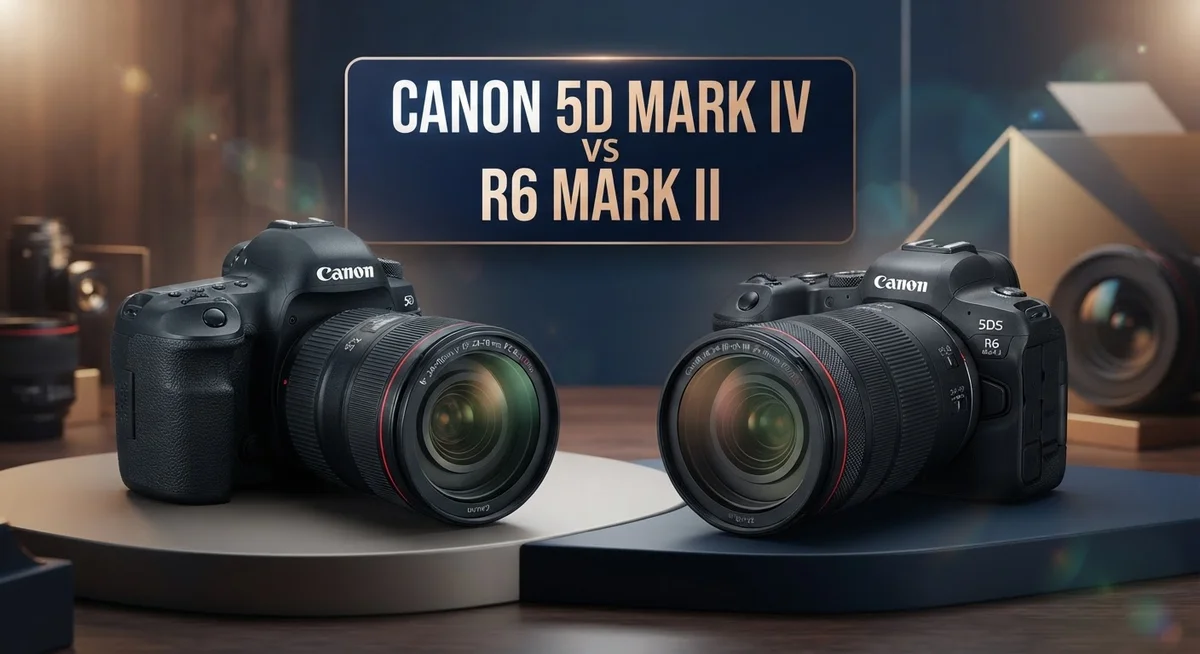
Choosing a new camera can feel tricky. Two great options stand out today: the Canon 5D Mark IV and the Canon R6 Mark II. Both cameras come from Canon’s trusted lineup, but they serve different needs.
The 5D Mark IV is a classic DSLR. It offers a higher resolution sensor and reliable performance that photographers have trusted for years.
The R6 Mark II is a modern mirrorless camera. It brings faster autofocus, quicker burst shooting, and better low light handling.
So, which camera fits your style? This comparison breaks down the key differences in specs, image quality, and performance.
We will look at autofocus systems, resolution, and video capabilities. By the end, you will know exactly which camera suits your photography goals. Let’s explore what makes each model unique.
In a Nutshell
Here is a quick rundown to help you decide fast.
-
Viewfinder type matters a lot. The 5D Mark IV uses an optical viewfinder. The R6 Mark II uses an electronic viewfinder with live exposure preview.
-
In body stabilization gives the R6 Mark II a big edge for handheld shots. The 5D Mark IV relies only on lens stabilization.
-
Battery life favors the 5D Mark IV. DSLRs simply sip less power than mirrorless bodies.
-
Video specs show a gap too. The R6 Mark II shoots smooth 4K at higher frame rates. The 5D Mark IV feels more limited here.
-
Lens ecosystem differs since the R6 Mark II uses RF mount lenses. The 5D Mark IV works with the older EF lineup.
-
Build feel stays solid on both cameras. Each one offers weather sealing for outdoor shoots.
Pick the 5D Mark IV if you love optical viewfinders and simple handling. Pick the R6 Mark II if you want modern video tools and better stabilization.
Sensor Resolution and Image Quality
The sensor sits at the heart of any camera’s image quality. The 5D Mark IV packs 30.4 megapixels. The R6 Mark II delivers 20 megapixels. That 10MP gap sounds big, but real world sharpness tells a different story.
Both cameras produce crisp, detailed images for most shooting situations. The 5D Mark IV has a stronger anti-alias filter built into its sensor. This filter softens the image slightly to prevent color artifacts. The R6 Mark II uses a gentler approach, which helps it retain edge detail. For print work and large displays, both hold their own well.
High ISO performance favors the R6 Mark II significantly. When you push the sensor in dim light, the newer camera stays cleaner. Grain and color noise stay minimal even at ISO 3200 and beyond. The 5D Mark IV shows more visible noise at those same settings. If you shoot events, concerts, or indoor sports without flash, this matters a lot.
Dynamic range is another area where the R6 Mark II pulls ahead. It captures more detail in bright skies and dark shadows within the same shot. You get more flexibility during editing to recover highlights or lift shadows. The 5D Mark IV holds its own here, but the R6 Mark II gives you extra breathing room.
Color science differs between the two. The 5D Mark IV renders warm, natural tones that many photographers love. The R6 Mark II produces cooler, more neutral colors straight from the camera. Neither approach is wrong. Your editing style and subject matter should guide your choice.
Resolution matters most if you crop heavily, print huge, or shoot commercial work. The 5D Mark IV’s extra pixels help there. For social media, web use, and standard prints, the R6 Mark II’s 20MP is plenty.
The real takeaway is simple. The R6 Mark II offers better technical performance in challenging light. The 5D Mark IV excels when resolution and proven color rendering matter most. Your shooting conditions and final output should drive your decision here.

- High Image Quality: EOS 5D Mark IV digital 4K camera features a 30.4 megapixel full-frame CMOS...
- Powerful Image Processor: High-performance DIGIC 6+ Image Processor allows for improved speed with...

Last update on 2026-11-09 / Affiliate links / Images from Amazon Product Advertising API
Autofocus System and Performance
The autofocus system separates these two cameras significantly. The 5D Mark IV uses a traditional 61 point autofocus setup. This system works well for general photography and controlled shoots.
The R6 Mark II steps forward with advanced eye-tracking autofocus. This feature locks onto a subject’s eyes automatically. The camera keeps focus on eyes even when the subject moves around the frame. This proves invaluable for portrait and wildlife work.
Burst shooting speed shows another gap. The 5D Mark IV captures around 7 frames per second. The R6 Mark II reaches 12 frames per second with full autofocus tracking. For action and sports, the R6 Mark II handles fast sequences much better.
Autofocus accuracy matters in real shooting scenarios. The R6 Mark II’s mirrorless sensor delivers faster focus feedback. The camera adjusts focus continuously and smoothly. The 5D Mark IV’s phase detection AF works reliably but feels slower by comparison.
Tracking performance differs too. The R6 Mark II follows moving subjects with precision. Its computational AF system predicts subject movement. The 5D Mark IV tracks subjects adequately for most situations. However, it struggles with erratic movement or quick direction changes.
Low light autofocus capability favors the R6 Mark II. It focuses accurately in dimmer conditions. The 5D Mark IV needs more light to lock focus reliably. This matters if you shoot indoors or during evening events.
For video work, autofocus performance becomes critical. The R6 Mark II provides smooth, continuous focus during recording. The 5D Mark IV’s video autofocus feels less refined. Transitions between subjects happen more abruptly.
The bottom line depends on your shooting style. Choose the 5D Mark IV if you shoot mostly static subjects or controlled environments. Pick the R6 Mark II if you need fast, accurate autofocus for unpredictable situations. The R6 Mark II’s autofocus system represents a generational leap forward in capability and reliability.
Video Capabilities and Recording Features
The 5D Mark IV records in 4K at 30fps with a 1.74x crop, while the R6 Mark II shoots 4K at up to 60fps without crop. This difference matters if you need smooth slow motion or cinema grade footage.
The R6 Mark II offers advanced video autofocus with eye-tracking that works during recording. The 5D Mark IV uses contrast detection AF for video, which can hunt and hunt for focus. Real world testing shows the R6 Mark II stays locked on subjects far better during dynamic scenes.
Internal recording on the R6 Mark II captures 10bit video, giving you more color information to work with in post production. The 5D Mark IV records 8bit internally. This means the R6 Mark II provides greater flexibility when grading footage or fixing exposure issues.
The R6 Mark II includes Canon Log 3, a flat color profile designed for color grading. The 5D Mark IV lacks this feature entirely. If you shoot log footage regularly, the R6 Mark II simplifies your workflow significantly.
Overheating becomes less of an issue with the R6 Mark II. The mirrorless design and better thermal management mean you can record longer sessions without waiting for the camera to cool down. The 5D Mark IV can throttle during extended 4K recording in warm conditions.
Frame rates differ too. The R6 Mark II shoots 4K 60fps, 1080p 120fps, and even 8K at lower frame rates. The 5D Mark IV maxes out at 4K 30fps. For action sports or music videos, the R6 Mark II gives you more creative options.
Audio handling on the R6 Mark II includes improved input options and better monitoring. The 5D Mark IV works fine for basic audio but lacks some modern conveniences.
The real gap appears in autofocus performance during video recording. If you shoot handheld or need subject tracking, the R6 Mark II pulls ahead. For static shots or tripod work, both cameras deliver solid results. Your specific video needs should guide your choice here.
Top 3 Alternatives
Nikon Z6 III

- VIDEO - 6K/60p Internal N-RAW video recording + oversampled 4K UHD, 4K/120p, Full HD/240p slow...
- BEST IN CLASS EVF - Max brightness of 4000 nits gives a clear, vibrant view even in very bright...
Last update on 2026-11-09 / Affiliate links / Images from Amazon Product Advertising API
The Nikon Z6 III brings excellent autofocus performance to professional photography. This camera excels at tracking moving subjects with its advanced eye-detection system. The 24.2-megapixel sensor delivers sharp images in various lighting conditions.
Video capabilities stand out here. You get 8K recording at 24fps, which matters if you shoot both stills and motion content. The ergonomic design feels comfortable during long shooting sessions.
Battery life runs longer than many competitors. The Z6 III handles demanding workflows without frequent charging interruptions.
Sony A7R V

- A whole new level of camera intelligence from new AI processing unit.Aspect Ratio : 3:2
- Next-generation AF with Real-time Recognition autofocus deep learning AI
Last update on 2026-11-09 / Affiliate links / Images from Amazon Product Advertising API
Sony’s A7R V targets photographers who need high resolution and speed combined. The 61-megapixel sensor captures incredible detail for large prints and cropping flexibility.
Real-time tracking keeps your subject sharp, even during unpredictable movement. The camera processes fast enough for burst shooting at 10fps with full autofocus.
Build quality feels solid and weather-sealed for outdoor adventures. The compact body doesn’t sacrifice functionality or durability. Sony’s lens ecosystem offers plenty of options for different creative directions.
Panasonic Lumix S5II

- Enhanced Imaging Power: The Panasonic Lumix S5II Mirrorless Camera is tailor-made for discerning...
- Cinematic Video Excellence: Elevate your filmmaking with the Lumix S5 II's impressive video...
Last update on 2026-10-07 / Affiliate links / Images from Amazon Product Advertising API
The Panasonic Lumix S5II offers practical features at a sensible value point. The full-frame 24.2-megapixel sensor produces clean images with good color accuracy.
This camera prioritizes reliability and straightforward operation. Menu systems feel intuitive compared to some alternatives. The in-body stabilization helps you shoot handheld in lower light situations.
Video features include 4K recording with solid codec options. The S5II works well for hybrid creators who split time between photography and videography. Panasonic’s L-Mount alliance gives you access to quality lenses from multiple manufacturers.
High-ISO Performance and Dynamic Range
The 5D Mark IV and R6 Mark II handle high ISO and dynamic range quite differently. Understanding these differences matters when you shoot in challenging light.
The R6 Mark II excels at high ISO sensitivity. It produces cleaner images at ISO 3200, 6400, and beyond. The sensor design minimizes noise patterns that plague older cameras. You’ll notice less grain and better detail retention when shooting in dim venues, outdoor events at dusk, or indoor settings without flash.
The 5D Mark IV shows its age here. Higher ISO values introduce visible noise and color shifts. This doesn’t mean the camera fails, but you’ll need to accept some graininess or use noise reduction software in post processing.
Dynamic range tells another story. The R6 Mark II captures more information in both shadows and highlights. This means your images retain detail in dark areas and blown out skies recover better during editing. The newer sensor technology provides approximately one stop of additional dynamic range compared to the 5D Mark IV.
The 5D Mark IV still holds its own for typical daytime shooting. You won’t see massive differences in normal light conditions. The anti alias filter on the 5D Mark IV actually helps with certain textures, though it slightly softens the image.
For practical use, consider your shooting environment. If you frequently work in low light, the R6 Mark II becomes the clear choice. Wedding photographers, event shooters, and concert photographers benefit from its superior noise performance. You can push exposure in post without fear.
The 5D Mark IV works well for controlled settings. Studio work, outdoor daylight shoots, and situations where you control lighting don’t stress the older sensor. The resolution advantage sometimes compensates for the dynamic range gap in specific scenarios.
The real difference emerges in extreme conditions. Both cameras perform acceptably at ISO 1600. Push them to ISO 6400 or higher, and the R6 Mark II pulls decisively ahead. Your editing workflow becomes faster and easier with cleaner files from the newer camera.
Design, Ergonomics, and Build Quality
The 5D Mark IV carries the traditional DSLR form factor that photographers have trusted for years. Its optical viewfinder provides a direct light path to your eye, giving you a true optical experience when composing shots. The camera feels substantial in your hands with a magnesium alloy body.
The R6 Mark II represents mirrorless design philosophy. It’s noticeably more compact and lighter than the 5D Mark IV, making it easier to carry during long shooting sessions. The electronic viewfinder displays real time exposure and focus information before you take the shot.
Button layout differs between these two cameras. The 5D Mark IV uses a traditional DSLR control scheme that feels familiar to long time Canon users. The R6 Mark II reorganizes controls for mirrorless operation, which means some adjustment time if you’re switching from DSLRs.
Weather sealing appears on both models. The 5D Mark IV offers solid dust and moisture resistance with its rubber gaskets around buttons and ports. The R6 Mark II improves on this with enhanced sealing around the lens mount and improved gasket design for more demanding environments.
Grip comfort matters during extended shoots. The 5D Mark IV provides a deeper, more pronounced grip that suits larger hands well. The R6 Mark II’s grip is still comfortable but slightly shallower due to the mirrorless body design.
Battery performance shows a notable difference. The 5D Mark IV uses LP E6N batteries that deliver approximately 900 shots per charge. The R6 Mark II uses LP E6NH batteries offering roughly 320 shots per charge, though the electronic viewfinder and advanced processing consume more power overall.
Lens mount compatibility affects your long term investment. The 5D Mark IV uses the EF mount with decades of lens options available. The R6 Mark II uses the newer RF mount, which has fewer lenses currently but represents Canon’s future direction. Both systems offer excellent lens selections for most photography needs.
The build quality on both cameras reflects professional standards. The 5D Mark IV proves its durability through years of field use by professionals. The R6 Mark II brings newer engineering with modern materials and tighter tolerances throughout its construction.
Pros and Cons
Pros
- 5D Mark IV: Higher resolution at 30.4MP captures more detail for large prints and cropping flexibility
- 5D Mark IV: Proven DSLR reliability with years of real world use by professionals
- R6 Mark II: Superior autofocus with advanced eye tracking that follows subjects automatically
- R6 Mark II: Faster burst shooting speed handles action and sports better
- R6 Mark II: Better high ISO performance means cleaner images in dim light
Cons
- 5D Mark IV: Older autofocus system struggles with fast moving subjects compared to mirrorless tech
- 5D Mark IV: Slower burst rate limits your options for capturing split second moments
- R6 Mark II: Lower resolution at 20MP gives you 10MP less than the 5D Mark IV
- R6 Mark II: DSLR users face a learning curve switching from optical viewfinder to electronic display
Who Should Buy It
Professional photographers with established Canon EF lens collections will find the 5D Mark IV a natural fit. You already own glass that works perfectly with this camera. Switching systems means replacing your entire lens library, which adds complexity to your workflow.
Choose the 5D Mark IV if you shoot primarily in controlled environments. Studio work, fashion photography, and landscape sessions benefit from its 30.4MP sensor. You get exceptional detail for large format prints and heavy cropping during post production.
The R6 Mark II suits photographers who chase fast action. Sports shooters need its advanced eye tracking autofocus. Wildlife photographers appreciate the burst speed advantage. If your subjects move unpredictably, this camera keeps pace better than older DSLR technology.
Video content creators should lean toward the R6 Mark II. Its overheating resistance matters during long recording sessions. Better audio input options and monitoring capabilities make professional video work smoother. The frame rate flexibility gives you more creative control.
Photographers transitioning from older Canon DSLRs face a decision point. Staying with the 5D Mark IV keeps your muscle memory intact. The button layout and handling feel familiar. But if you’re open to learning new systems, the R6 Mark II’s mirrorless advantages compound over time.
Low light specialists need the R6 Mark II. Concert photographers, event shooters, and interior specialists benefit from its superior high ISO performance. Cleaner images in dim conditions mean less noise reduction work later.
Travel photographers should consider their gear weight. The R6 Mark II weighs less and requires fewer lenses thanks to the RF mount’s optical designs. Mirrorless systems pack more capability into smaller packages.
Choose the 5D Mark IV if you value proven reliability. Millions of these cameras work in the field daily. You know exactly what you’re getting. The technology has zero surprises.
The R6 Mark II appeals to photographers ready to embrace modern features. Advanced autofocus systems and faster processing speeds streamline your creative process. You get cutting edge technology that evolves through firmware updates.
Your shooting style determines the best choice. Action and video demand the R6 Mark II. Resolution and DSLR familiarity favor the 5D Mark IV.
Final Verdict
Picking between these two cameras comes down to your shooting style. Both models deliver excellent image quality. But they serve different photography needs.
The 5D Mark IV still holds value for photographers who want a dependable workhorse. Its DSLR design feels familiar to anyone who grew up with optical viewfinders.
The R6 Mark II points toward where Canon’s technology is headed. Its sensor and processor combination handles modern shooting demands with ease.
Think about your future needs, not just today’s projects. Canon continues to invest in mirrorless development. New lenses and firmware updates favor the RF mount system.
If you shoot weddings, sports, or wildlife, the R6 Mark II gives you an edge. Its autofocus tracks unpredictable subjects better than the older 5D Mark IV system.
If you shoot landscapes, portraits, or studio work, either camera performs well. The 5D Mark IV still produces stunning results in controlled settings.
Consider your existing lens collection too. EF lenses still work great on the 5D Mark IV without adapters. RF lenses unlock the full potential of the R6 Mark II.
Neither camera is a wrong choice. Both cameras represent solid engineering from Canon. Your final decision should match your personal workflow and creative goals.
New photographers might prefer the R6 Mark II’s modern interface and smart automation features. Experienced Canon shooters comfortable with DSLR habits may stick with the 5D Mark IV a bit longer.
Bottom line: choose the R6 Mark II for versatility and future ready technology. Choose the 5D Mark IV if a classic DSLR experience still serves your creative process well.
Whichever camera you pick, both bodies help you capture memorable images for years to come.
Frequently Asked Questions
Which camera has better autofocus for wildlife photography?
The R6 Mark II wins here. Its advanced eye tracking follows animals automatically, even when they move fast. The 5D Mark IV uses a 61 point AF system that works fine for stationary subjects. For wildlife, you need speed and accuracy. The R6 Mark II delivers both.
The mirrorless design lets the R6 Mark II see what the sensor sees in real time. This means faster focus lock on moving creatures.
Can I use my existing Canon EF lenses on both cameras?
Yes, but differently. The 5D Mark IV accepts EF lenses directly. The R6 Mark II uses RF lenses natively, but you can attach an EF adapter to use your old lenses.
The adapter works well. Performance stays strong. You keep your investment in glass while upgrading your body.
Which camera performs better in extremely dim lighting?
The R6 Mark II handles low light much better. It produces cleaner images at high ISO settings. Shadows stay detailed without ugly grain.
The 5D Mark IV struggles more at high ISO. Noise becomes visible faster. For night events or indoor venues without flash, the R6 Mark II is the clear choice.
Does the 5D Mark IV still take sharp photos despite lower megapixels?
Absolutely. The 5D Mark IV produces sharp, detailed images. The difference in megapixels does not mean the R6 Mark II is automatically sharper.
The 5D Mark IV has a stronger anti alias filter. This affects sharpness perception slightly. Both cameras create excellent prints up to large sizes. Your lens quality matters more than the megapixel count.

Dillip is the founder and editor of Switch & Size, where he breaks down tech products, accessories, and gadgets to help readers make smarter buying decisions. With a passion for testing and comparing the latest technology, he delivers honest reviews, in-depth guides, and side-by-side comparisons that cut through the marketing noise.