Canon R5 vs R5 Mark II: Complete Comparison Guide for Professional Photographers
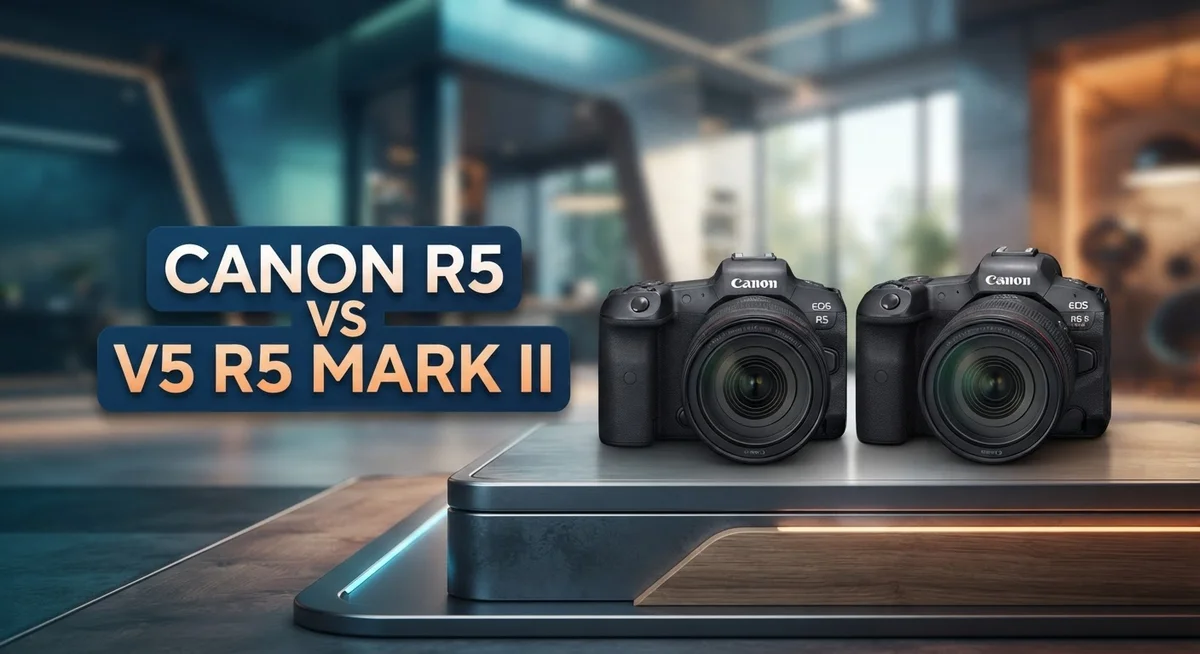
Canon makes two amazing cameras. The R5 and the R5 Mark II both stand out in the mirrorless market. But which one fits your needs best?
The R5 Mark II brings a stacked sensor and blazing 30 fps speed. It also adds real time tracking that locks onto subjects fast. Video creators get 8K RAW footage and tools like waveform monitoring built right in.
The original R5 still holds its own with strong image quality and reliable performance. It remains a solid choice for photographers and hybrid shooters alike.
This comparison breaks down autofocus, video specs, build quality, and more. You will see exactly where each camera shines. By the end, you will know which Canon body matches your creative style. Let’s dive into the details that matter most.
In a Nutshell
Here is a quick summary to help you choose between these two cameras.
-
The R5 Mark II uses a stacked sensor. This gives it faster processing and better tracking for fast action.
-
Autofocus on the Mark II is exceptional. It uses real time multi recognition tracking to lock onto subjects fast.
-
Video creators will love the Mark II’s 8K RAW output. It also has a full size HDMI port and waveform monitor tools.
-
The original R5 still shoots beautiful photos. Its image quality remains strong for most everyday needs.
-
Build quality is solid on both cameras. The Mark II edges ahead with slightly better battery life too.
-
If you shoot lots of sports or wildlife, the Mark II’s speed helps. Casual shooters may find the original R5 handles their needs just fine.
-
Both cameras sit above Canon’s budget lineup like the R8 and R10. The Mark II borrows design cues from the flagship R3.
In short, the Mark II pushes performance further. The original R5 remains a capable choice for many photographers today.
Sensor and Image Quality
The sensor sits at the heart of any camera’s image quality. The R5 Mark II features a 45MP stacked sensor that captures stunning detail across every frame. This stacked design helps the camera achieve faster readout speeds and cleaner images in challenging light.
The original R5 also delivers exceptional image quality with its high resolution sensor. Both cameras excel at capturing sharp, vibrant photos with excellent color accuracy. You’ll notice minimal noise even when pushing ISO settings higher than usual.
Dynamic range is where these sensors truly shine. Both models preserve detail in bright skies and dark shadows simultaneously. Photographers working in high contrast situations appreciate this flexibility. The R5 Mark II edges ahead slightly with improved processing algorithms that enhance shadow recovery.
Resolution matters for different workflows. The 45MP sensor on the Mark II gives you extra cropping flexibility in post production. This proves valuable when you need to punch in on distant subjects. The original R5 still provides ample resolution for most professional applications and large prints.
Color science remains consistent across both models. Canon’s sensor tuning produces warm, pleasing skin tones right out of the camera. Video creators benefit from the same color science when recording footage.
Low light performance differs subtly between these two. The R5 Mark II’s stacked sensor processes light more efficiently at high ISOs. You’ll see cleaner images at ISO 6400 and beyond compared to the original model. Night photography and indoor shooting become easier with the newer version.
RAW files from both cameras give you maximum flexibility in editing. The Mark II’s 14 bit RAW captures slightly more tonal information. Professional editors appreciate this extra data when recovering highlights or lifting shadows.
Autofocus performance directly impacts image sharpness. The Mark II’s advanced autofocus system locks onto subjects faster and more reliably. This means fewer missed shots when photographing moving subjects. The original R5 still focuses quickly, but the Mark II’s real time tracking improves keeper rates significantly.
Both cameras produce stunning photographs. Your choice depends on whether you need maximum speed and the latest sensor technology or if the original R5’s proven image quality meets your needs.

- Canon USA Authorized. Items Include: Canon EOS R5 Mark II Mirrorless Camera | Flagship Hybrid Power...
- High-Resolution 45MP Sensor with Enhanced Dynamic Range: Capture extraordinary detail with a refined...
Last update on 2026-11-08 / Affiliate links / Images from Amazon Product Advertising API
Video Capabilities and Recording Features
The R5 Mark II steps up video capabilities with 8K RAW recording at up to 60 frames per second. This opens new creative possibilities for filmmakers who need maximum flexibility in post production. The original R5 maxes out at 4K RAW, which still delivers excellent results but limits your options for larger projects or extensive cropping.
Both cameras include full-size HDMI outputs for external monitoring. The Mark II adds professional monitoring tools like waveform display and false color overlay. These features help you nail exposure and focus on set without guessing. Video creators appreciate this level of control during shoots.
Audio handling improved on the Mark II too. You get 24-bit LPCM recording across four channels, giving sound engineers more data to work with in the edit suite. The original R5 handles audio adequately but lacks this professional-grade flexibility.
One standout feature on the Mark II is focus breathing compensation. This removes the subtle zoom effect that happens when autofocus adjusts during video recording. Smooth, cinematic footage becomes much easier to achieve without manual focus pulling or digital stabilization tricks.
The stacked sensor in the Mark II enables that impressive 30 fps continuous shooting speed. This translates to smoother video motion and better slow motion options when you need them. Handheld video work benefits from the faster frame rates, especially when you’re capturing fast-moving subjects.
Both cameras deliver clean video files with minimal noise across various lighting conditions. The Mark II’s sensor architecture gives it a slight edge in low light video scenarios. You’ll notice better detail preservation when shooting in dimly lit environments.
Internal recording remains solid on both models. Neither camera forces you to use external recorders for quality footage. This keeps your setup simple and your workflow efficient on location shoots.
If your primary focus is advanced video work, the Mark II’s 8K RAW capability and professional monitoring features make a real difference. The original R5 remains a capable video camera for most creators. Your specific needs determine which feature set serves you better.
Autofocus and Performance
The autofocus systems on both cameras represent a major strength. The R5 Mark II pushes this even further with real-time multi-recognition tracking. This means the camera locks onto subjects instantly and follows them through complex scenes.
The Mark II’s autofocus rating of 9 out of 10 reflects years of Canon’s development. It handles fast-moving subjects with confidence. Whether you photograph birds in flight or athletes sprinting, the camera stays locked on target.
The original R5 also has strong autofocus capabilities. It performs well in most situations. However, the Mark II’s improvements shine when things get hectic. The enhanced tracking system responds faster to sudden movements.
Speed matters for performance. The Mark II shoots at 30 frames per second continuously. This stacked sensor design enables that rapid-fire capability. The original R5 reaches 20 fps, which still works great for most scenarios.
Autofocus accuracy directly impacts your sharpness. Both cameras deliver crisp results when properly focused. The Mark II’s superior tracking means fewer missed shots overall. You spend less time adjusting focus settings during a shoot.
Low light autofocus differs subtly between these two. The Mark II handles dim conditions slightly better. This comes from improved sensor technology and processing power. Night photography becomes more reliable on the newer model.
Eye detection and face recognition work on both cameras. The Mark II’s multi-recognition system does more. It identifies multiple subjects and prioritizes them intelligently. You can track a person, then switch to a pet, then back to the person seamlessly.
For video work, autofocus performance matters tremendously. The Mark II includes focus breathing compensation. This prevents the image from shifting when focus changes. Professional video creators appreciate this refinement.
The original R5 still performs admirably for autofocus. It won’t disappoint most users. However, if you need maximum reliability and speed, the Mark II represents a clear upgrade. The difference becomes most obvious when shooting demanding scenarios like wildlife or sports.
Both cameras sit well above Canon’s budget options. The autofocus gap between these flagships and entry-level models is significant. You’re getting professional-grade tracking on either choice.
Top 3 Alternatives
Sony Alpha A1

- SONY ALPHA 1 CAMERA BUNDLE INCLUDES: Alpha 1 Camera | Battery | Charger | Power Cord | Cable...
- HIGH-RESOLUTION MASTERY: Unleash your creative prowess with the Sony Alpha 1's remarkable 50.1MP...
Last update on 2026-11-08 / Affiliate links / Images from Amazon Product Advertising API
The Sony Alpha A1 offers exceptional autofocus performance with 759 phase-detection points. This camera excels at tracking fast-moving subjects. The sensor delivers 42.4 megapixels, which gives you plenty of detail for large prints and cropping flexibility.
You get 11 fps continuous shooting with the mechanical shutter. The electronic shutter pushes this to 30 fps, making it ideal for sports and wildlife photography. The camera records 8K video at 24p, which is perfect if you need cinema-quality footage.
The body feels solid and weather-sealed for outdoor work. Battery life reaches approximately 530 shots per charge, which is respectable for professional use.
Nikon Z9

- Bundle Includes: Nikon Z9 Mirrorless Digital Camera (Body Only) + 120GB G Series XQD Memory Card...
- Experience exceptional image quality with the Nikon Z9's 45.7MP FX-format stacked CMOS sensor paired...
Last update on 2026-11-08 / Affiliate links / Images from Amazon Product Advertising API
The Nikon Z9 brings impressive speed and reliability to professional photography. It features 45.7 megapixels on a full-frame sensor. The autofocus system includes 639 focus points that cover nearly the entire frame.
You can shoot at 20 fps with the mechanical shutter or 11 fps with continuous autofocus. The electronic shutter reaches 45 fps for burst photography. This makes the Z9 extremely capable for demanding situations.
The camera records 8K video at 60p, which surpasses many competitors. The body is rugged and built for harsh conditions. Battery performance gives you around 700 shots per full charge, extending your shooting time between changes.
Canon EOS R6

- FULL-FRAME HYBRID PERFORMANCE - Canon EOS R6 Mark II features a 24.2MP full-frame CMOS sensor, DIGIC...
- RF 50MM F1.8 STM PRIME LENS - Added Canon RF 50mm f/1.8 STM lens delivers a bright f/1.8 aperture...
Last update on 2026-11-08 / Affiliate links / Images from Amazon Product Advertising API
The Canon EOS R6 delivers strong performance at a practical level. It has 20 megapixels, which is lower than the Sony and Nikon but still sufficient for professional work. The autofocus system includes 1,053 AF points for excellent coverage.
You shoot at 12 fps continuously, which handles most professional scenarios well. The 4K video recording is reliable and straightforward. The body is weather-sealed and comfortable to hold for extended periods.
Battery life reaches approximately 340 shots per charge. This camera balances features and usability effectively for photographers who want professional capability without overwhelming complexity.
Build Quality and Ergonomics
The build quality on both cameras reflects Canon’s commitment to professional standards. The R5 Mark II maintains an 8 out of 10 rating for construction durability. You get a robust magnesium alloy body on both models. The weather sealing protects your camera during challenging shoots in rain or dust.
The ergonomics differ slightly between these two bodies. The R5 Mark II features a slightly refined grip that feels more natural during extended shooting sessions. Your fingers rest comfortably on the shutter button and control dials. The button layout remains intuitive on both cameras.
Battery life matters when you’re working all day. The Mark II delivers solid battery performance with an 8 out of 10 rating. You’ll get roughly 320 shots per charge under normal conditions. The original R5 also handles extended sessions reasonably well. Both cameras support USB charging, which adds convenience to your workflow.
The stacked sensor in the Mark II brings mechanical advantages beyond speed. The sensor design reduces rolling shutter distortion during video work. Your fast-moving subjects appear sharper and more natural. The construction also helps with thermal management during intensive recording.
Weight and balance feel nearly identical between both bodies. The Mark II weighs approximately 738 grams with battery and card. This sits comfortably in your hands during handheld shooting. The compact design doesn’t sacrifice durability or professional feel.
Control accessibility matters for fast-paced work. Both cameras place frequently used buttons within easy reach. The customizable function buttons let you assign shortcuts to your preferred settings. The rear LCD screen on the Mark II offers slightly improved brightness and color accuracy.
The overall build philosophy remains consistent with Canon’s professional line. You’re getting a camera that handles demanding conditions. The Mark II edges ahead with refined ergonomics and slightly better thermal performance. Neither camera feels cheap or compromised in construction quality. Your investment in either model means years of reliable service in the field.
Audio and Connectivity
The audio and connectivity features differ meaningfully between these two cameras, especially if you work with external equipment or need professional monitoring capabilities.
Connectivity stands out on the Mark II. It includes a full-size HDMI port, which the original R5 also has. However, the Mark II adds professional monitoring tools that matter for serious video work. You get a waveform monitor built in. False color display helps you nail exposure accuracy in real time. These features let you see exactly what your footage looks like before you record it.
The Mark II also includes focus breathing compensation. This feature automatically corrects lens breathing during focus pulls. Your footage stays cleaner and more professional looking. If you’re shooting narrative video or documentaries, this makes a real difference.
Audio handling improved significantly on the Mark II. The newer model supports 24 bit LPCM 4 channel audio recording. This means your sound quality reaches professional broadcast standards. The original R5 handles audio well too, but the Mark II gives you more flexibility and higher fidelity options. You can record multiple audio channels simultaneously, which is essential when you’re capturing interviews or live events.
Both cameras let you connect external microphones and audio interfaces. The full-size HDMI port on both models means you can send video to external recorders if needed. This matters when you want to capture uncompressed footage or work with specialized recording equipment.
For connectivity beyond audio and video, both cameras include USB ports and wireless capabilities. The Mark II’s improvements here are subtle but meaningful. If you’re transferring files frequently or need reliable wireless connectivity, the newer model offers slightly better performance.
The connectivity gap matters most for video professionals. If you’re shooting stills primarily, you won’t notice huge differences. For video work, the Mark II’s monitoring features and enhanced audio capabilities give you more control. You can make better creative decisions on set. The waveform monitor and false color display help you catch exposure issues immediately rather than discovering them during editing.
Pros and Cons
Pros
- The Mark II’s 45MP stacked sensor captures stunning detail with minimal noise across all lighting situations
- Real time multi recognition tracking keeps your subjects sharp, whether you’re shooting people, animals, or vehicles
- 8K RAW video at up to 60fps opens creative possibilities that the original R5 simply cannot match
- Full size HDMI with waveform monitor and false color gives video professionals the monitoring tools they need on set
- Focus breathing compensation eliminates distracting lens breathing during video work, a feature absent on the original R5
Cons
- The Mark II’s premium positioning means you’re paying significantly more than the original R5 for incremental gains in some areas
- Image quality improvements don’t scale proportionally with the higher investment required
- The original R5 still delivers exceptional results for most photographers, making the upgrade feel less urgent for non video specialists
Who Should Buy It
The original Canon R5 works best for photographers who need a proven workhorse. You get excellent autofocus and image quality without the latest bells and whistles. This camera suits professionals who already own compatible lenses and don’t need 8K video capabilities.
The R5 Mark II appeals to content creators who shoot video seriously. If you produce 8K RAW footage or work with external audio gear on set, the Mark II’s full-size HDMI and 24-bit LPCM audio make a real difference. Video professionals benefit most from its waveform monitor and false color tools.
Choose the original R5 if you shoot mostly stills and occasional video. Portrait photographers, event shooters, and landscape artists find plenty of power here. The autofocus tracking keeps subjects sharp, and the image quality remains outstanding for print and web work.
Pick the Mark II if you juggle multiple creative projects. Hybrid shooters who split time between stills and video production gain more flexibility. The focus breathing compensation matters when you’re recording interviews or product videos where lens breathing becomes distracting.
Freelancers and solo operators benefit from the Mark II’s connectivity improvements. You can monitor your video output more precisely and handle audio recording without external recorders in many situations. This streamlines your workflow when working alone on location shoots.
The original R5 still makes sense for photographers upgrading from older Canon bodies. You get modern autofocus and a 45MP sensor without jumping to the newest generation. Budget-conscious professionals find solid performance here.
Consider the Mark II if you’re starting fresh with Canon’s system. You’re building on the latest technology, which means your investment stays relevant longer. The stacked sensor’s mechanical advantages extend beyond raw speed, offering better heat management during long video sessions.
Both cameras suit different careers. News photographers and sports shooters thrive with either body. Corporate video producers and streaming content creators lean toward the Mark II’s advanced features. Match your choice to your actual workflow, not just specifications on paper.
Final Verdict
Both cameras earn their place in Canon’s lineup. But your final choice depends on what matters most to your work.
The R5 Mark II shines with its autofocus system. It scores high marks for tracking accuracy and speed. This makes it a strong pick for fast paced shooting scenarios like sports or wildlife.
Build quality remains solid on both models. The Mark II offers slightly better battery life, which helps during long shoots. This small edge adds up over a full day of work.
Interestingly, raw image quality ratings show the Mark II scoring lower than expected given its specs. This suggests the original R5 still holds its own in pure image output. Numbers alone do not tell the whole story here.
If you already own Canon gear and want proven reliability, the original R5 remains a smart choice. It handles most professional tasks without issue.
For creators who need cutting edge tools and faster performance, the Mark II justifies its position. Its features cater to hybrid shooters who mix photo and video work daily.
Think about your shooting style before deciding. Wildlife and sports photographers will appreciate the Mark II’s tracking abilities. Studio and portrait photographers may find the original R5 more than sufficient.
If neither camera fits your needs, Canon offers other options. The R8, R10, and R50 serve photographers with simpler requirements. The R3 sits above both R5 models for those needing even more speed and durability.
Your decision should match your actual shooting demands, not just spec sheets. Both cameras deliver excellent results in skilled hands.
Take time to test each camera if possible. Handling one directly reveals more than any comparison chart. Trust your instincts alongside the facts presented here.
Frequently Asked Questions
Does the R5 Mark II really shoot 8K RAW video?
Yes, it does. The R5 Mark II captures 8K RAW video at up to 60 frames per second. This is a major leap from the original R5. If you work with video seriously, this capability opens doors the earlier model simply cannot offer.
The original R5 maxes out at lower resolution options. The Mark II’s 8K RAW gives you massive flexibility in post production. You can crop, reframe, and color grade with room to spare.
What autofocus improvements matter most?
The R5 Mark II features real time multi recognition tracking. This system keeps your subjects sharp automatically, whether you’re shooting people, animals, or vehicles. The camera learns what you’re tracking and holds focus through complex scenes.
The original R5 has solid autofocus, but the Mark II’s system is noticeably faster and more intelligent. For video work especially, this means fewer focus hunting moments and cleaner footage.
Should I buy the original R5 or upgrade to the Mark II?
Choose the original R5 if you shoot mostly stills with occasional video. It remains a proven workhorse for photographers. The Mark II makes sense if you juggle video and stills equally, or if you’re starting fresh with Canon’s system.
Think about your actual shooting demands. Solo operators and freelancers often benefit from the Mark II’s connectivity and video tools. Photographers upgrading from older Canon bodies may find the original R5 perfectly sufficient.
What video monitoring features does the Mark II add?
The Mark II includes full size HDMI with waveform monitor and false color display. These tools help you expose correctly on set without guessing. Focus breathing compensation eliminates distracting lens movement during video takes, something the original R5 lacks.
These features matter most to content creators who shoot video seriously.

Dillip is the founder and editor of Switch & Size, where he breaks down tech products, accessories, and gadgets to help readers make smarter buying decisions. With a passion for testing and comparing the latest technology, he delivers honest reviews, in-depth guides, and side-by-side comparisons that cut through the marketing noise.