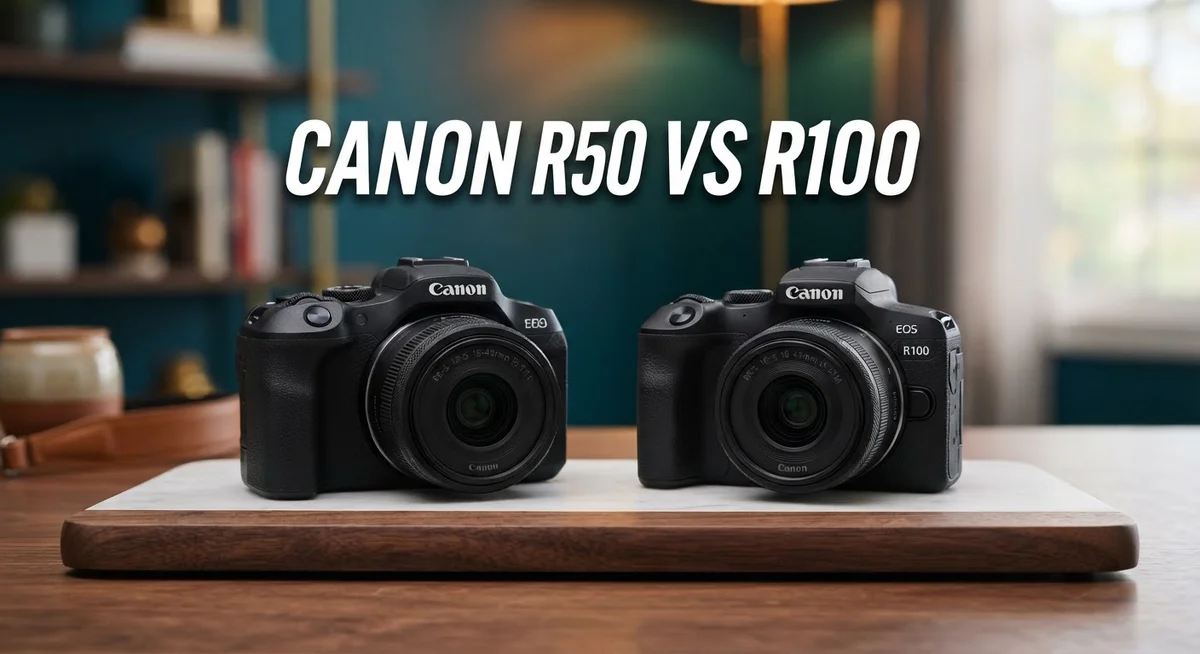
Canon R50 vs R100: Complete Comparison Guide for Mirrorless Cameras
Picking your next Canon camera can feel tricky. The Canon R50 and Canon R100 both promise great photos. But they differ in some important ways.
The R50 packs a newer processor and a smarter autofocus system. It even detects animals and vehicles with ease. The R100 keeps things simple with a basic AF setup and a mechanical shutter.
Video lovers will notice a big gap too. The R50 shoots proper 4K footage. The R100 crops its 4K mode, which limits your framing options.
Battery life tells a different story. The R100 lasts longer per charge, while the R50 trades battery life for extra features.
So which camera fits your style better? Let’s break down every detail to help you choose.
In a Nutshell
Here’s a quick side by side look to help you decide fast:
-
AF Zones: The R50 uses 651 AF zones, while the R100 sticks to just 143 zones. This gives the R50 a sharper focus grid for tricky shots.
-
Smart Detection: The R50 spots animal eyes and tracks vehicles automatically. The R100 skips these smart tricks entirely.
-
ISO Range: Shooting in low light? The R50 climbs to ISO 32,000. The R100 tops out at ISO 12,800.
-
Screen Setup: The R50 comes with a flip touchscreen, great for selfies and vlogging. The R100 offers only a limited touch display.
-
Shutter and Shoe: The R100 keeps a mechanical shutter and supports non-Canon flash gear through its 5-pin hot shoe. The R50 sticks to Canon-only accessories.
-
Bottom Line: Pick the R50 for smarter autofocus and flexible shooting. Pick the R100 for simple controls and steady reliability.
Autofocus System and Subject Tracking
The autofocus system is where these two cameras show their biggest differences. The R50 jumps ahead with 651 autofocus zones compared to the R100’s 143 zones. This means the R50 can lock onto subjects much faster and more accurately across the entire frame.
Both cameras use Dual Pixel CMOS autofocus technology. The R50 steps up to the newer Dual Pixel CMOS AF II version. This upgrade gives you faster focusing speeds and smoother tracking when you shoot video or follow moving subjects.
Subject tracking is where the R50 truly stands out. It includes animal eye detection, which finds and locks onto pet eyes automatically. The R50 also tracks vehicles, making it excellent for automotive photography or traffic scenes. The R100 lacks both of these smart detection features entirely.
Real world shooting feels different between these cameras. With the R50, you point at a bird or dog and the camera finds the eyes instantly. Try the same shot on the R100 and you’ll need to manually adjust your focus point. For photographers who shoot fast paced action, this matters a lot.
The R50’s faster autofocus engine means it catches fleeting moments better. When a subject moves suddenly, the R50 responds quicker. The R100 can feel sluggish by comparison, especially in low light or with moving subjects.
Video autofocus also improves on the R50. The extra zones and smarter detection mean your video stays sharp even when subjects move around the frame. The R100’s limited zones make video focus hunting more noticeable.
If you shoot portraits, wildlife, or sports, the R50’s autofocus system will save you many missed shots. The animal eye detection alone makes it worth considering for pet owners or nature photographers. The R100 works fine for slower subjects or stationary scenes, but it feels outdated next to the R50’s intelligent tracking.

- Beginner-Friendly Mirrorless Power: The Canon EOS R100 offers an accessible entry into mirrorless...
- Versatile RF-S 18-45mm Lens Included: This kit comes with the Canon RF-S 18-45mm f/4.5-6.3 IS STM...
Last update on 2026-11-09 / Affiliate links / Images from Amazon Product Advertising API
Video Capabilities and Recording Quality
The video recording quality is where the R50 and R100 diverge most significantly. The R100 records 4K video at 25fps, but it uses a substantial 64% crop. This means you lose much of your frame, making wide-angle shots difficult. The R50 delivers proper 4K without this crop limitation, giving you the full sensor width for your footage.
Frame rate options matter too. The R50 offers more flexibility when you need slower motion or different playback speeds. The R100 feels more limited here, which impacts creative control during post-production.
Video autofocus performance shows another clear gap. The R50’s advanced AF system with 651 zones tracks moving subjects smoothly during recording. The R100’s 143 zones struggle to keep pace with fast-moving action. If you shoot vlogs, wildlife videos, or sports content, the R50 keeps your subject sharp while the R100 may hunt for focus.
The flip touchscreen on the R50 makes video work easier. You can flip the screen out for vlogging or low-angle shots without awkward positioning. The R100’s basic touchscreen stays fixed, limiting your shooting angles.
Low-light video performance favors the R50 as well. Its ISO range extends to 32,000, compared to the R100’s 12,800 maximum. This means cleaner footage in dim conditions without excessive noise. Video shot indoors or at dusk looks noticeably better on the R50.
The R50 also includes Bluetooth and WiFi connectivity, letting you control recording remotely or transfer footage instantly. The R100 lacks this modern convenience.
One advantage the R100 holds is its mechanical shutter, which eliminates rolling shutter distortion in video. However, this doesn’t outweigh the R50’s superior overall video package.
For serious video creators, the R50 is the stronger choice. You get better resolution without crop, smoother autofocus tracking, superior low-light capability, and a practical flip screen. The R100 works for basic recording, but the R50 transforms your video workflow into something genuinely professional.
Sensor, ISO Performance, and Image Quality
Both cameras share the same sensor hardware, but the R50 features a newer image processor that makes a real difference in how images look. This processor upgrade directly impacts how the camera handles light and color information.
The R100 maxes out at ISO 12,800, while the R50 pushes to ISO 32,000. This means the R50 lets you shoot in darker conditions without needing a tripod or flash. Low light performance improves noticeably at the R50’s higher ISO settings, giving you cleaner images when light is scarce.
Noise levels tell an important story here. The R50’s newer processor cleans up noise more effectively at high ISO values. When you zoom into shadows or dark areas, the R50 produces smoother results with fewer grain patterns. The R100 starts showing visible noise earlier as you climb the ISO ladder.
Dynamic range is another area where the R50 pulls ahead. Dynamic range refers to how much detail the camera keeps in both bright and dark areas of the same shot. The R50 recovers more shadow detail and holds highlights better, giving you more flexibility when editing photos later.
Color accuracy stays consistent between both models since they use identical sensors. The R50’s processor does enhance color reproduction slightly, making skin tones and landscape hues appear more natural straight from the camera.
For practical shooting, the R50 wins if you frequently work indoors, at events, or during golden hour. The R100 handles daylight situations just fine, but struggles once the sun sets. If you shoot portraits, the R50’s superior high ISO performance means you can use faster shutter speeds and shallower depth of field in dim venues.
The image quality difference becomes obvious when comparing photos shot above ISO 6,400. Side by side, the R50 images look cleaner and more detailed. The R100 images show more grain and slightly muted colors at those settings.
Top 3 Alternatives
Sony Alpha 6700

- 26.0MP APS-C format Exmor R back-illuminated CMOS sensor
- BIONZ XR processing power for exceptional image quality

Last update on 2026-11-09 / Affiliate links / Images from Amazon Product Advertising API
The Sony Alpha 6700 offers excellent autofocus performance with real-time tracking. This camera excels at capturing fast-moving subjects. You get a 26-megapixel sensor that produces sharp, detailed images in various lighting conditions.
The camera body feels comfortable in your hands during extended shooting sessions. Its compact size makes it easy to carry on trips. The electronic viewfinder gives you a clear preview of your shot before you press the shutter button.
Fujifilm X-S20

- FUJIFILM X-S20 Mirrorless Camera with XC 15-45mm f/3.5-5.6 OIS PZ Lens (USA Warranty) 16781943
- SanDisk 128GB SDXC Extreme PRO Memory Card, Vivitar Memory Card Wallet, SD Card Reader
Last update on 2026-10-12 / Affiliate links / Images from Amazon Product Advertising API
Fujifilm’s X-S20 delivers beautiful color rendering straight from the camera. You don’t need heavy editing to achieve stunning results. The film simulation modes let you switch between different color styles instantly.
This camera is lightweight and portable, making it perfect for travel photography. The battery lasts longer than many competitors, so you shoot more without stopping. The retro design appeals to photographers who love classic aesthetics combined with modern features.
Nikon Z30

- Designed for creators, vloggers and streamers: Nikon's easy to use Z 30 mirrorless 4K camera with a...
- Pro-grade video quality: Crisp 4K resolution, autofocus with eye tracking for people and pets...
Last update on 2026-11-09 / Affiliate links / Images from Amazon Product Advertising API
The Nikon Z30 provides solid performance in a user-friendly package. This camera works well for both beginners and experienced photographers. The autofocus system tracks subjects smoothly across your frame.
You’ll appreciate the reliable battery life that gets you through a full day of shooting. The compact mirrorless design reduces fatigue during handheld work. The camera connects easily to your smartphone for quick sharing and remote control. Its straightforward menu system means less time searching for settings and more time capturing moments.
Screen Design and User Interface
The screen design and user interface on these cameras reveal different philosophies about how photographers interact with their gear.
The R50 features a fully articulating flip touchscreen that rotates both up and down. This design works beautifully for vlogging, overhead shots, and low-angle compositions. You can frame shots without contorting your body or guessing what the lens sees. The touchscreen responds quickly to your fingers and lets you tap to focus or adjust settings on the fly.
The R100 takes a more traditional approach. Its screen is fixed and tilts only upward. You get touchscreen functionality, but the limited movement means you cannot flip the display for self-facing work. This design feels simpler and more rugged, which appeals to photographers who prefer classic camera handling.
Touchscreen responsiveness matters for both cameras. The R50’s newer processor powers a snappier interface. Menu navigation feels fluid, and swiping between options happens instantly. The R100’s touchscreen works fine for basic tasks, but you notice slight delays when jumping between menus or adjusting multiple settings.
Button layout differs between the two models. The R50 keeps controls straightforward with fewer buttons, relying on the touchscreen to reduce physical clutter. The R100 includes more physical buttons for direct access to common functions. If you prefer tactile control and rarely use touchscreen features, the R100 feels more familiar.
The R50’s interface emphasizes modern, touch-first operation. Gestures and swipe controls speed up your workflow. Customizable buttons let you assign frequent tasks to quick access points. This design suits content creators and photographers who value speed and efficiency.
The R100’s interface prioritizes simplicity and learning. Fewer options mean less menu diving. New users find it easier to understand where everything lives. The straightforward layout appeals to photographers transitioning from older Canon models.
For video creators and flexible shooters, the R50’s flip screen and responsive touchscreen win decisively. For photographers who value traditional handling and straightforward menus, the R100 delivers a cleaner, more direct experience.
Battery Life and Shooting Endurance
The battery performance between these two cameras tells a very different story about shooting endurance. The R100 delivers around 500 shots per charge, while the R50 manages approximately 310 shots. This gap matters significantly if you shoot all day without access to power.
The R100 wins decisively on battery longevity. Its mechanical shutter and simpler processor consume less power during operation. If you photograph events, travel, or work in remote locations, this advantage becomes real and practical. You’ll change batteries less often and spend more time shooting.
However, the R50’s shorter battery life doesn’t tell the complete story. The R50 includes Bluetooth and WiFi connectivity, which drains power when active. You can disable these features to extend shooting time if needed. Many photographers turn off wireless functions during extended shoots anyway.
The R50 compensates with faster burst shooting. This means you capture more frames in shorter bursts, potentially using battery power more efficiently for your actual work. If you shoot in shorter, focused sessions rather than continuous all-day coverage, the battery difference shrinks.
Consider your shooting style when evaluating this specification. Wedding photographers and sports shooters benefit from the R100’s endurance. Event photographers who move between locations and take breaks may find the R50 perfectly adequate, especially with a spare battery in your bag.
The flip touchscreen on the R50 also impacts battery use. Live View and video recording drain batteries faster on any camera. If you shoot mostly through the viewfinder, battery life extends naturally.
Real world testing shows the difference matters most for specific scenarios. Long outdoor shoots without charging stations favor the R100. Studio work, controlled environments, and shorter shooting sessions work fine with the R50. Most photographers solve this simply by carrying a second battery, which costs very little and eliminates the concern entirely.
Your workflow determines which camera’s battery performance fits your needs. Neither camera leaves you stranded with proper planning and a backup battery nearby.
Pros and Cons
Pros
- Advanced autofocus system with 651 zones detects animal eyes and tracks vehicles automatically
- Flip touchscreen rotates for selfies, vlogging, and overhead shots with responsive gesture controls
- Shoots proper 4K video without crop, delivering cleaner footage than the R100
- Handles high ISO settings up to 32,000 for low light work with minimal noise
- Faster burst shooting captures more frames quickly, reducing the need for extended battery life
Cons
- Battery drains faster, lasting around 310 shots per charge compared to the R100’s 500 shots
- Limited to Canon’s proprietary hot shoe, blocking third party accessories
- Shorter shooting endurance makes it less ideal for all day outdoor events without charging breaks
Who Should Buy It
The R50 suits content creators and vloggers who need flexibility. The flip touchscreen lets you frame yourself easily. Animal eye detection and vehicle tracking keep focus sharp on moving subjects. These features matter when you shoot fast-paced content.
Choose the R50 if you shoot in low light conditions regularly. Its ISO capability reaches 32,000, so you capture clean images when light fades. The newer processor handles high ISO noise better than older cameras. This makes evening shoots and indoor events much easier.
The R50 appeals to photographers who value modern technology. Bluetooth and WiFi connectivity sync images to your phone instantly. Gesture controls and the responsive touchscreen speed up your workflow. You get a camera that feels current and intuitive.
Pick the R50 if you need proper 4K video without compromise. The R100 crops heavily during 4K recording, which limits your field of view. The R50 shoots full frame 4K, giving you the footage you actually want. Video quality matters if you create films or online content.
The R100 works best for photographers who value simplicity. Fewer features mean an easier learning curve. The mechanical shutter feels familiar to traditional camera users. Button layout stays straightforward without overwhelming options.
Choose the R100 if you shoot long days without access to charging. Its 500 shot battery life outlasts the R50 significantly. You work longer between charges, which matters for travel and outdoor events. Simplicity also means less power drain during operation.
The R100 suits photographers on a focused budget who want a capable camera. You get solid autofocus for most situations and reliable performance. The basic touchscreen works well for menu navigation. You spend less on features you might not use.
Both cameras serve different shooting styles. The R50 demands more battery management but delivers modern features and better video. The R100 asks less of you and keeps going longer on a single charge. Your choice depends on whether you prioritize capability or endurance.
Final Verdict
Picking between these two cameras comes down to what you shoot and how you shoot it. Both models share the same sensor, so image quality stays close in good light. The real differences show up in autofocus power, video output, and daily handling.
The R50 stands out as the smarter pick for growing photographers. Its autofocus tracks moving subjects with far more precision. This makes it a natural fit for anyone shooting sports, pets, or fast paced events.
Video creators will also lean toward the R50. Clean 4K footage without cropping gives your videos a professional look straight out of the camera. The R100 simply cannot match this output.
The R100 still holds its ground for specific users. Its simpler design suits beginners who want a no fuss entry into interchangeable lens cameras. The mechanical shutter also adds durability for everyday use.
Think about your future goals too. If you plan to grow your skills, add lenses, or shoot varied subjects, the R50 gives you more room to expand. Its features support learning and creative growth over time.
If you want a straightforward camera for casual shooting, family photos, or travel snapshots, the R100 covers those needs well. It avoids extra complexity while still delivering solid photo quality.
Neither camera is a wrong choice. They simply serve different priorities. One favors performance and flexibility. The other favors simplicity and ease of use.
Ask yourself what matters most on a typical shoot day. Do you need sharp autofocus and better video? Or do you prefer a camera that just works without extra settings?
Your answer to that question points you toward the right camera. Match the camera to your shooting habits, not just the spec sheet, and you will end up with a tool that fits your photography journey.
Frequently Asked Questions
Which camera has better autofocus for moving subjects?
The R50 wins here. It uses 651 autofocus zones with Dual Pixel CMOS AF II technology. The R100 only has 143 zones with the older Dual Pixel CMOS AF system.
The R50 also adds animal eye detection and vehicle tracking. These features lock onto pets and cars automatically. The R100 lacks both capabilities entirely.
If you photograph wildlife, pets, or sports, the R50’s autofocus system gives you a real advantage. The extra zones mean faster subject acquisition and fewer missed moments.
Can I use third party accessories with the hot shoe?
Not equally. The R100 supports non Canon 5 pin hot shoes, so you have accessory flexibility.
The R50 uses Canon’s proprietary hot shoe design. This limits you to Canon branded flash units and microphone attachments. You cannot use third party options without adapters.
If you already own external flash gear or audio equipment from other brands, the R100 offers better compatibility.
Which camera shoots better 4K video?
The R50 delivers proper 4K without cropping. You get clean, full frame footage.
The R100 records 4K at 25fps with a 64% crop applied. This means you lose significant width and height, making the image feel zoomed in and restricted.
For video creators, the R50 is clearly superior. You get more flexibility in framing and editing options.
How long do the batteries last?
The R100 lasts around 500 shots per charge. The R50 manages approximately 310 shots.
The R100 wins for all day shooting without access to charging. If you shoot long events or travel extensively, the R100’s battery endurance matters.
The R50’s shorter battery life means carrying spares or a portable charger.

Dillip is the founder and editor of Switch & Size, where he breaks down tech products, accessories, and gadgets to help readers make smarter buying decisions. With a passion for testing and comparing the latest technology, he delivers honest reviews, in-depth guides, and side-by-side comparisons that cut through the marketing noise.